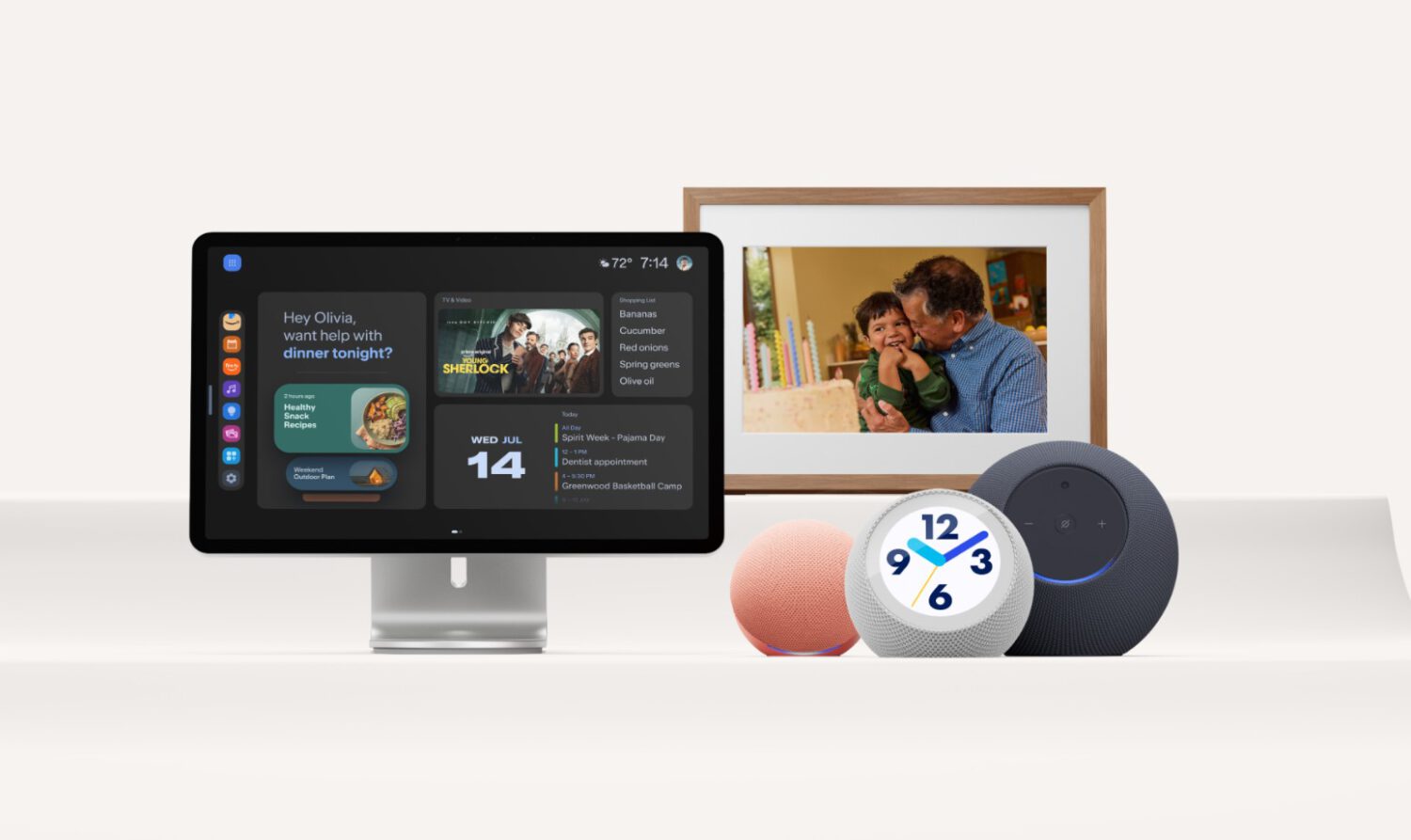
Your Amazon Photos library holds thousands of images spanning years of family moments, travel, and everyday life. Amazon’s new Alexa Photo Frame, announced October 28 alongside four other devices, uses Alexa+ to skip screenshots and clutter and surface images worth displaying on your wall. The full lineup, covering the Alexa Photo Frame, Echo Time, redesigned Echo Dot, Echo Studio with Home Camera, and Echo Show 16, signals a move toward purpose-built hardware for specific rooms and routines rather than general-purpose smart speakers.

Narrower Focus, Sharper Purpose: What These Devices Actually Do
Each of the two flagship additions targets a distinct room and a distinct frustration, from walls cluttered with forgettable snapshots to mornings disrupted by a jarring alarm.
Traditional digital frames display whatever you load onto them; the Alexa Photo Frame is designed to curate actively. Alexa+ can select images based on people and season and surfaces photos where you are smiling, according to Amazon’s launch materials, and you can request photos of a specific person, pet, or trip by voice.
The frame starts at $199.99 in black and rises to $229 for birch or walnut finishes. Reporting from TechCrunch indicates that Google Photos importing was not supported at launch, making Amazon Photos the central requirement for the feature to work as described.
Echo Time takes a different approach: its optional sleep-sensing feature uses Omnisense sleep sensing to detect lighter sleep phases and can fire the alarm anywhere from 10 to 60 minutes before your scheduled time, according to Amazon. Amazon describes this as a gentler wake-up experience, though the feature is a wellness convenience and not a medical-grade sleep measurement.
The device is camera-free, a deliberate privacy distinction for bedroom placement. It costs $199.99; the Kids version runs $209.99.
One Ecosystem, Five Entry Points: The Platform Underneath the Hardware
The remaining three devices extend Alexa+ across the home, adding network coverage, visual intelligence, and a large shared display to the lineup.
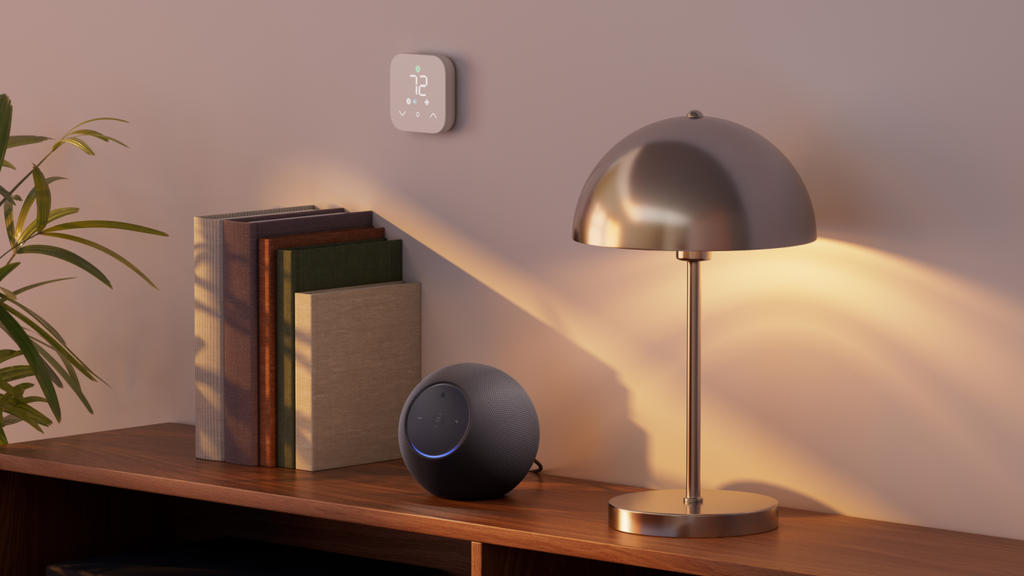
The redesigned Echo Dot is priced at $99.99 and now includes a built-in smart-home hub. It also adds an eero Wi-Fi extender that Amazon says can extend coverage by up to 1,000 square feet, along with a new AZ3 chip that Amazon says improves on-device processing for Alexa+ conversations.
Echo Studio with Home Camera costs $249.99 and adds visual intelligence to Amazon’s higher-end speaker. Point the camera at a board game or a cereal box and Alexa+ can reportedly explain the rules or reorder the product.

The Echo Show 16 rounds out the lineup at $499.99 with a 16-inch display. Amazon says the screen offers a 10% larger viewing area and a 40% smaller frame than its predecessor, and the device includes Fire TV integration and Family Organizer tools. It opened for preorder at launch, with shipping expected later in the year.
Amazon’s launch materials describe the products as a connected system, with Alexa+ serving as the layer linking photo curation, smart-home control, visual interpretation, morning routines, and entertainment.
Their value, however, depends on your depth inside the Amazon ecosystem: Prime, Amazon Photos, Alexa+, Fire TV, and eero. The Photo Frame’s dependence on Amazon Photos is the clearest example, but the pattern holds across the lineup.

If your home already runs on Amazon infrastructure, this lineup addresses specific gaps a single Echo speaker could not fill. If you are still weighing ecosystems, these five devices represent Amazon’s most direct case for why a deeper investment in that stack tends to unlock more value per device.