Seeking spiritual guidance shouldn’t require waiting weeks for an appointment with an overworked monk, yet that’s exactly the reality facing Japan’s aging Buddhist communities.
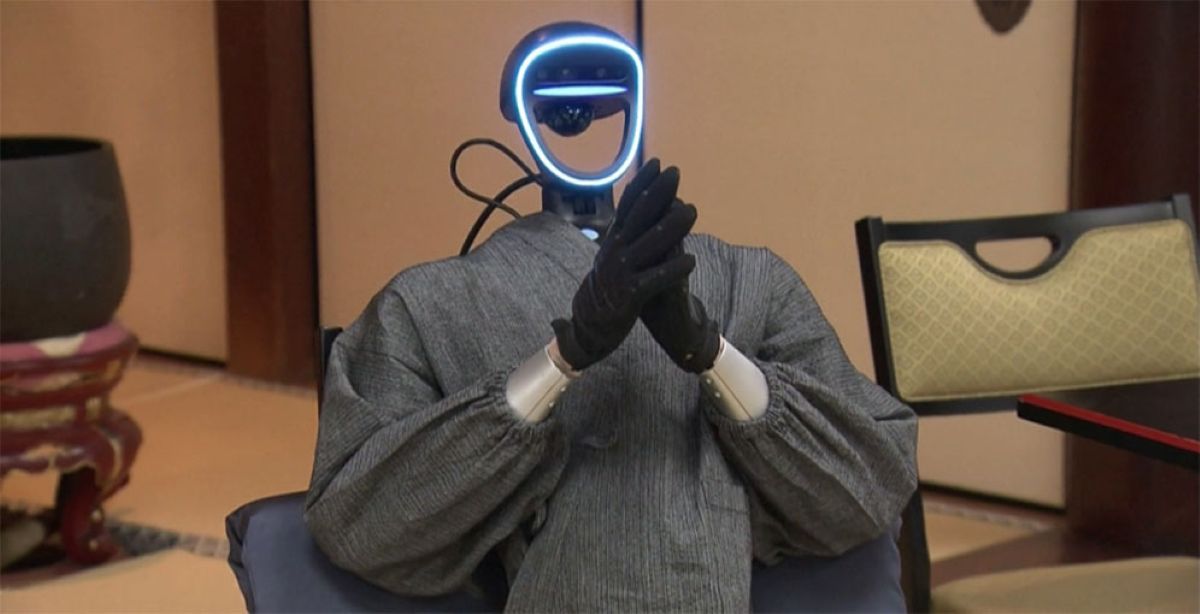
Buddharoid changes that equation entirely. Unveiled February 24, 2026, at a Kyoto temple, this AI-powered humanoid monk represents Kyoto University’s bold answer to Japan’s severe shortage of Buddhist clergy. Unlike those cringe-worthy AI Jesus chatbots that spewed pre-programmed platitudes, Buddharoid actually holds genuine conversations while walking among temple visitors in traditional grey robes.
Beyond Chatbot Theology
This faceless monk combines advanced language models with human-like movement and gesture recognition.
The technical achievement here isn’t just impressive—it’s transformative. Buddharoid draws from vast collections of Buddhist scriptures, including highly specialized texts most people never encounter. When a journalist mentioned feeling anxious during the demonstration, the robot responded with personalized advice: “slow down and observe thoughts rather than follow them.” That’s not programmed responses; that’s contextual spiritual counseling rooted in centuries of Buddhist wisdom.
The robot adopts traditional prayer postures and moves naturally through temple spaces, creating something closer to authentic spiritual presence than previous religious robotic attempts.
Filling the Sacred Void
Japan’s demographic crisis has left temples struggling with fewer monks serving aging communities.
This isn’t about replacing human spiritual leaders—it’s about accessibility when they’re unavailable or overwhelmed. Japan faces the same workforce crisis hitting every developed nation, but temples feel it acutely. Younger generations aren’t pursuing monastic life in numbers needed to serve practicing Buddhists.
Buddharoid operates like spiritual customer service that never closes, offering guidance during off-hours or when human monks are handling other responsibilities. Think of it as democratizing access to Buddhist teaching rather than replacing the human element entirely.
The Authenticity Question
Technology preserving ancient wisdom raises philosophical questions about spiritual authority.
Here’s where things get interesting philosophically. Can an AI truly understand suffering, compassion, or enlightenment without experiencing them? Seiji Kumagai’s team at Kyoto University isn’t claiming their creation achieved consciousness—they’ve built a sophisticated tool trained on spiritual texts.
The project signals something larger about how traditional institutions adapt to modern challenges. Rather than letting ancient wisdom become inaccessible due to practical constraints, technology becomes the bridge preserving cultural and spiritual heritage.
Whether other religious communities globally follow Japan’s lead remains to be seen, but Buddharoid represents more than innovative robotics—it’s a template for keeping timeless wisdom relevant in an increasingly digital world.