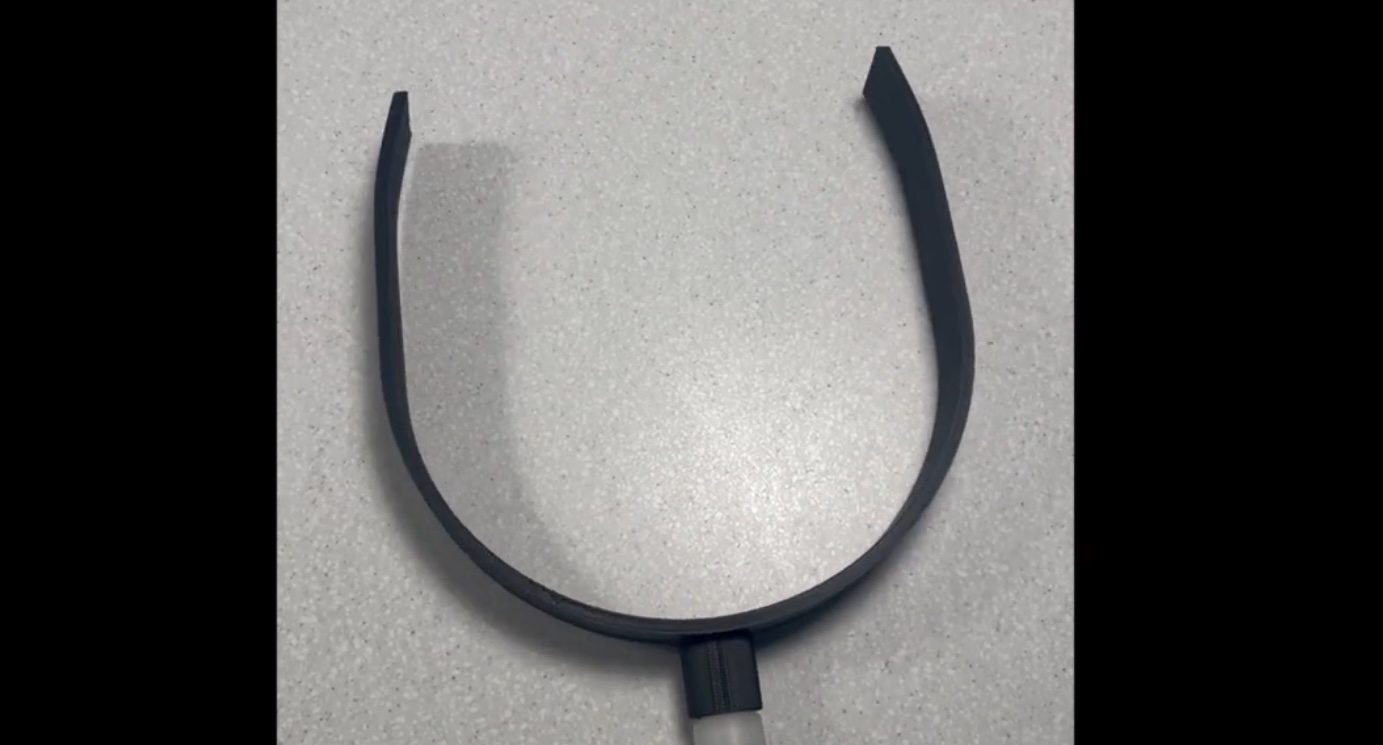
A maker on Reddit’s r/FlockSurveillance community posted designs for a 3D-printed attachment that fits standard broom or paint-roller extension poles, using a rubber band to stretch a grocery bag over a camera lens. No contact with the housing. No marks. No residue.
Surveillance has become ambient background noise — like cookie consent banners you stopped reading three years ago. This gadget is someone clicking “reject all” in physical form.
The attachment is PLA filament, costs almost nothing beyond printer stock, and leaves zero contact marks on the housing. The broader specs break down simply:
- Design intent: temporary, reversible visual obstruction
- Origin: r/FlockSurveillance, posted explicitly as “discussion only”
- Legal status: completely unverified across any jurisdiction — a caveat worth keeping front of mind
Nobody’s Lawyer, Everybody’s Problem
The creator’s disclaimer is doing more heavy lifting than the broom handle.
The post’s author believes this design avoids vandalism statutes because nothing gets damaged. That claim carries zero legal verification in any available source. Whether blocking a camera constitutes “interference,” “obstruction,” or something else entirely depends on your jurisdiction, whether the cameras sits on public or private property, and how a court interprets the relevant code. The creator’s own framing — “not a lawyer, discussion purposes only” — is carrying the entire evidentiary load here, and readers should treat it accordingly.

Remember when people discovered their Roombas were quietly mapping their homes for data partners? Surveillance infrastructure hides in plain sight until someone puts a grocery bag over it. The normalization runs deep, which is exactly why a low-fi physical workaround lands as both absurd and strangely logical at the same time.
Why a Bag on a Stick Resonates
For privacy-minded makers, the symbolism matters as much as the function — and the function is deliberately, stubbornly unverified at scale.
If you own a 3D printer, you could prototype this in an afternoon for pocket change. That accessibility matters. It fits a long maker tradition of low-tech responses to high-tech problems — duct tape over laptop webcams walked so grocery bags could run. The cost barrier is essentially nonexistent. The symbolic weight, however, is doing serious work.
Effectiveness against modern multi-camera, wide-angle, cloud-connected surveillance networks remains entirely unestablished by any available research. This is not a scalable countermeasure. It’s a conversation piece that happens to fit on a broom handle, and overstating what it accomplishes technically would miss the point.
The fact that a plastic bag on a stick qualifies as a credible entry point into the privacy discourse tells you something about where that conversation stands right now — somewhere between overdue and quietly, stubbornly absurd.
Other Options If There Isn’t a 3D Printer on Hand
The broom-handle attachment isn’t the only response people have proposed or attempted. Across online communities and in real-world incidents, opposition to Flock cameras has taken several different forms:
- Temporary visual obstructions, such as covering or blocking the camera’s field of view.
- Attempts to interfere with power, networking, or mounting hardware.
- Acts of vandalism, including paint, physical damage, or cutting down camera poles.
- Organized public campaigns urging cities to suspend contracts, remove cameras, or limit deployments.
- Legal and political efforts focused on public records requests, procurement oversight, and stronger privacy protections.
Taken together, the responses illustrate that the debate has expanded well beyond the hardware itself. For many critics, the camera has become a symbol of a much broader conversation about automated surveillance, public accountability, and where the limits should be drawn.
Disclaimer: This content is intended solely for entertainment, satire, and educational discussion. It is not intended to encourage, promote, instruct, or condone any illegal, unsafe, or unethical activity. Any actions depicted or discussed should not be interpreted as advice or a recommendation to violate any law, regulation, or the rights of others. Always comply with applicable laws and use good judgment.