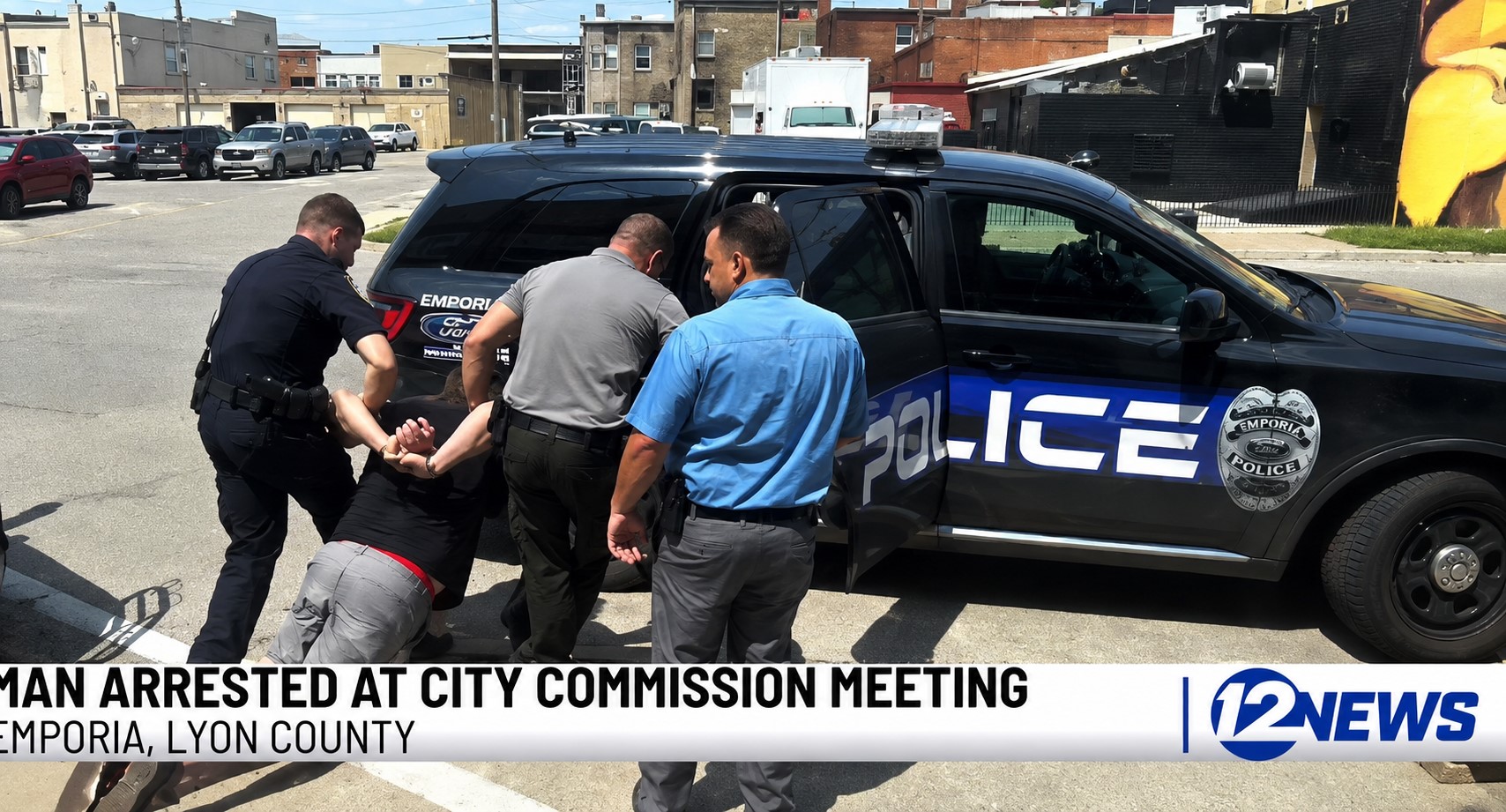
On July 22, Emporia resident Lux Claridge clapped during a city commission meeting. Clapped in support of speakers opposing the proposed Flint Hills Digital Campus, a data center project that has divided the town. Commissioners had warned attendees against clapping, snapping, and “rude comments.” Claridge was removed, arrested, and charged with disorderly conduct and interference with law enforcement. For applause. Emporia reportedly found the line between decorum and suppression somewhere between a golf clap and a criminal charge.
“The city remains committed to open and transparent government.” That’s the official statement from Emporia — issued alongside the announcement that its August 5 and August 19 commission meetings would be virtual-only, with no public comment period at either. Residents could still reach officials by email and phone, the city noted, which is one way to define participation.
Safety Measure or Mute Button?
Death threats prompted the shift to virtual meetings, but the decision to cut all live public input is raising harder questions than the city has answered.
The city says it moved meetings online “in the interest of public safety.” Emporia’s police chief reportedly told local media that officials had received death threats. That’s serious — if the threats were credible and specific. The city has not clarified whether those threats came from local residents, outside actors, or anonymous online noise. That distinction matters when the remedy is eliminating all live public input, not simply tightening security.
Residents showed up anyway. A small group gathered outside the municipal auditorium during the August 5 virtual meeting — the civic equivalent of knocking on a door someone changed the locks on mid-argument. Inside that stream, the commission voted 5-0 to refer a petition challenging a ban on high-impact data centers to a Kansas court. Mayor Becky Smith said a judicial ruling would reduce the city’s litigation risk. Commissioner Erren Harter acknowledged that accepting or declining the petition either way created legal exposure for the city.
Key facts worth tracking:
- Lux Claridge arrested July 22 for clapping; charged with disorderly conduct and interference with law enforcement
- August 5 and August 19 meetings moved to virtual; no public comment period at either
- Commission voted 5-0 to refer the data center petition to a Kansas court
- Residents protested outside the auditorium during the virtual August 5 session
- The August 19 agenda remains unpublished; the commission did not return comment requests from 404 Media
The court will eventually rule on the Flint Hills Digital Campus. But the people who came to participate — who clapped, who stood in a parking lot — are watching a city define “transparent” as something you can observe but never actually influence.