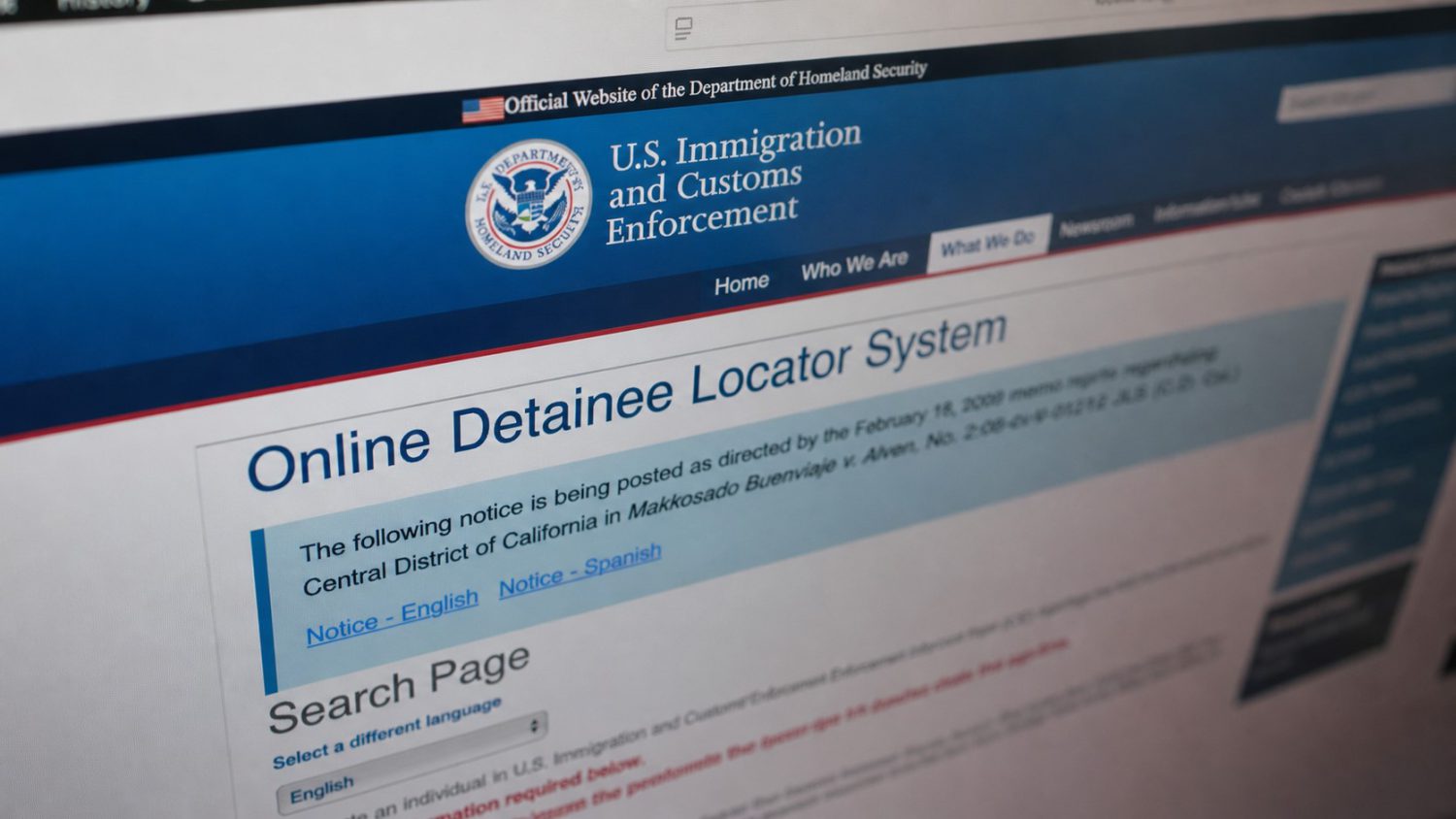
Attorneys at the Amica Center for Immigrant Rights searched the detainee locator for 17 of their clients one Monday in mid-September. All 17 had disappeared from the system, with no explanation available through the public database.
The Search That Comes Up Empty
A federal tool meant to keep people in custody findable is now hiding thousands of them.
ICE launched its Online Detainee Locator in 2010 to give families and attorneys a way to find people held in federal immigration custody, replacing a process that once required contacting individual facilities or regional offices.
As of Sept. 15, 2026, that system quietly stopped showing detainees with final removal orders, according to three current and former ICE officials who spoke to the Associated Press on condition of anonymity because they were not authorized to discuss the change.
ICE made no public announcement. The agency did not confirm or deny the change in a statement to AP.
Nearly 16,000 people booked into ICE detention in July had final removal orders. That is more than one-third of all bookings that month, according to ICE data obtained by the Deportation Data Project at UC Berkeley and UCLA. Total ICE detention exceeded 65,000 people in early July.
Greg Chen, senior director of government relations at the American Immigration Lawyers Association, put it plainly: “Families are freaking out because they think the person has been deported and they don’t know where the person might be.”
A Final Order Is Not a Closed Door
ICE’s position omits a critical legal reality: a final removal order does not eliminate every option a detainee has.
People with final orders can still seek to reopen their cases, file habeas petitions challenging the legality of their detention, or request bond hearings. They may also invoke protections under U.S. and international law against removal to countries where they face persecution or torture.
Some detainees face removal to third countries where they have no family and no community ties. In those cases, timely attorney access is not a procedural formality but an urgent practical need, according to attorneys cited by AP.
My Khanh Ngo, an attorney with the American Civil Liberties Union, described the consequence directly: “If you can’t find your client, don’t know what’s happening to your client, you can’t get that information to the court to stop their removal.”
Ngo told AP that eight Somali men held at the U.S. military base at Guantánamo Bay had disappeared from the locator after the change.
An Agency That Won’t Confirm What It Did
ICE defended its deportation priorities while declining to address the locator change directly.
In its statement to AP, ICE emphasized prioritizing deportations for people with final orders and cited what the agency called a “historic number of injunctions” blocking individual removals. DHS has argued that people with final orders have already received due process, but that framing does not address the legal remedies that can still follow a final order.
The policy reportedly has exceptions. Detainees at an ICE facility in Adelanto, California, and at temporary holding facilities in Minneapolis, New York City, and suburban Chicago remain listed because existing court orders in active litigation require it. That the agency maintains listing where courts compel it suggests the transparency gap elsewhere is a policy choice, not a technical limitation.
The locator had known shortcomings before September, including delays, missing data, and standing exclusions for minors and people in transit. Michelle Mendez, legal director of the National Immigration Project, described the new practice as another way of “disappearing people.”
The locator’s purpose is to make people in government custody searchable by the families and attorneys who need to reach them. Removing thousands of detainees from that system without announcement, without a stated legal basis, and without any alternative mechanism does not make enforcement more efficient. As attorneys cited by AP argued, it makes accountability structurally harder. The reported exceptions tied to existing court orders suggest litigation will be the next pressure point.