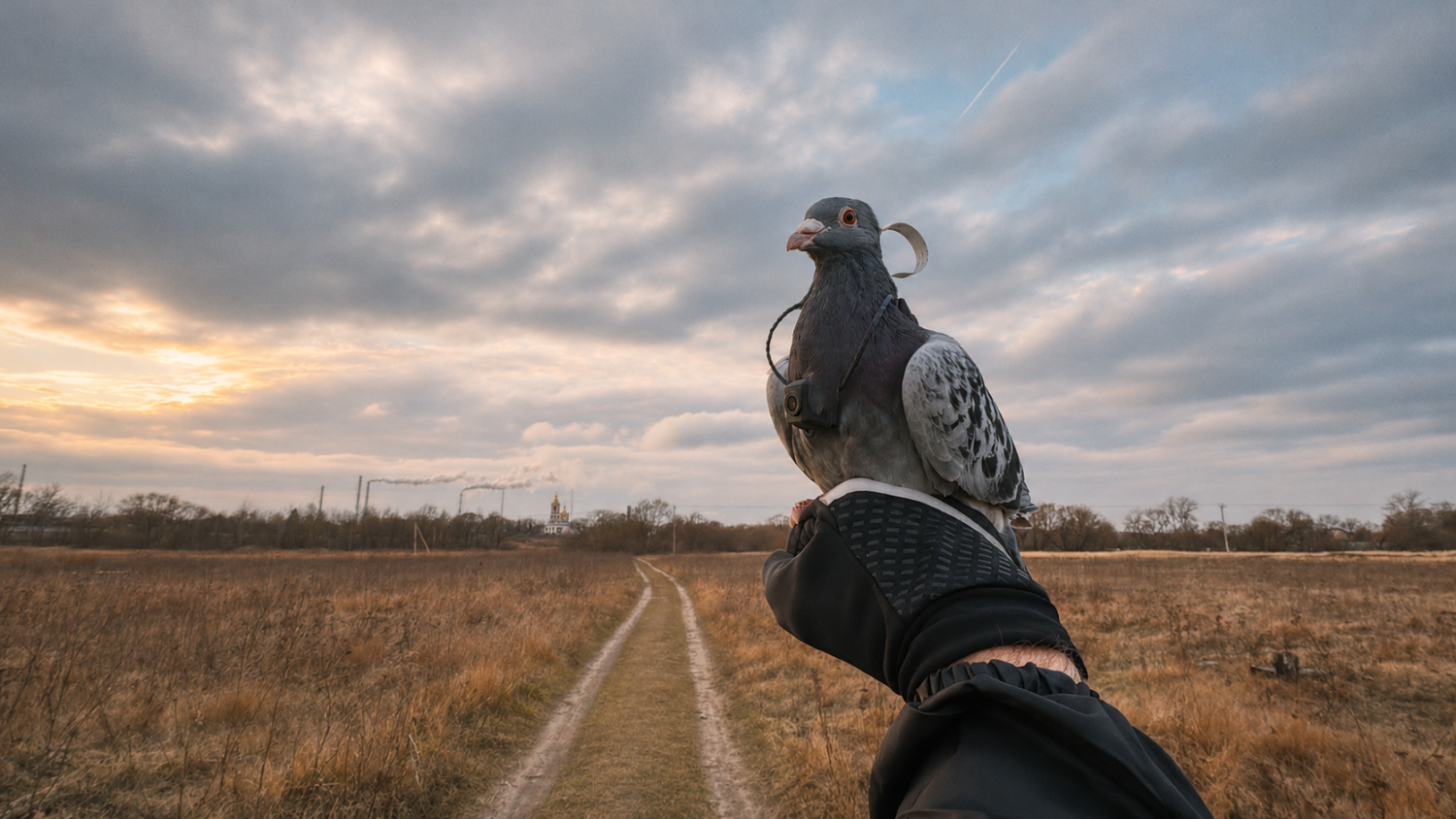
Brain electrodes, chest-mounted cameras, and a pigeon: this combination is what Russian neurotechnology company Neiry is now offering as a paid aerial photography service. The company says it has begun accepting beta commercial orders for the system, which it calls a biodrone, currently available only in Russia.
How the System Is Built
The implants do not give birds human-like instructions; they deliver electrical signals intended to nudge directional behavior while onboard hardware manages the rest.
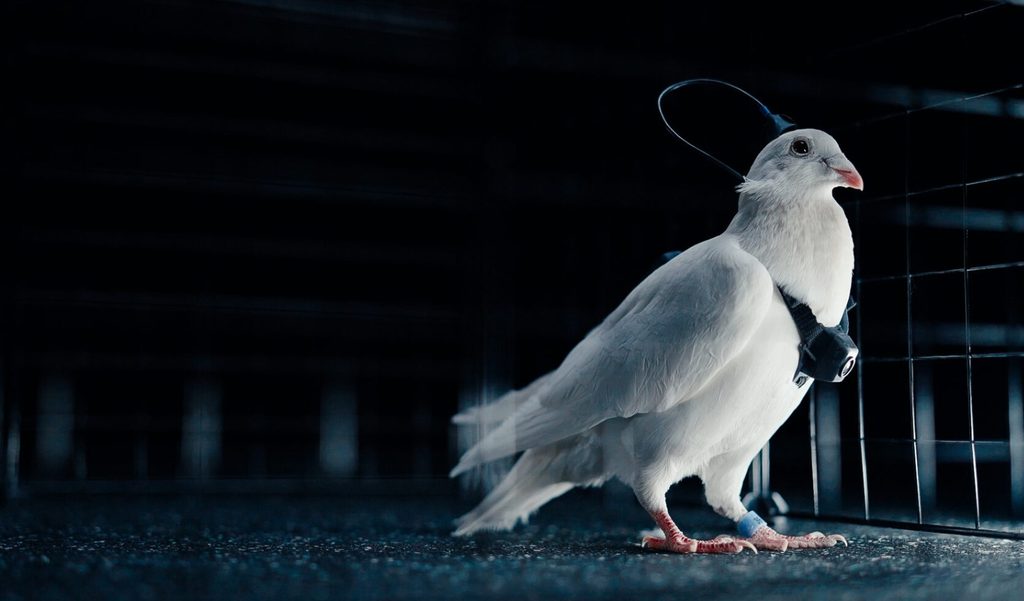
Biocompatible electrodes are surgically implanted into specific areas of a pigeon’s brain and connected to a stimulator housed in a small backpack the bird carries during flight. Electrical impulses from that stimulator are intended to influence whether the bird turns in a particular direction. Onboard electronics, reportedly including GPS, handle navigation and communications, while cameras mounted on the bird’s chest capture imagery.
What Neiry Claims About Performance
The company reports substantial flight activity, though none of its performance figures have been independently confirmed.
More than 100 flights outside the laboratory and more than 1,000 images have been completed, according to Neiry. The company also claims a longest recorded flight exceeding 10 hours and remote operator control at distances beyond 100 kilometers, figures that have not been independently verified in the available reporting.
The Image Quality Gap
Current resolution falls well short of the company’s own stated target.
Ground resolution currently sits below 20 centimeters per pixel, according to available reporting on the project. Neiry says it aims to reach approximately 1 to 2 centimeters per pixel, but that target is a stated development goal, not an achieved capability. Readers curious about how this compares to the best cameras on the market will find the resolution gap substantial.
Intended Uses and Pricing
Neiry proposes the service for infrastructure, environmental, and security work at a price the company compares to conventional drones.
Power lines, pipelines, gas-distribution facilities, urban areas, and environmental monitoring sites are among the target use cases Neiry identifies. The company also lists industrial inspection, search-and-rescue operations, and security monitoring as potential applications. Neiry’s advertised starting price is 300,000 rubles per square kilometer, which the company says is comparable to conventional drone services, though no independent market source has confirmed that comparison.
The Animal Welfare Problem
Implantation is an invasive procedure, and no independent audit of its outcomes exists in the available reporting.
Electrode implantation requires surgery, which makes the welfare of the birds a central concern for any assessment of the project. Neiry says it operates under an approved ethical protocol and targets a 100 percent survival rate during implantation. No independently audited data on surgical complications, long-term health outcomes, or retirement conditions for the animals appears in the available reporting.
Regulatory Status Remains Unclear
The company emphasizes civilian uses, but whether authorities have approved all of them is not established.
Whether Russian aviation, privacy, animal-research, or surveillance authorities have formally approved all of Neiry’s proposed commercial uses is not established in the available material. The company publicly emphasizes civilian applications, but camera-equipped birds operating over urban infrastructure also carry a reasonable potential for covert surveillance use.
What Is and Isn’t Confirmed
The announcement and its price are confirmed; the performance, welfare outcomes, and regulatory clearances are not.
Neiry publicly announced the beta service, its advertised price, and its stated use cases; those are confirmed at the source level. Performance figures, including flight duration, control range, and image volume, are reported from Neiry but have not been independently verified. No confirmed customer deliveries, independently tested commercial results, formal regulatory clearances, or audited animal-welfare outcomes appear in the available material. Until independent verification exists, the project is best understood as an early commercial experiment built on company claims. It is not yet a proven replacement for conventional aerial photography.