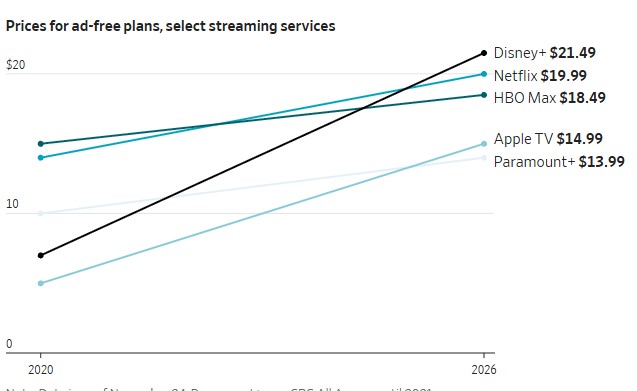
Disney+’s ad-free plan launched at $6.99 per month in 2019. By 2026, it costs $21.49, an increase of more than 207%, according to Binary Briefing’s 2026 price comparison.
Zoom out to a basket of nine major streaming subscriptions and the picture stays uncomfortable. That bundle cost $91.91 per month in October 2019. By November 2026, it had risen to $138.91, a 51.1% increase. Broader inflation over the same period ran roughly 31%, per Binary Briefing. If you suspect you’re paying too much across your subscriptions, streaming is rarely the only culprit.
Netflix Beat Inflation Too, Just Less Dramatically
Netflix’s Standard ad-free plan rose 54% over the same period, outpacing inflation by roughly 22 percentage points.
Netflix’s Standard ad-free plan moved from $12.99 in 2019 to $19.99 in 2026, a 54% increase. Inflation over that period ran approximately 32%, according to the Wall Street Journal’s November 2026 analysis.
Source: the companies
The Ad-Supported Compromise
Platforms responded to subscriber pushback by expanding ad-supported tiers. Disney+ now offers a lower-cost plan at approximately $12.49 per month, though the exact current price should be confirmed directly with the platform.
Brendan Brady, VP of strategy at Antenna, told the Wall Street Journal that the growing volume of streaming content and the arrival of live sports on these platforms is pushing consumers toward cheaper plans, according to the Journal’s November 2026 report.
Cheap Subscribers Are Harder to Keep
Antenna data cited by the Wall Street Journal indicates that ad-supported subscribers cancel more readily than longtime premium customers. That pattern pressures platforms to invest more in win-back campaigns and new subscriber acquisition.
The Plateau Problem
S&P Global data, cited in the same Wall Street Journal report, suggests that household premium-subscription counts are beginning to level off. Some industry analysts describe an emerging rotation pattern, in which viewers subscribe for a specific show or sports season, cancel, and return later.
Bundles as a Retention Strategy
Bundling multiple services together can make cancellation feel like a larger sacrifice, according to the Wall Street Journal’s analysis. Bundles can also make it costs less straightforward for households to track their total monthly streaming spend.
YouTube Waits at the Bottom of the Price Stack
YouTube requires no subscription and offers a large content library at no cost. The Wall Street Journal identified it as a likely beneficiary when consumers decide the combined monthly bill for premium services has grown too high.
What Maturity Looks Like
Streaming platforms are increasingly focused on revenue per subscriber, advertising yield, and keeping existing customers. For households that have maintained the same mix of services since 2019, that shift has translated into a substantially higher monthly bill.