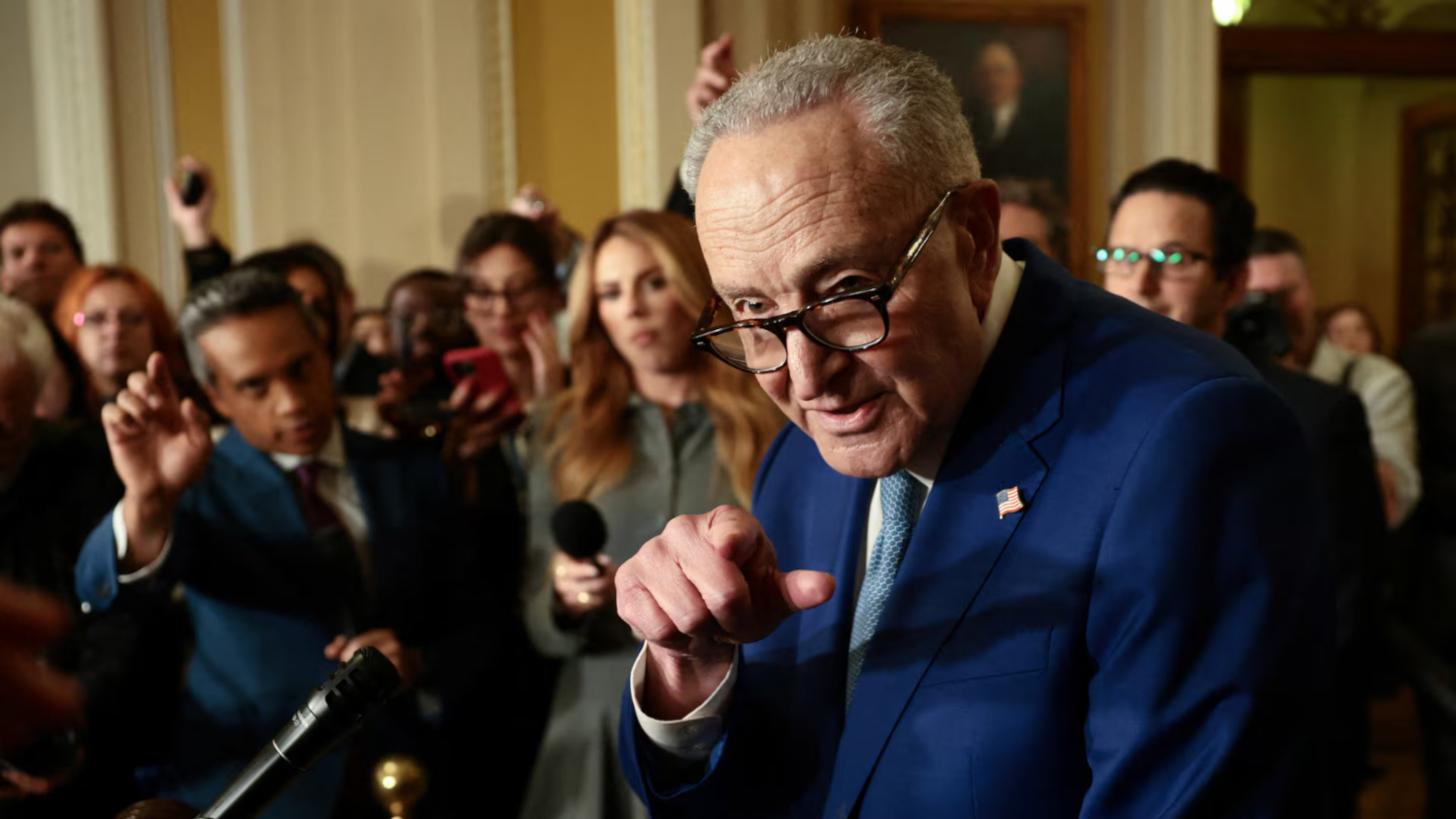
Senate Democratic Leader Chuck Schumer accused Nvidia CEO Jensen Huang of shipping advanced chips to China in violation of U.S. export controls, comparing the alleged conduct to transferring rocket engines to the Soviet Union during the Space Race. That accusation is Schumer’s, posted on X and reported by Reuters; Huang and Nvidia have not been charged with any crime.
shipped extremely advanced chips to China, violating US export control law, in what amounts to the equivalent of selling rocket engines to the Soviets during the Space Race.
Chuck Schumer, Senate Democratic Leader, as reported by Reuters
The Congressional Calendar
Three days of back-to-back appearances will put Huang and Nvidia’s top lawyer before lawmakers starting December 1.
Huang is scheduled to testify publicly before the Senate Banking Committee on December 3. Committee Chair Tim Scott announced the hearing in the context of export-control concerns and separate allegations, still under investigation, surrounding Huang’s reported relationship with a woman accused of being a Chinese intelligence operative.
Before that public session, Huang is expected to participate in a closed-door transcribed interview with three House committees on December 1, according to congressional reporting from Politico. Nvidia General Counsel Tim Teter is expected to appear the following day, December 2, also per Politico.
Trump’s Role
House Democrats are demanding records that could reveal whether the White House shaped a private corporate decision.
The congressional calendar sits on top of a contested corporate sequence. Huang reportedly resigned on November 12; eleven days later, on November 23, the Nvidia board reinstated him.
House Democratic leaders from four committees demanded records from the Trump administration covering communications with Nvidia’s board during that eleven-day window. Democrats say Trump participated in the board meeting and advocated for Huang’s return, after which the board reinstated him. These are committee claims, not established findings, and the White House did not immediately comment at publication, per Reuters.
The records request targets communications involving Trump, the vice president, White House officials, and senior administration staff. Rep. Gregory Meeks, the top Democrat on the House Foreign Affairs Committee, separately called for a public hearing with Huang and cited prior concerns about Nvidia’s efforts to weaken restrictions on advanced-chip sales to China.
The Underlying Policy Problem
Congress is examining two separate questions, and the answer to each carries different legal and regulatory consequences.
The first question is whether Nvidia’s exports violated existing U.S. controls. The second is whether those controls are strong enough to stop chips from reaching China through third-country intermediaries. Meeks and other lawmakers have flagged that diversion risk as a specific concern requiring legislative attention.
Members of both parties have discussed potential legislative responses to close that gap. No bill has been confirmed with an official number or bipartisan sponsors in the available reporting, so no specific legislation is cited here.
What Remains Unanswered
No legal determination has been made, and the central factual questions await testimony.
No legal finding has been made against Huang or Nvidia. Nvidia did not immediately comment at publication, per Reuters.
Key questions head into December still unresolved. Those include whether the alleged shipments covered chips restricted under existing export rules, whether diversion through third countries occurred, and what compliance procedures Nvidia had in place. Those are questions for witnesses and lawmakers to address, not conclusions the available reporting supports.