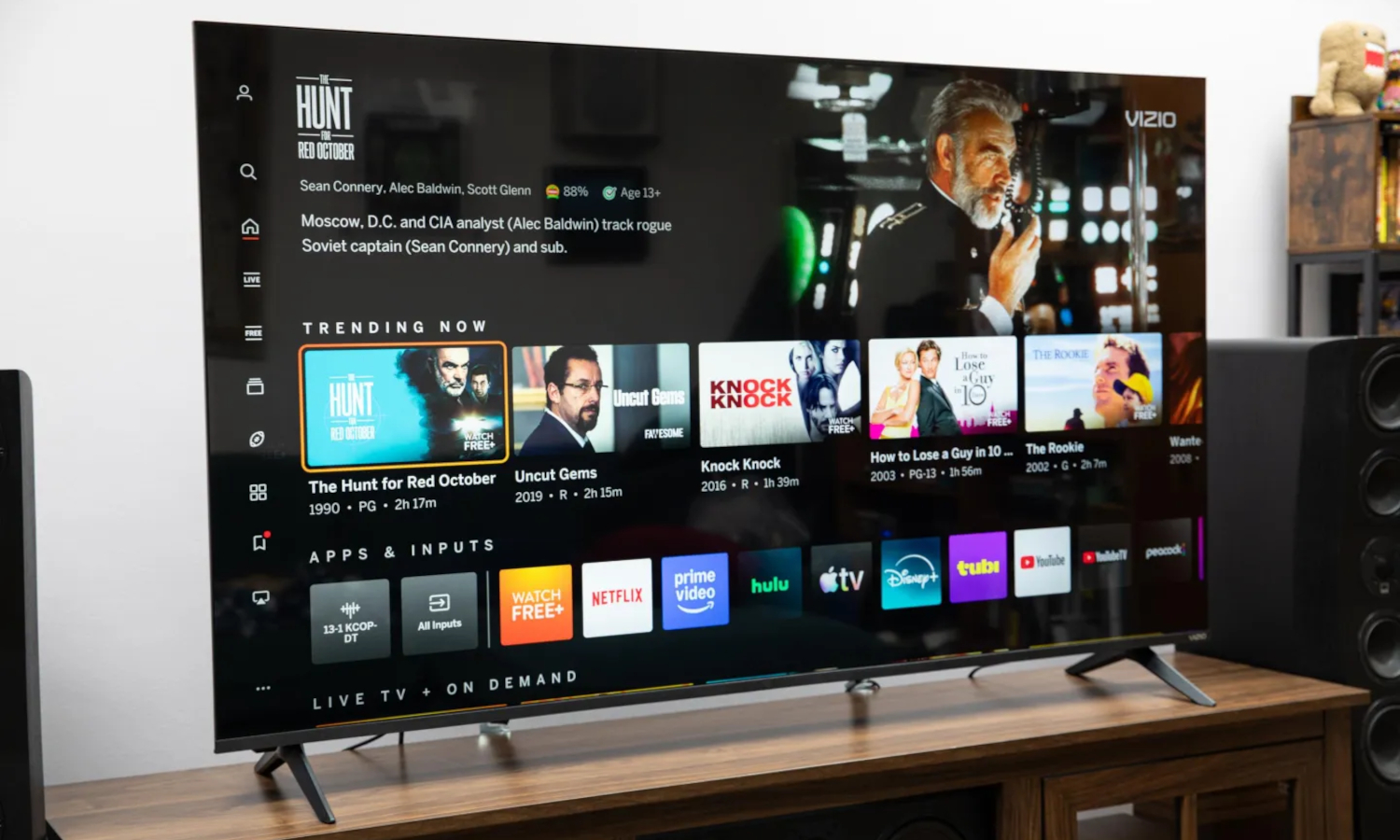
Researchers sent 11 major TV manufacturers a 17-question yes-or-no questionnaire to produce directly comparable answers. The companies asked were Amazon, Apple, Google, Hisense, LG, Panasonic, Roku, Samsung, Sony, TCL, and Walmart’s Vizio. Hisense did not respond; Panasonic, Sony, and Vizio declined to answer.
“Spying” Is Not One Thing
The data collection happening inside a smart TV is a layered mix of features, some optional and some not.
Responding companies describe a combination of voice-command audio processing, viewing-history collection, navigation telemetry, advertising identifiers, location estimates, home-network device discovery, and automatic content recognition, known as ACR. ACR identifies what a viewer is watching by matching audio fingerprints against remote databases, without necessarily capturing screenshots or video.
What the Microphone Is Actually Doing
The companies that addressed microphone behavior generally described feature-specific operation rather than continuous room recording, though several left gaps in their answers.
Amazon says audio reaches the cloud only when Alexa is invoked. Google stores voice recordings only when Voice and Audio Activity is enabled. Roku may retain voice commands from voice-enabled remotes; an account-level opt-out is available. LG says wake-word detection runs locally on supported models, Samsung says its televisions do not passively monitor or record conversations, and TCL notes that microphone behavior can depend on third-party operating systems or applications.
The Viewing Record Your TV Keeps
Most companies collect some version of what a viewer watches, but how much varies significantly.
Amazon collects viewing information from third-party apps when users enable the relevant setting. Google TV stores viewing history, watchlists, and app interactions for some Google TV services. LG’s ACR system, which is optional, uses audio fingerprints according to LG’s response; Roku’s comparable feature, Smart TV Experience, is off by default in the United States; Samsung acknowledges collecting television-program and app-viewing history. Most responding companies said they do not capture screenshots or screen recordings to identify content.
Location Data and Home Networks
A public IP address is a baseline; some platforms collect considerably more.
Google TV can transmit Wi-Fi scan data and account configuration to estimate approximate or precise location. LG uses nearby Wi-Fi information for approximate location when ACR is enabled. Google, LG, Roku, and TCL acknowledge discovering nearby devices on the home network for casting, connectivity, or smart-home functions; Samsung says it does not scan the network to inventory other devices.
What Opt-Outs Actually Stop
A Northeastern University study tested 12 televisions from 10 manufacturers to determine whether disabling ACR changes anything measurable on the network.
The results differed substantially by platform. LG webOS, Amazon Fire TV, VIDAA, and Sony’s Google TV fully stopped identifiable ACR-related traffic after opt-out in the tested scenarios. Samsung’s traffic decreased but did not stop, with ACR-correlated activity observed across antenna viewing, first-party streaming, and HDMI inputs.
Roku’s opt-out did not appear to cover The Roku Channel’s own ACR-like activity. Traffic to an endpoint researchers associated with ACR on Vizio devices continued after opt-out, including when the television sat idle on its home screen. Vizio characterized this as routine operational data supporting the Vizio experience, not ACR data.
Most traffic was encrypted. Researchers identified patterns consistent with ACR but could not verify packet contents or confirm what was processed or retained on remote servers. For broader context on how surveillance app tactics extend beyond consumer televisions, related investigations have documented similar opt-out limitations across other connected devices.
Where to Start If You Care About This
Setup defaults matter more than most users realize, and an opt-out on screen does not always match what happens on the network.
No responding company said users can eliminate every form of data transmission while keeping full internet functionality; some data is described as necessary for streaming, security, or service delivery. Google specifically noted that Usage and Diagnostics sharing and personalized recommendations may be enabled by default during setup unless a user opts out. Reviewing privacy, voice, advertising, and diagnostics settings after initial setup is the most direct action available to stay safe. Continued encrypted network traffic after an opt-out is evidence that the opt-out may be incomplete; it does not independently confirm what data was collected or retained.