Apple designed the iPhone Duo, its first foldable, with titanium construction and an IP68 water-resistance rating. Phone Repair Guru, a repair-focused creator known for hardware teardowns and modifications, set out to do what Apple had not: make the rear panel transparent. If you’re looking for ways to complement your device, there are plenty of iPhone accessories worth considering.
No official clear-back version exists. That meant the project ran on a single-unit margin, because damaging the rear glass during disassembly would leave an expensive foldable with no path to recovery and no replacement parts available.
Taking the Back Off a Foldable
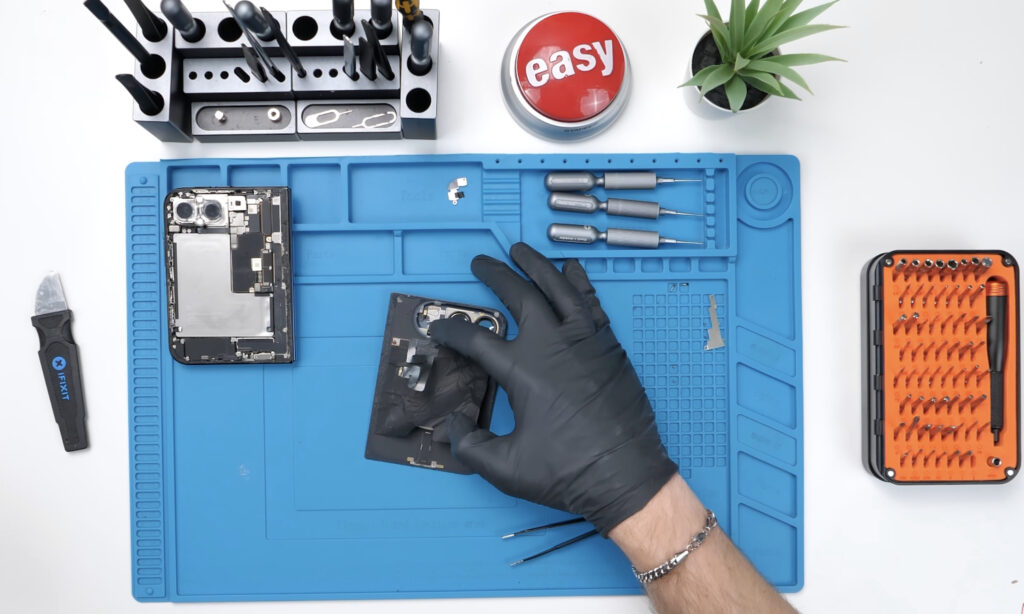
Disassembly required removing the flash, microphone, charging hardware, and a precise array of magnets before the glass could be touched.
The process started with two Phillips screws securing the rear flash and microphone assembly. Phone Repair Guru removed both components and stored them separately before proceeding.
Lifting the wireless-charging coil came next. A heated MagSafe puck (Apple’s magnetic charging and accessory hardware) wrapped in paper allowed the coil and most surrounding magnets to come free as a single unit. The remaining magnets required individual removal, with their original spacing carefully documented for accurate reinstallation.
He also removed a lower screw plate, the silicone surrounding the cameras, metal supports, camera surrounds, and the rear microphone mesh, setting each piece aside for reassembly.
The Paint Was the Hard Part
Removing the opaque coating from the inside of the rear glass proved to be the most demanding stage of the entire project.
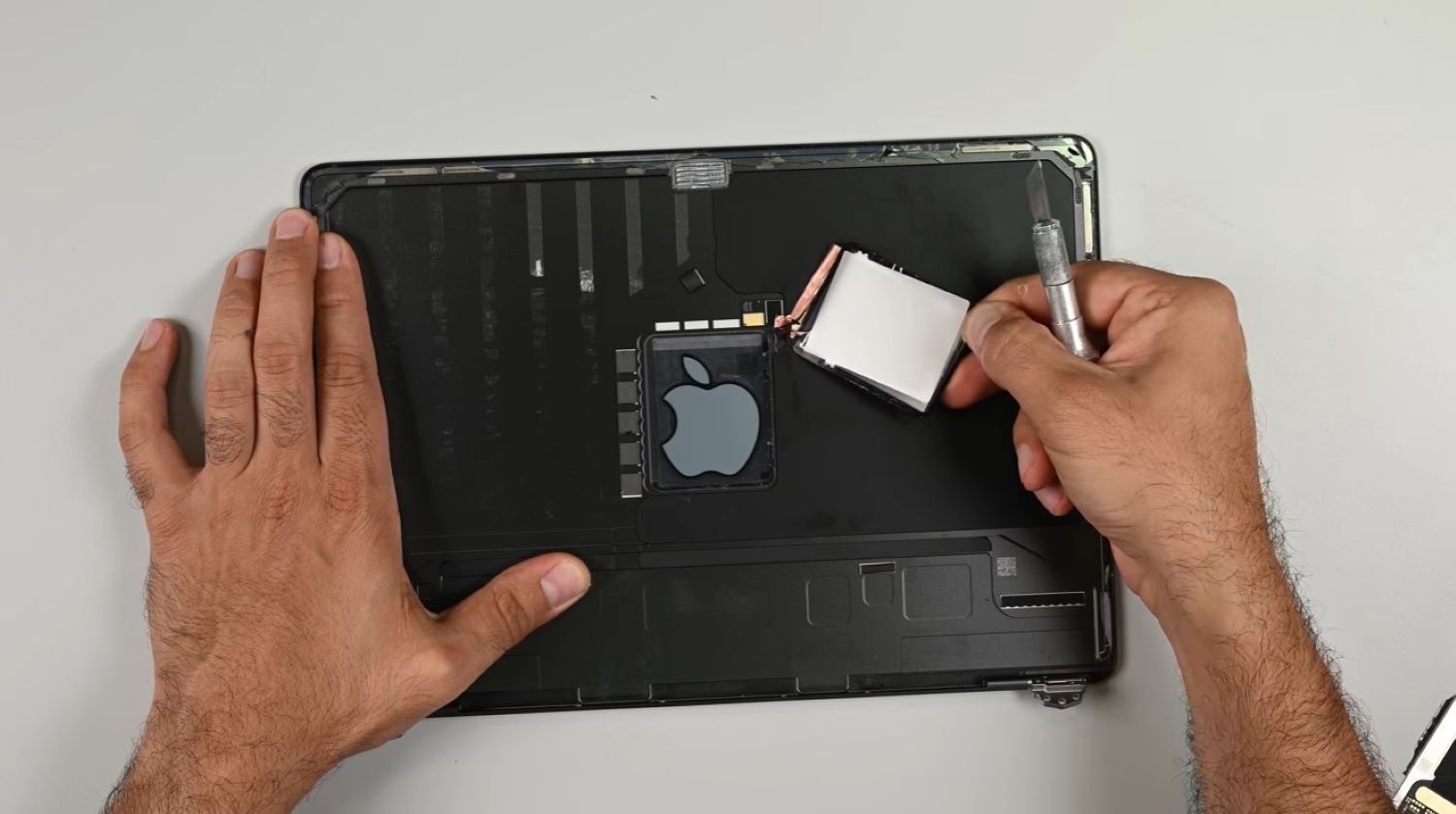
Paint thinner did not work, so Phone Repair Guru scraped the coating away manually using a sharp blade. The flat sections of the glass came off at a manageable pace, while the curved camera platform held its paint far more stubbornly and required substantially more time to clear.
Heat added another constraint. Too much warmth caused the rear glass to flex toward the breaking point, so temperatures stayed deliberately low throughout the scraping process.
A Magnet Cracked
Reassembly introduced the project’s most significant complication, turning a placement problem into a structural one.
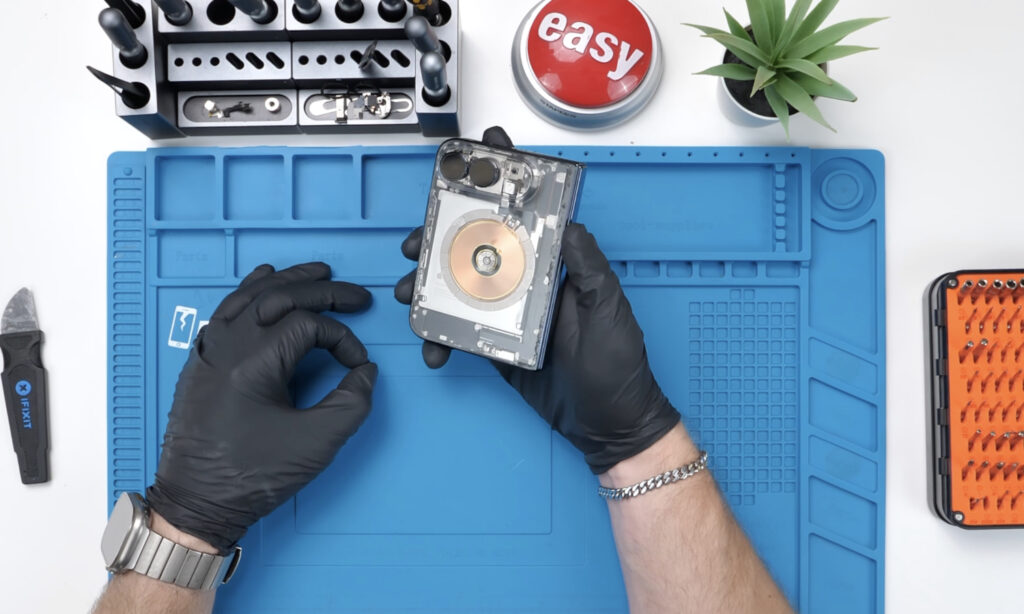
One magnet would not sit flat because neighboring components left insufficient clearance. Phone Repair Guru loosened adjacent adhesive and shifted the surrounding pieces to create room, but the magnet cracked under pressure anyway.
Rather than abandon the build, he flipped the broken piece so the crack faced inward and placed it into the revised layout. The bottom magnets were omitted entirely, which altered the final internal arrangement but made more of the phone’s structure visible through the panel.
What the Finished Phone Reveals
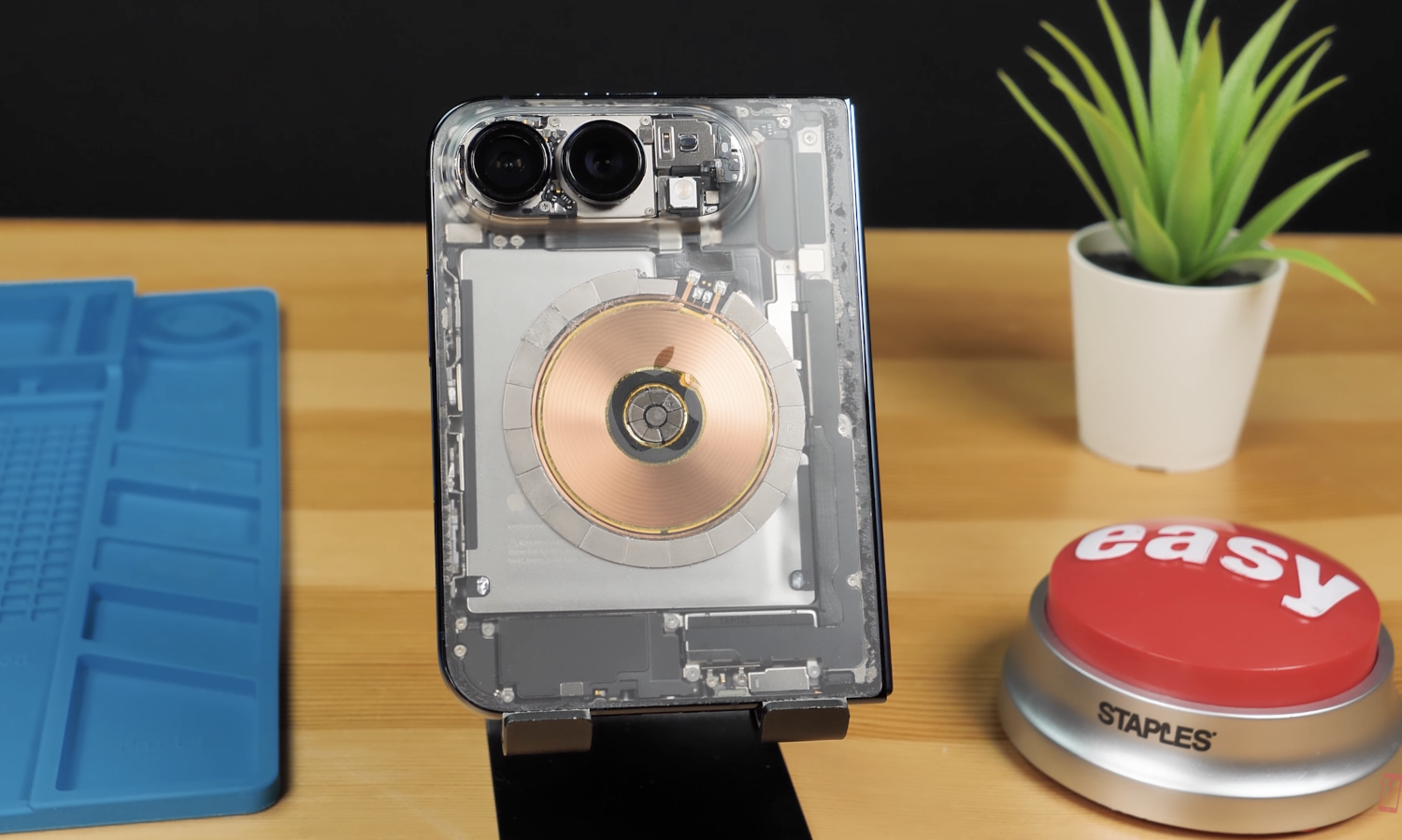
The reassembled Duo exposed its internal magnet array and charging hardware through the new clear panel, with core functions confirmed working.
After reassembly, the transparent back put the Duo’s central magnet array and charging hardware on display. The finish was not factory-perfect, but the clear-panel effect achieved its goal.
Wireless charging functioned when tested, and the rear flash worked after the phone was put back together. Phone Repair Guru ranked the result his second-best clear-back iPhone build, placing it behind his earlier transparent iPhone Air project.
What the Experiment Does Not Preserve
The visual result is striking; the engineering trade-offs are worth understanding clearly.
The iPhone Duo’s IP68 water-resistance rating is a factory characteristic tied to the original bonded glass, adhesives, and sealed components. Modifying those elements does not preserve that protection, and the modification should not be treated as maintaining the phone’s factory specifications. For broader context on Apple’s hardware engineering direction, the company’s custom silicon and materials strategy continues to shape devices like the Duo.
The cracked magnet, the omitted bottom magnets, and the absence of any replacement parts throughout the process illustrate how narrow the margin was at every stage. This was a successful experiment, not a repeatable procedure.