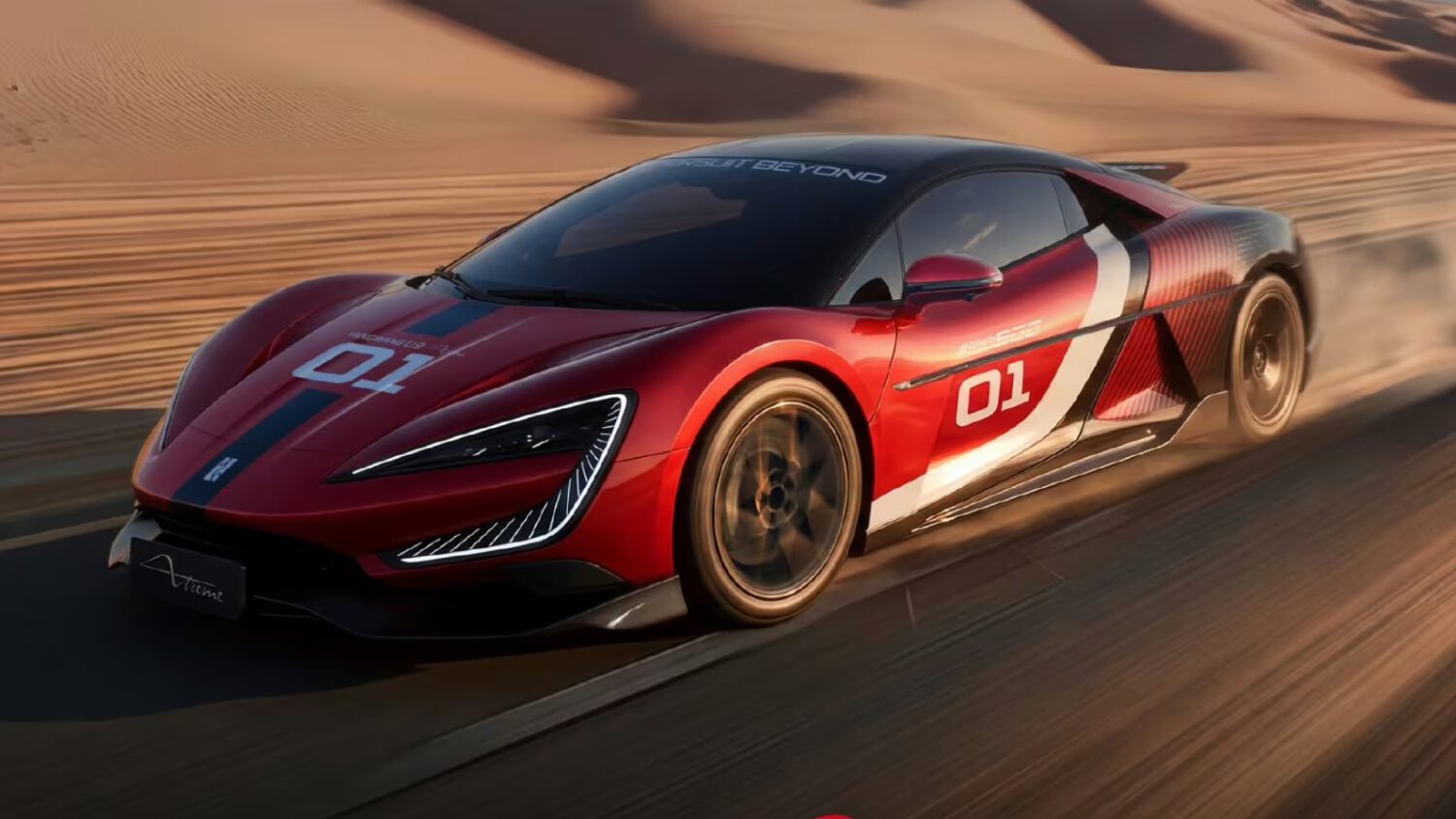
On November 1, 2026, the Yangwang U9X recorded a top speed of 503.17 km/h (312.65 mph) in Abu Dhabi’s Al Dhafra region, according to the FIA. That figure made it the first production car to exceed 500 km/h in a single-direction run.
A Closed Road, a Seven-Kilometer Straight
The site was E11, a major highway in Al Dhafra, with a seven-kilometer straight used for the attempt. Local authorities cooperated with the effort and closed the relevant section; this was a controlled, officially sanctioned event, not an unsanctioned public-road run.
Day One Fell Short. Overnight, Engineers Got to Work.
On October 31, German racing driver Marc Basseng pushed the U9X to approximately 490 km/h, still short of the target. Overnight, the team adjusted the car’s aerodynamics, suspension settings, and tire pressures, according to reporting by Electrek. The following day, Basseng’s second run produced 503.17 km/h. That figure now appears in both the FIA’s official recognition and Guinness World Records.
One Direction, One Record
Some land-speed record formats require a two-way average across back-to-back runs. That method reduces the influence of wind and road gradient. The U9X’s record, as reported by Motor1 and recognized by the FIA, is a single-direction result, and that distinction is worth understanding when evaluating the claim.
Two Guinness Titles, One FIA Recognition
The FIA formally recognized the run and described the U9X as the first production car to exceed 500 km/h. Guinness World Records listed two titles: highest speed achieved by a production car in a single-direction run, and highest speed achieved by an electric production car in a single-direction run.
This Was Not BYD’s First Attempt Near This Number
The U9 Xtreme had reached 496.22 km/h at Germany’s ATP Papenburg test track in September 2025, according to BYD’s official material. Basseng drove during that earlier attempt as well, per FIA reporting. Abu Dhabi was not a one-off demonstration. It was a second data point in a clear progression: the same driver, the same model, and engineers who had already identified which systems to improve between sessions.
What It Signals
At 503.17 km/h, the U9X reaches a threshold that the previous production-car benchmark, 490.484 km/h according to BYD’s official material, had not crossed. For the Yangwang brand, the Abu Dhabi result is less about a single headline and more about a documented, incremental record of technical progress in a part of the market where credibility is built through verified results.