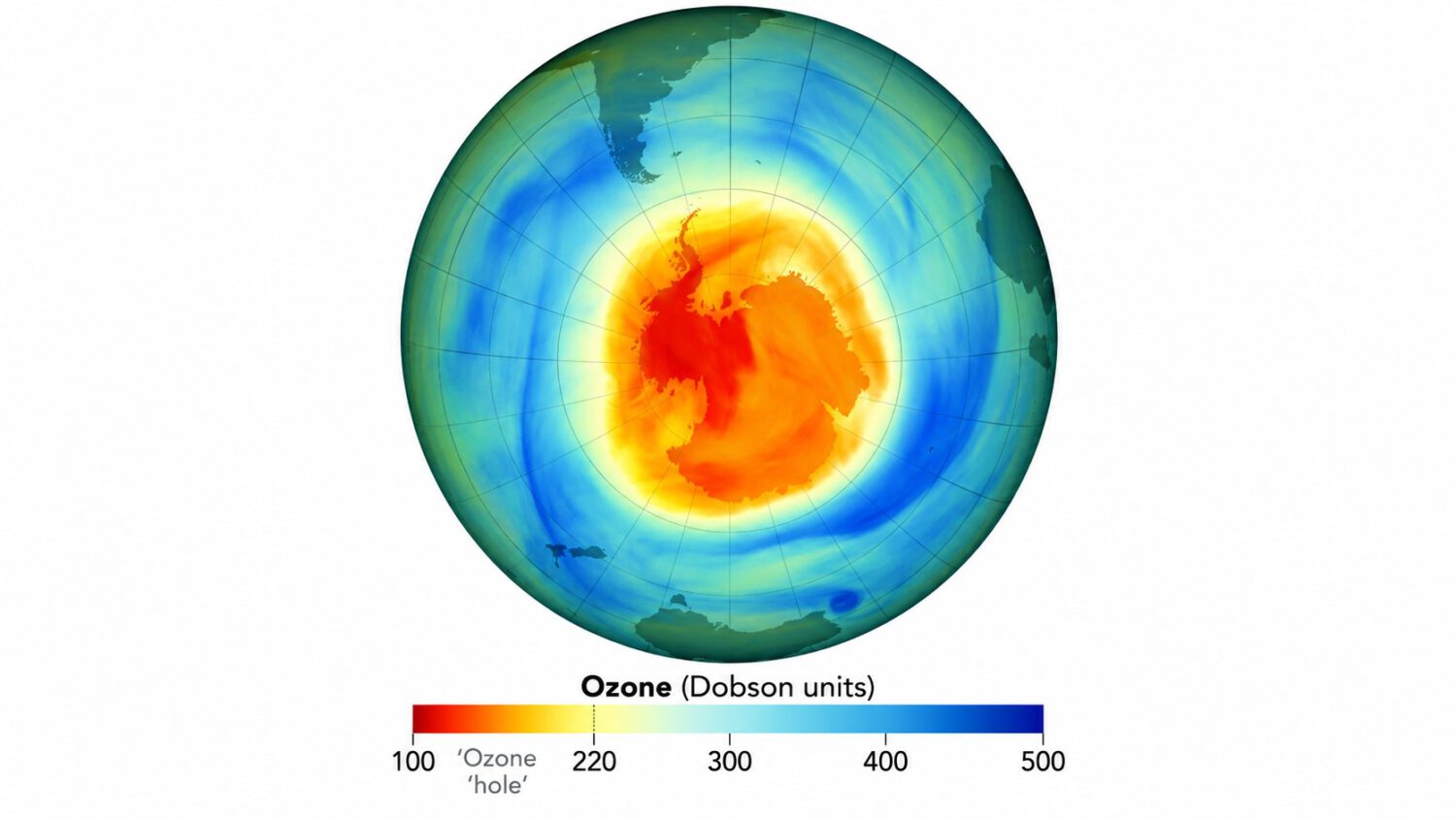
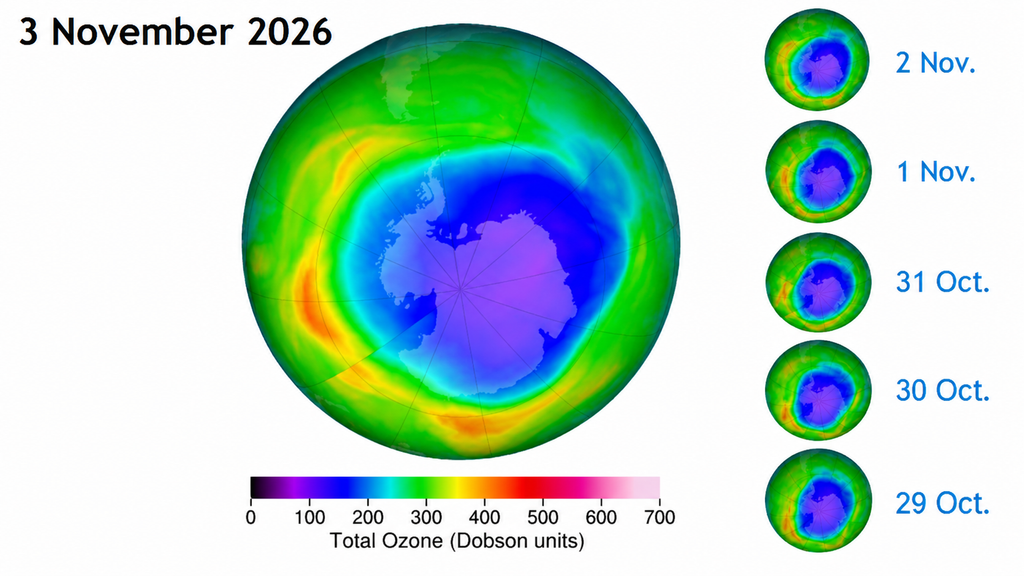
On September 18, 2026, the Antarctic ozone hole reached its largest single-day extent in roughly a decade: 10.5 million square miles (27.1 million square kilometers), or about 90% of the largest measurement ever recorded, set on September 9, 2000.
The seasonal picture is more nuanced. Averaged across the main depletion period, September 7 through October 13, the hole covered approximately 9.6 million square miles (25 million square kilometers) and ranked seventh-largest in 48 years of continuous monitoring by NASA and NOAA.
What Drove the Spike
An unusually powerful polar vortex, combined with weak atmospheric disruption, created the conditions for a larger-than-normal hole.
An unusually powerful polar vortex is the primary explanation. The vortex is a band of circulating stratospheric winds that corrals cold air over the South Pole each Southern Hemisphere winter.
In August and September 2026, planetary-scale weather systems that typically break up the vortex were especially weak. That allowed the cold region to extend farther from the pole, expanding the zone where ozone-depleting chemistry can operate.
Why Cold Air Matters
At the extreme cold of the Antarctic stratosphere, clouds form and trigger the chemical reactions that destroy ozone.
Extremely low stratospheric temperatures allow polar stratospheric clouds to form. On the surfaces of those clouds, chlorine and bromine released from human-made compounds react chemically. When spring sunlight returns to the Antarctic stratosphere, those reactions destroy ozone rapidly.
NASA and NOAA track ozone concentration via satellites, weather balloons, and ground-based instruments. Both agencies identified this sequence as the driver behind the 2026 event.
Wide Area, Not the Deepest Loss
Yet size alone does not measure how severely the ozone layer is depleted.
A large ozone hole and a severe ozone hole are not the same measurement. NASA and NOAA reported that the 2026 hole was not as deep as several of the deepest historical ozone holes on record, meaning concentrations inside the hole did not fall to the lowest levels ever observed.
Extent describes how far the depleted region spreads; depth describes how severely ozone concentrations fall within it. The 2026 event ranked high on the first measure while remaining below the worst historical readings on the second.
The Long-Term Trend Has Not Reversed
Ozone-depleting substances continue to decline, and scientists expect the Antarctic ozone layer to recover fully around the 2070s.
Atmospheric concentrations of ozone-depleting substances have been declining since the Montreal Protocol took effect in 1987. NASA and NOAA report that the long-term recovery remains on track, with full restoration of the Antarctic ozone layer projected around the 2070s as the longest-lived depleting compounds gradually break down.
A single anomalous season does not alter that trajectory. The 2026 event was driven by atmospheric weather, not by a resurgence in chemical pollution, according to NASA and NOAA.
The Protocol’s Clearest Evidence
A direct comparison from NASA and NOAA shows how much chemical phaseout has already reduced the scale of ozone loss.
NASA and NOAA offered a concrete comparison to show why the international agreement still matters. Had ozone-depleting substances remained at their 2000 concentration levels, the 2026 hole would have been roughly 1 to 2 million square miles larger than it actually was.
The recovery is slow and uneven year to year, with full restoration not expected for another half century. It is, according to the agencies, still on course.