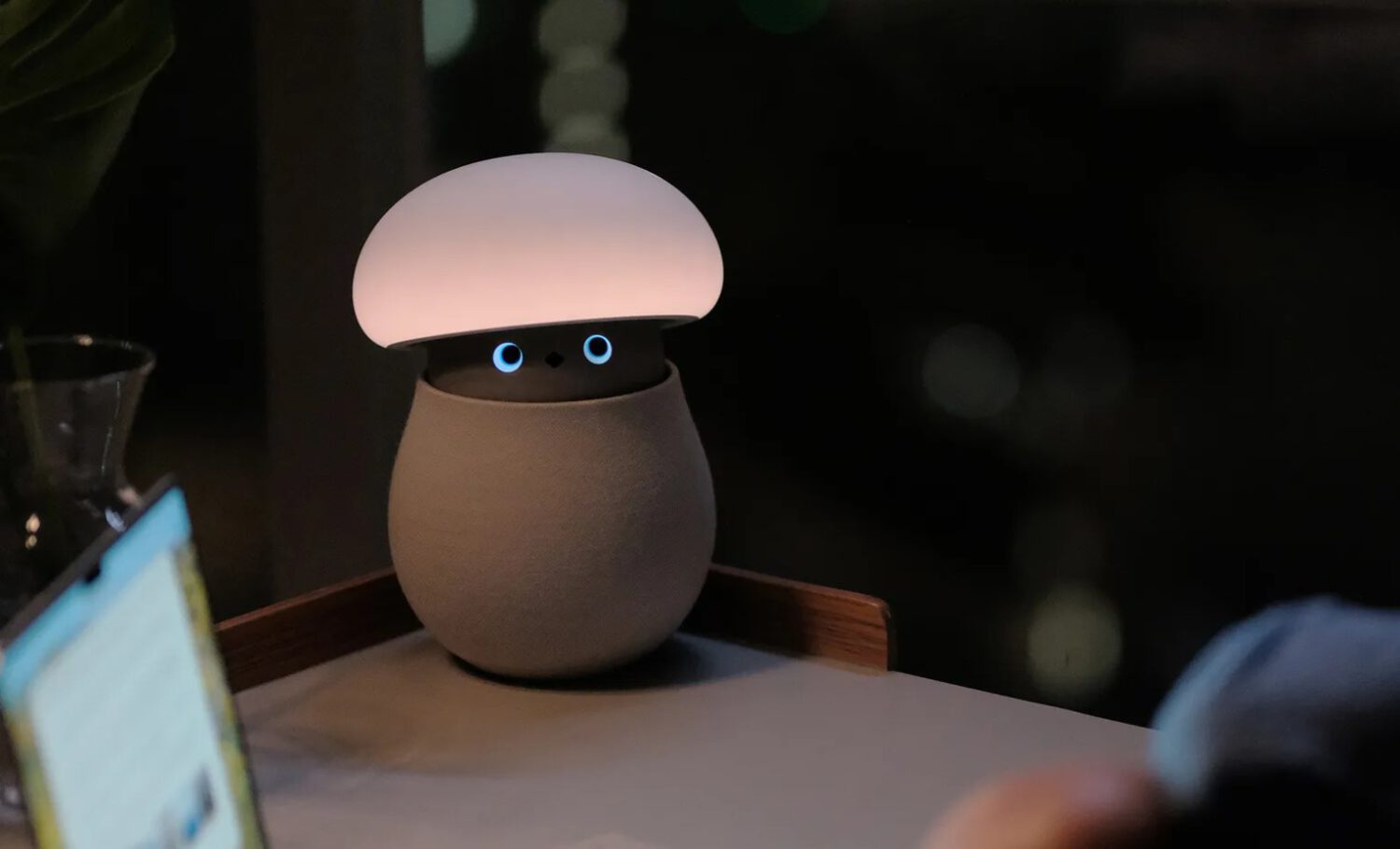
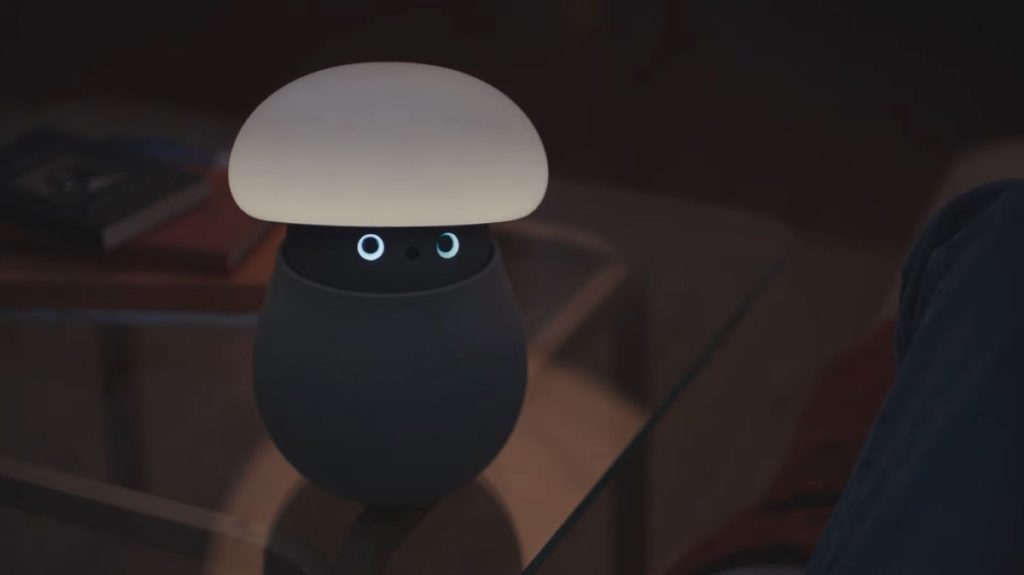
Mori is a nearly 12-inch mushroom-shaped robot with a wool-blend textile body, an illuminated cap, and a movable head. It sits on a shelf or table and reacts to its surroundings through light, movement, and nonverbal sounds rather than spoken responses or a screen.
Eyes Under the Cap
The cap lifts to reveal expressive eyes and a small camera, but retracted it reads more like a contemporary lamp than a consumer device.
OKA positions Mori as a “nature companion,” not an assistant. It turns toward someone entering a room, bobs along to music, reacts to activity on a nearby television, and goes still when the environment quiets down.
Rain Sounds, No Reminders
Mori’s feature set is specific and deliberately narrow, built around atmosphere rather than task completion.
It plays nature soundscapes, including rain, woodland environments, and campfire audio. Lighting shifts to match each soundscape, and Mori can also guide users through breathing exercises.
According to OKA, the device will not answer questions, control smart lights, or respond to voice commands. OKA’s “Attentive Intelligence“ system determines whether a situation calls for a response or continued stillness. That non-response is framed as a design decision, not a gap.
Privacy, As Described by OKA
OKA says all processing happens on the device itself, though these claims have not been independently audited.
According to OKA, photos and audio are processed on-device and raw files are discarded after use. The company says facial-feature data is encrypted and not transmitted to external servers.
A double-tap turns off the microphone. Retracting Mori’s head covers the camera and returns the device to a lamp-like state.
The Founders’ Argument
OKA was built on a deliberate turn away from technology designed to capture and hold attention.
OKA, which stands for One Kind Artifact, was founded by Hua Wang and Weizhe Chen. Wang has described the company as a move away from apps and platforms engineered to hold attention.
Mori is the first of five planned “Artifacts” in OKA’s planned series. The company’s stated goal is technology that asks less of people rather than more.
What It Actually Costs
The price depends on when a buyer entered, and ongoing subscription costs add meaningfully to the total.
The Founder Edition launched at $649 for a limited run of several hundred units, with two years of hardware coverage and two years of the nature-sound subscription included. At launch, standard preorders were listed at approximately $799, with a retail price expected to reach $849.
After the included subscription period, access to richer soundscapes and nature scenes was priced at $17 per month or $80 per year at launch, though subscription terms have since changed. Breathing guidance remains available without a subscription. Early delivery estimates extended into late December, indicating initial availability was limited.
The Central Question
The real test is whether designed presence and emotional atmosphere justify a price that far exceeds a lamp or a smart speaker.
At $849 before ongoing subscription costs, Mori carries a significant premium over conventional alternatives. Its value depends on whether subtle ambient reactions, nature soundscapes, and deliberate quiet feel worth that difference.
For buyers who want one less screen in a room and no voice assistant waiting for a wake word, Mori may be a clean fit. For anyone expecting measurable utility, the math is harder to close.