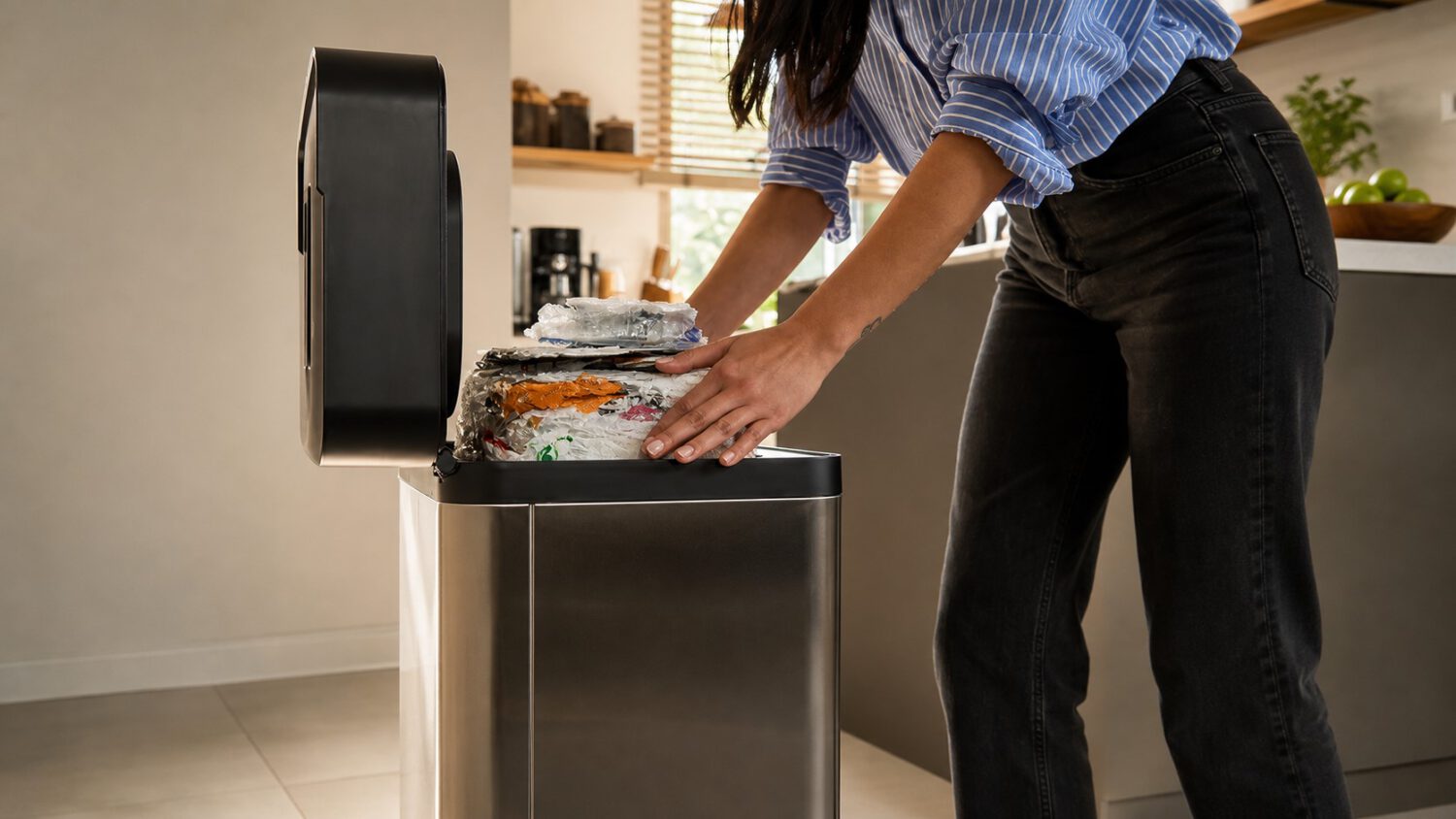
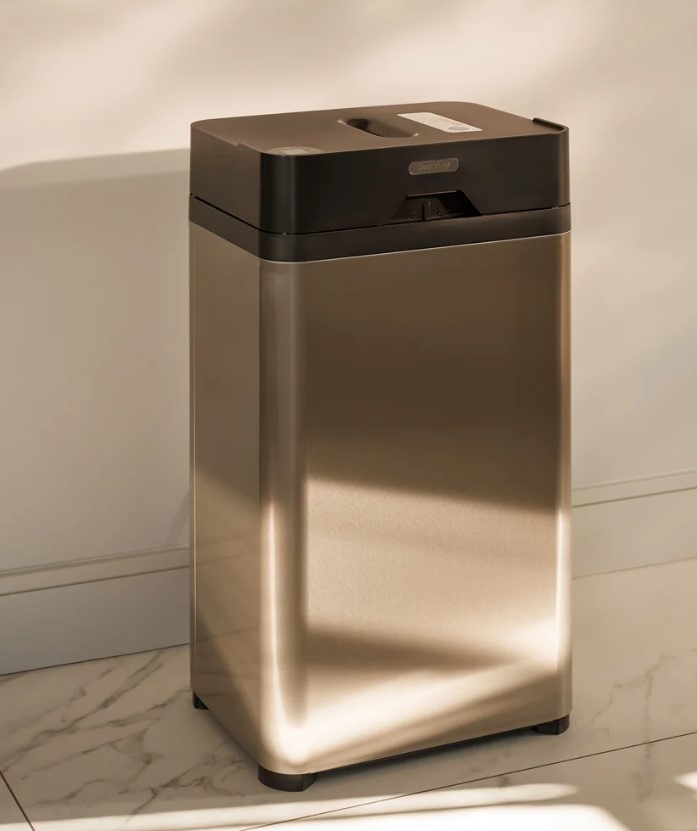
Soft plastic films, including grocery bags, bubble wrap, cling wrap, zip-top bags, and shipping mailers, tangle and damage the sorting equipment at many municipal recycling facilities. ClearDrop‘s Soft Plastic Compactor (SPC) is a $1,399 household appliance designed to compress those rejected materials into dense, shippable blocks before they reach a recycling partner.
What the Machine Actually Does
Heat and compression form each block, which ClearDrop estimates at roughly 12 x 8 x 4 inches and about 3.3 pounds.
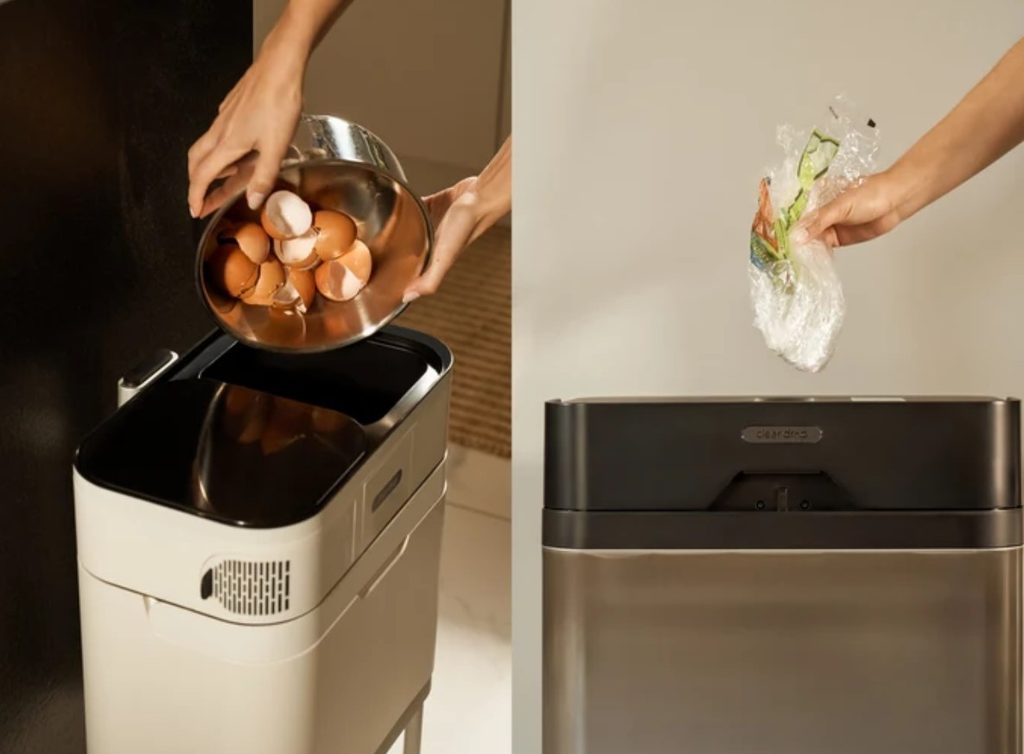
The SPC accepts flexible plastics including #2 HDPE, #4 LDPE, #5 polypropylene, and limited expanded polyethylene. That covers shopping bags, produce bags, bubble wrap, stretch film, zip-top bags, and shipping mailers, though acceptance depends on polymer type, contamination level, and construction.
The unit uses heat and compression to form each block. According to the company’s product page, an average household fills approximately one block per month, and the completed block ships back through a prepaid mailer.
What to Test Before You Trust It
Setup time, noise, odors, and which everyday packaging the machine will actually accept are the first things any hands-on review must establish.
A thorough hands-on review needs to record setup time, counter or floor footprint, loading effort, operating noise, and any heat or odor produced during the compression cycle. Block ejection and cleaning requirements are worth documenting separately, since both affect daily usability.
Tracking how long a real household takes to fill one block matters as much as the machine’s mechanics. Multilayer snack wrappers, metalized film, and food-residue packaging are useful edge cases for revealing practical limits.
ClearDrop’s manual specifies that accepted materials must be flexible. It does not address whether labels, adhesives, or minor food residue require removal before loading, so that detail needs written clarification from the company as well as confirmation through a live test.
Two Ways to Pay, One Price to Confirm
The upfront cost is $1,399; the monthly alternative runs longer and costs more overall.
ClearDrop’s product page presents two purchase structures, and both should be confirmed directly with the company before publication. The first option is a $1,399 upfront payment described as including prepaid shipping for 20 blocks, roughly one year of recycling service.
A second payment structure has also appeared in published descriptions, though the exact terms vary across sources and should not be treated as settled without a dated screenshot or written confirmation from ClearDrop. Where free store drop-off programs exist for soft plastics, the total cost of the SPC deserves honest comparison against that alternative , and readers wary of paying too much should weigh that context carefully.
The Claim That Still Needs Documentation
ClearDrop says every block is tracked and guaranteed out of landfills, but no independent source has confirmed that guarantee covers every returned block.
ClearDrop names Frankfort Plastics in Indiana as its processing partner. According to the company, returned blocks are sorted, shredded, cleaned, and converted into feedstock for products such as benches, decking, and outdoor furniture.
The company also states that blocks are tracked and guaranteed not to reach landfills or overseas markets. Independent reporting has observed ClearDrop blocks being processed at Frankfort, but that reporting does not establish an audited guarantee covering every block. No chain-of-custody record, mass-balance documentation, or rejected-load policy was found in the materials reviewed. Any final review should request that documentation specifically and describe it in detail if supplied.
The Carbon Math Is Incomplete
Denser blocks could improve shipping efficiency compared with loose film, but the full environmental picture remains unavailable.
The SPC uses electricity to compress and heat-seal each block, and return shipping adds transportation emissions. Net environmental benefit depends on processing yield, energy consumption figures, and the fate of any material the recycler cannot use.
Those figures were not found in the materials reviewed. The article should state that gap plainly rather than assume a positive outcome.
A Conditional Answer
The SPC may suit the right household, but that word “may” is carrying significant weight.
Households with high soft-plastic output and no accessible collection point have the clearest potential use case for the SPC. Its value is conditional on verified downstream recycling and pricing terms confirmed in writing.
ClearDrop’s recycling guarantee should not be presented as independently established until documentation supports it.
Disclosure: This article should state clearly whether the review unit was supplied by ClearDrop and whether an affiliate relationship exists that could result in a commission from purchases.