Permits for xAI’s Mississippi power plant authorize carbon monoxide emissions at twice the rate allowed for the site’s other turbines. That arrangement is now drawing legal scrutiny in a region that has dealt with the company’s permitting problems before.
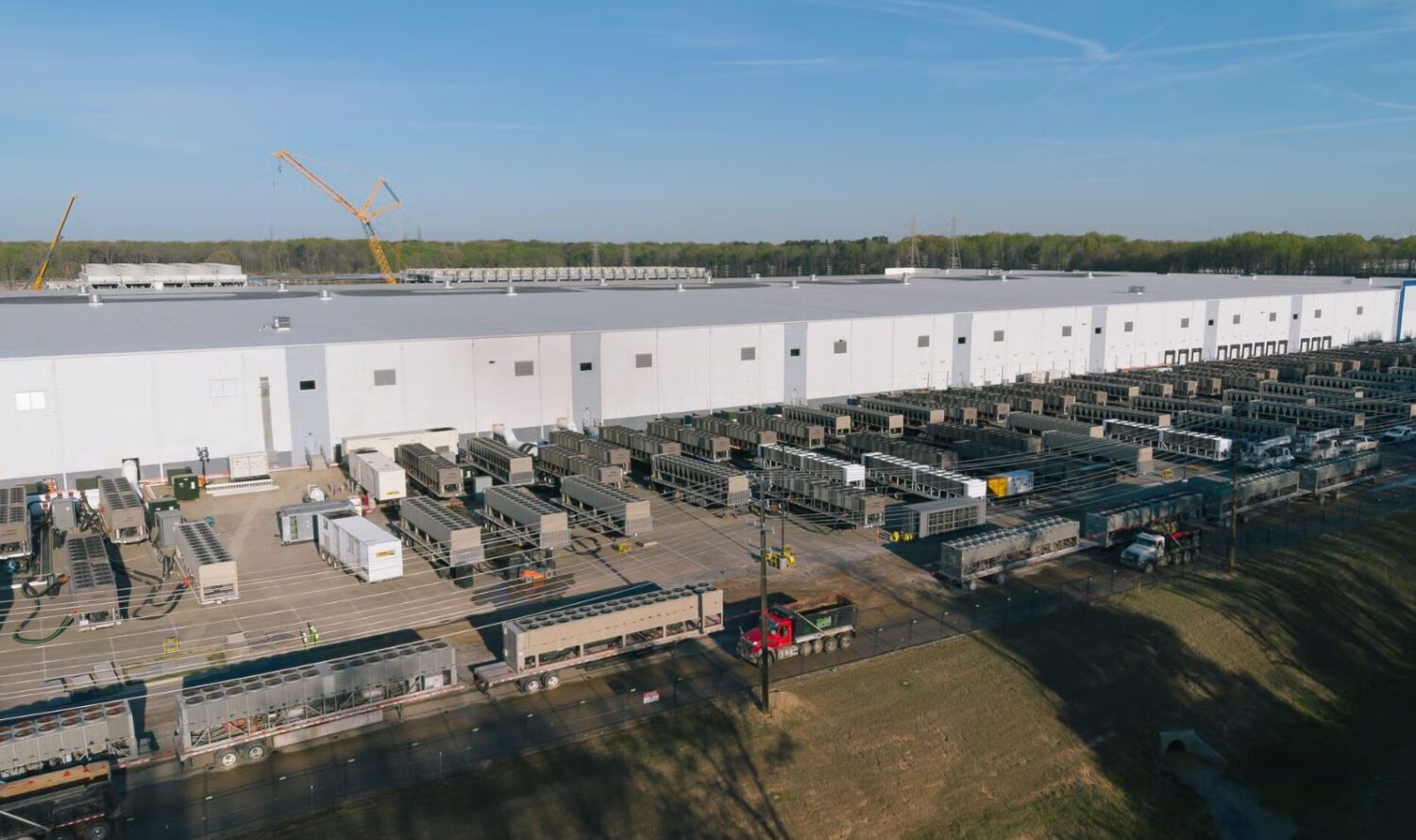
The plant serves Colossus 2, xAI’s artificial-intelligence data center near Memphis, Tennessee. Eight converted aircraft-engine turbines, supplied by Missouri-based ProEnergy, form the core of the installation. ProEnergy refurbishes General Electric engine cores for stationary power generation; according to the New York Times, those cores previously flew on Boeing 747s, though that detail should be confirmed against the original report.
Each turbine can generate up to 50 megawatts. Combined, the eight units represent a potential 400 megawatts of generating capacity.
Permitted Pollutant Levels Exceed the Site’s Own Benchmarks
The eight ProEnergy units carry a carbon monoxide limit of 4 parts per million, double the limit set for the other 33 turbines on the same property.
Mississippi’s air permits allow the eight converted turbines to emit carbon monoxide at twice the rate authorized for other turbines on the same property. Volatile organic compounds, or VOCs, are permitted at a level 25 percent higher than the site’s other units.
Carbon monoxide interferes with the body’s ability to transport oxygen. VOCs contribute to smog formation and can carry toxic effects depending on the specific compound and exposure level.
A Legal Challenge Questions Whether the Permits Are Enough
A permit appeal filed by the Southern Environmental Law Center, on behalf of the NAACP, Young Gifted & Green, and the Safe and Sound Coalition, contests Mississippi regulators’ approval of the turbines.
A legal challenge filed by the Southern Environmental Law Center contests Mississippi’s approval of the turbines on behalf of environmental and community groups. The challenge alleges that xAI failed to provide adequate guarantees that the turbines meet emissions standards for pollutants including formaldehyde.
The groups also allege that xAI underestimated or failed to account for projected emissions tied to the data center’s power sources. They further argue that state regulators should have required pollution offsets or reductions elsewhere in the area. The status of that permit appeal remains unclear, and it is separate from earlier litigation over previously unpermitted turbines.
Neither xAI nor ProEnergy has publicly responded to these allegations; details of any direct response were not available at the time of publication.
Why Converted Jet Engines Are Appearing at Data Centers
Onsite generation using repurposed aircraft engines can reduce a developer’s reliance on slow-moving grid-interconnection queues, but the tradeoff is lower efficiency and higher emissions.
ProEnergy builds its units around refurbished aircraft-engine cores, adding cooling, emissions-control, and noise-reduction systems for stationary use. Even with those modifications, the converted turbines are reported by the New York Times to be less efficient and more polluting than turbines designed for conventional power plants.
Data-center developers are turning to this technology primarily for speed. Grid-interconnection queues are long, and utility infrastructure expansion may not arrive quickly enough to match surging AI data centers-related electricity demand. Onsite generation can reduce reliance on a conventional grid interconnection, though it still requires air permits, fuel supply, and construction approvals. This is a broader industry trend, not an arrangement unique to xAI.
The Region Has Been Here Before
A prior legal fight over xAI’s use of unpermitted gas generators near a densely populated area has made cumulative pollution a central and documented issue in the region.
This dispute follows an earlier legal fight over xAI’s use of gas generators without required permits in a nearby area. That conflict has made cumulative pollution a concrete concern for local residents and environmental groups, not a hypothetical one. The current permit appeal, layered on that history, raises questions about whether successive permitting decisions are adequately accounting for the total pollution burden on nearby communities.
A Policy Precedent May Be Taking Shape
How Mississippi resolves these competing permit and legal challenges could influence how other states and data-center developers approach onsite fossil-fuel generation.
Regulators who consistently accept elevated pollutant limits set a replicable precedent. Other data-center developers may seek identical terms as AI infrastructure demand grows.
A successful legal challenge, by contrast, could influence future permitting decisions by requiring additional emissions controls, pollution offsets, or more rigorous documentation. The outcome in Mississippi may serve as a reference point, in one direction or the other, for how communities weigh the electricity demands of AI infrastructure against public-health safeguards.