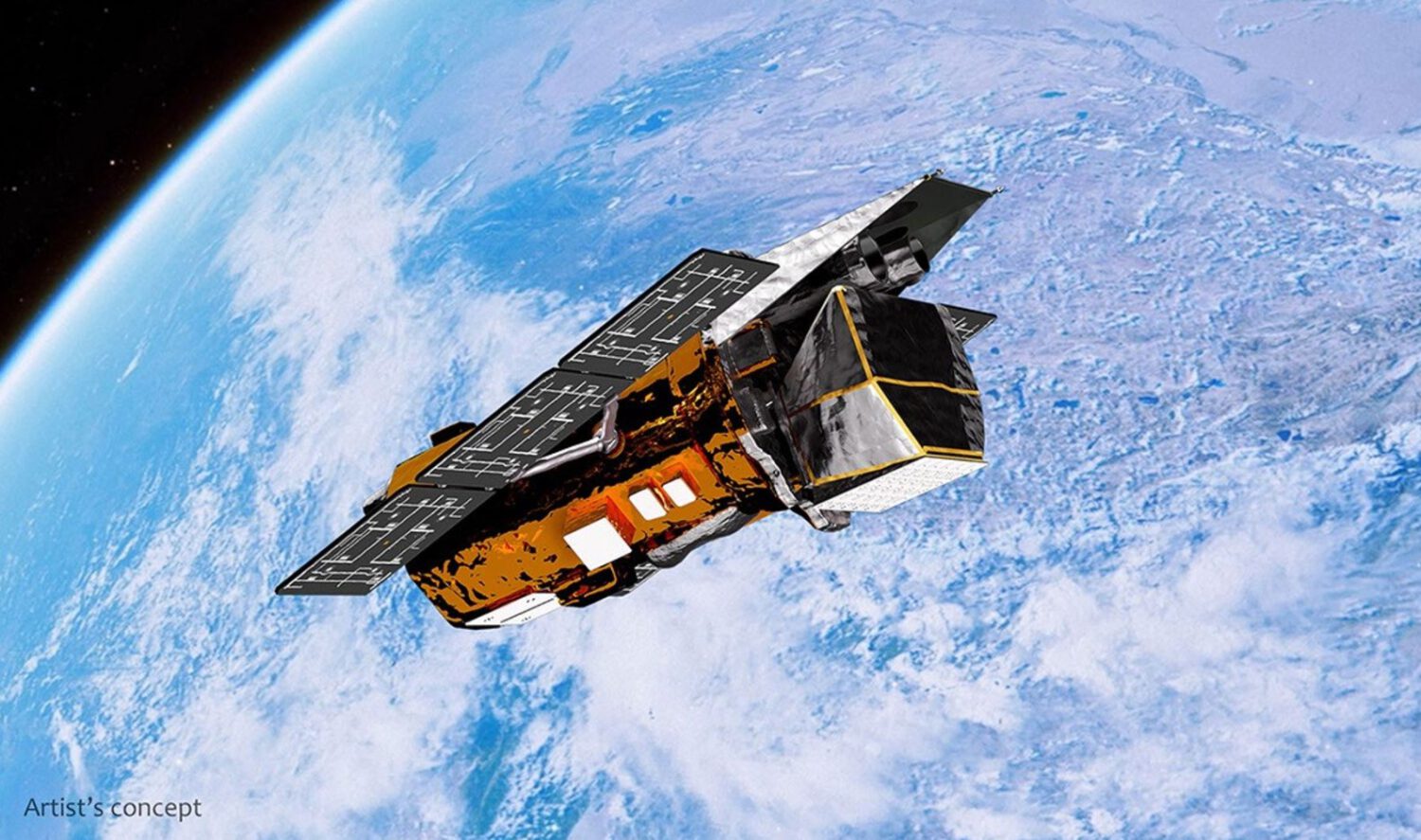
Designed for a two-year mission, NASA’s Neil Gehrels Swift Observatory lasted nearly 22. Now, with no way to correct its orbit, the spacecraft is coming down.
Why the Sun Ended Swift’s Run
Increased solar activity in 2024 heated and expanded Earth’s upper atmosphere, intensifying aerodynamic drag on the spacecraft. The observatory carried no propulsion system capable of pushing back against that drag and restoring a stable orbit.
NASA pursued a rescue. A robotic vehicle called LINK was designed to rendezvous with Swift and boost it to a higher orbit.
The attempt failed after multiple technical problems, including reaction-wheel failures, an uncontrolled spin, and propulsion issues that left the vehicle without sufficient fuel to complete the mission. The attempt was abandoned, and Swift’s descent continued monitored but unstoppable.
The observatory completed its final scientific observation on October 20.
When and Where It Comes Down
As of November 2, 2026, NASA forecast reentry around November 4, near 3:30 a.m. Eastern time, with an uncertainty window of approximately 11 hours. That estimate is subject to change as the spacecraft loses altitude.
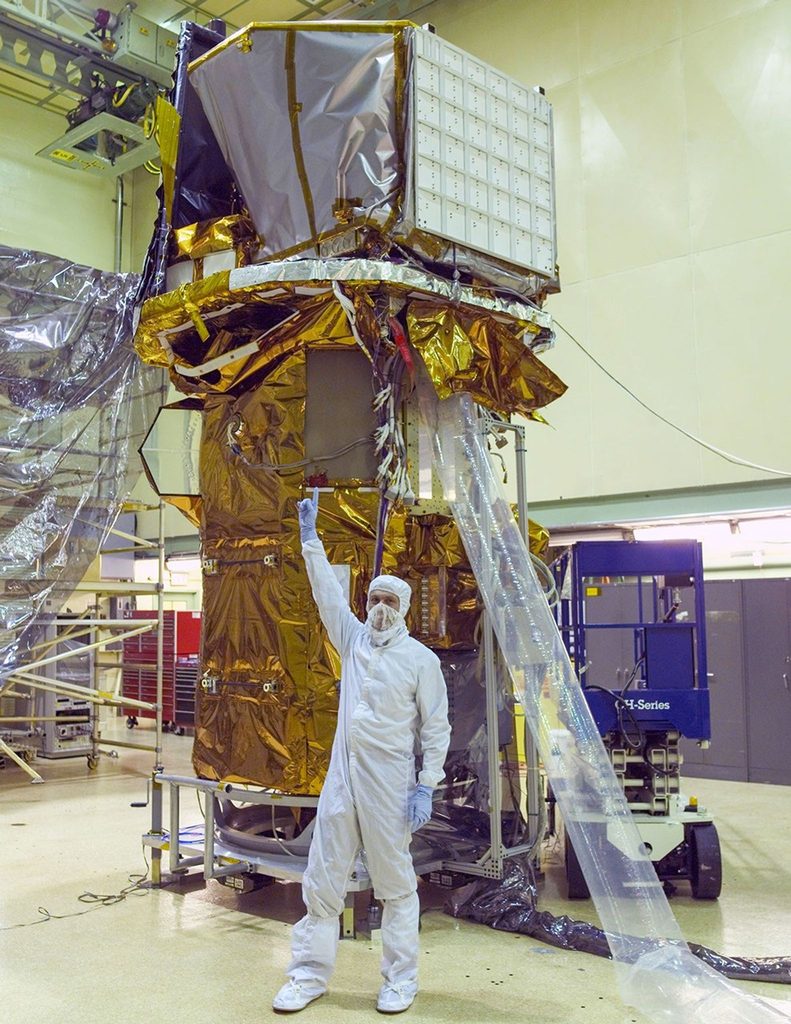
Swift weighs roughly 3,200 pounds. Most of the spacecraft will burn up during reentry. Denser components, including tungsten parts, reaction wheels, and fragments of the telescope’s optical hardware, may survive the descent and reach the surface as small, damaged pieces.
The Risk in Plain Terms
NASA puts the odds of harm to any person at approximately 1 in 2,100, reflecting both the spacecraft’s largely ocean-spanning corridor and the degree of burnup expected.
Swift’s low-inclination orbit limits the possible debris corridor to latitudes between 20.6 degrees north and 20.6 degrees south. That band includes parts of Africa, South and Southeast Asia, Australia, and Central and South America, though much of its surface area is open ocean.
Visible reentry is possible but unlikely for most observers, requiring the spacecraft to come down near a populated area under favorable nighttime conditions, among other factors.
What Swift Left Behind
Launched on November 20, 2004, Swift operated far beyond its original two-year design life. It detected more than 2,000 gamma-ray bursts, the most energetic explosions in the known universe, and contributed data to more than 7,000 scientific papers.
Its rapid-response design allowed it to determine a burst’s location quickly and notify ground- and space-based observatories to follow up on the same coordinates. That capability helped confirm that at least some short gamma-ray bursts are produced by collisions between neutron stars, a finding with significant implications for understanding how heavy elements form, though the conclusion rests on observations from multiple facilities.
Swift also observed supernovae, active galaxies, stellar flares, and tidal disruption events. That last term describes a black hole tearing a star apart. According to NASA, the observatory’s archived multiwavelength data are expected to support new research for decades after the hardware is gone.
The spacecraft falls. The science does not.