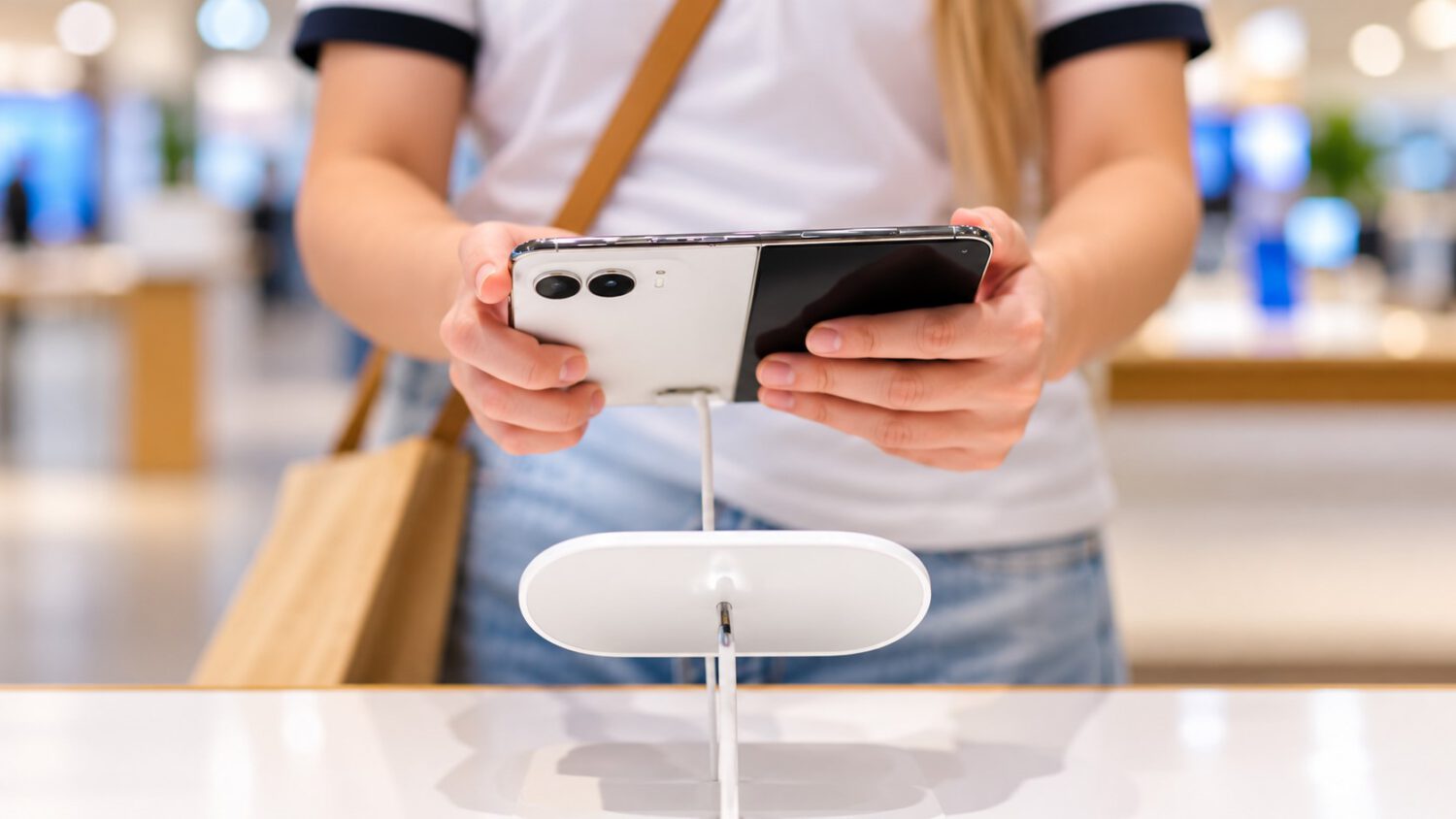
Research firm TrendForce is forecasting that Apple could own nearly 30% of global foldable-smartphone shipments by 2027, a striking position for a brand that only recently entered the category. That projection suggests the iPhone Duo’s arrival is expected to meaningfully alter an established competitive order.
What the Numbers Actually Say
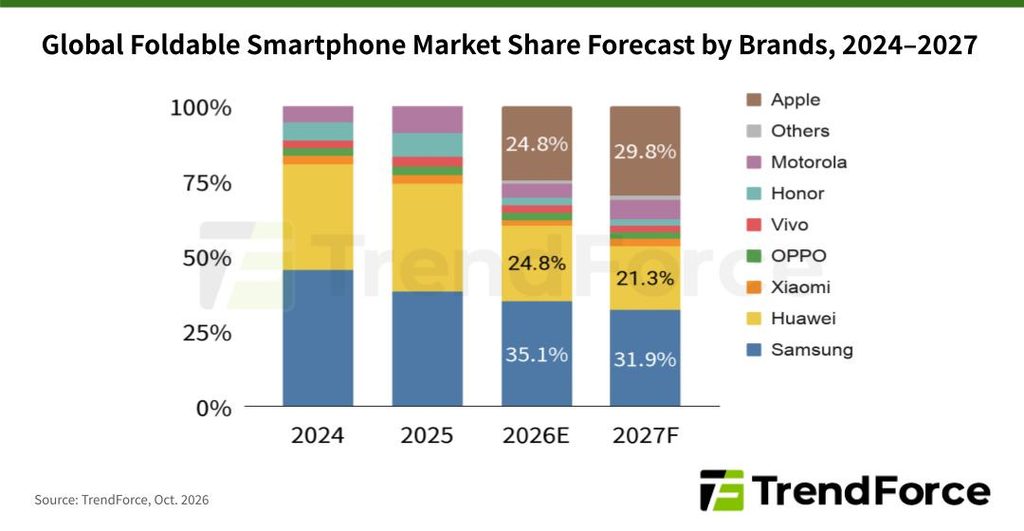
TrendForce’s figures show Apple rising, Samsung retreating, and Huawei losing ground across both forecast years.
TrendForce projects Apple’s share of global foldable shipments will rise from 24.8% in 2026 to 29.8% in 2027. Samsung is expected to remain the market leader, but its share is projected to fall from 35.1% in 2026 to 31.9% in 2027.
Huawei faces a steeper decline, falling from 24.8% in 2026 to 21.3% in 2027. That drop would place it behind Apple in the global rankings.
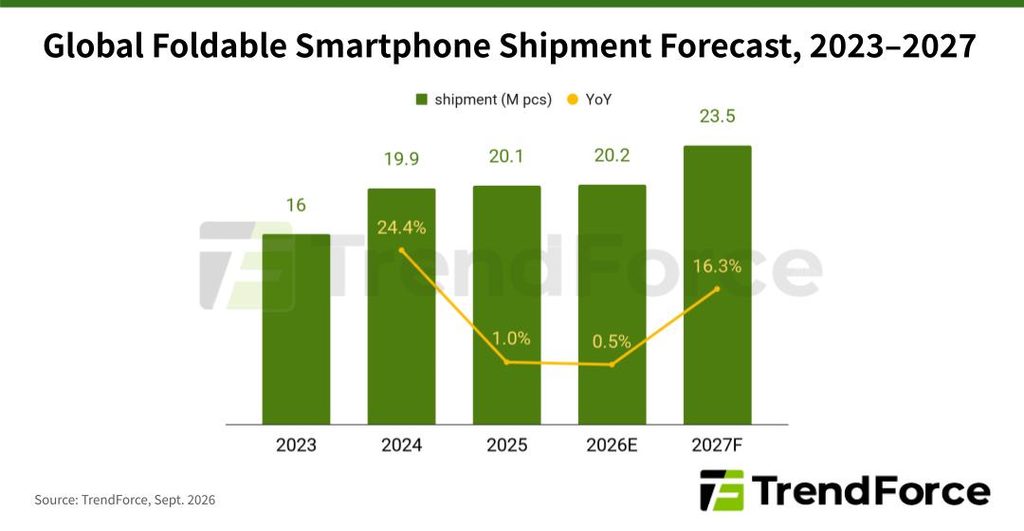
TrendForce estimates the total foldable market will grow from approximately 20.2 million units in 2026 to 23.5 million units in 2027, a 16.3% year-over-year increase. Apple’s estimated contribution to that 2026 figure is roughly 5 million iPhone Duo shipments.
Second Place Is Not a Consolation Prize
Apple’s projected share, even without the top position, could give it meaningful influence over how the foldable category develops.
Finishing behind Samsung does not necessarily limit Apple’s role in shaping foldable-smartphone standards. A near-30% share could give Apple considerable influence over app design expectations, accessory development, and what mainstream buyers come to expect from a foldable device.
TrendForce identifies Apple’s integrated combination of custom chips, operating system, and developer ecosystem as a potential differentiator. That level of hardware-software coordination is something rivals whose hardware may already be comparable would find difficult to match through any single product decision.
The Experience Looks Good. The Problems Are Real.
Early feedback points to genuine strengths, but unresolved software and hardware issues remain real concerns for potential buyers.
Early feedback on the iPhone Duo has reportedly praised the unfolded viewing experience and split-screen functionality. Those two features define the core value proposition of any book-style foldable.
The software picture is less settled. Some applications reportedly display black borders or fail to fill the entire unfolded screen. Addressing that gap will require meaningful adaptation from developers, as well as continued refinement at the platform level.
Reports of display damage and high repair estimates add a more tangible ownership risk. TrendForce cites fold-area reliability and hardware-software integration as ongoing challenges for the category, not just for Apple but for every manufacturer competing in it.
A Forecast Is Not a Result
The 29.8% figure reflects current projections and remains subject to change as market conditions evolve.
The 29.8% figure is a projection based on current data, not a confirmed outcome. Actual performance will depend on pricing, production capacity, consumer demand, and how quickly the broader foldable market grows.
New competing products launched before 2027 could shift the numbers in either direction. The foldable category is still expanding quickly enough that forecast revisions are a normal part of how the market is tracked.