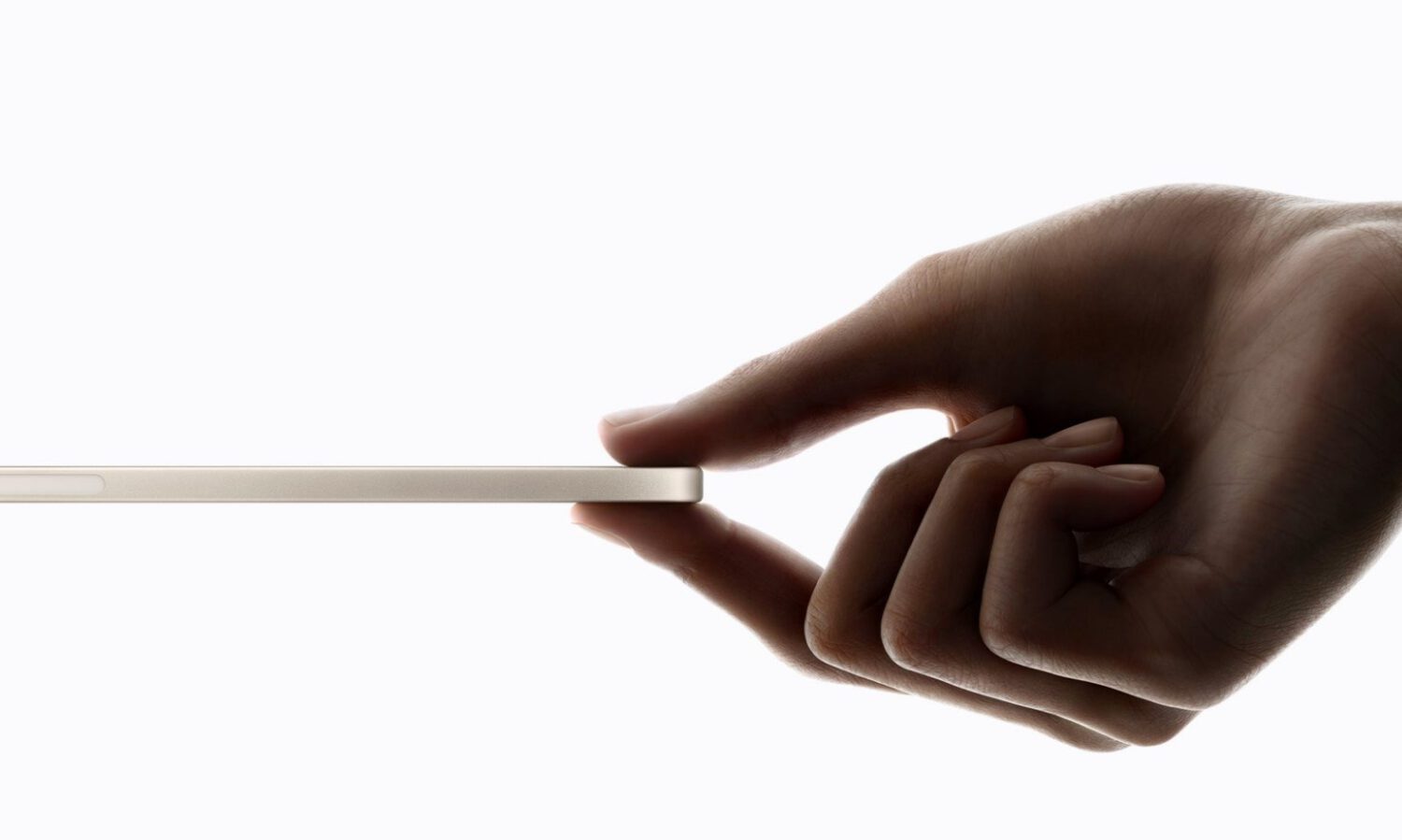
The same promotional image appears in most markets with a hand. In South Korea, according to multiple reports, the hand is gone. Other reported markets, including the United States and China, see a hand. South Korea sees the tablet alone.
Apple’s promotional imagery for the new OLED iPad mini shows the device pinched between a thumb and index finger in the United States, China, and other reported markets. On Apple’s South Korean website, according to multiple reports, that hand is absent.
The gesture appears intended to serve a specific marketing purpose. The new iPad mini measures 5.4mm thick, and the pinching hand gives that specification physical context by showing the tablet’s thin edge held between two fingers.
In South Korea, that same hand gesture carries contested political weight. The controversy surfaced in 2023, when Korean gamers accused Nexon of including imagery that players associated with Megalia in promotional material for MapleStory and other titles. This echoes broader debates around video games and cultural censorship.
Megalia was a now-defunct South Korean feminist online community. Nexon removed the relevant videos, issued an apology, and said it would investigate. Studio PPURI, the animation studio involved, said the gesture appeared as part of movement transitions rather than as an ideological statement.
Some Korean male online communities interpret the pinching gesture as a reference mocking Korean men’s genital size. Available reporting does not establish that reading as a universally accepted meaning; it is an interpretation that gained traction in specific online spaces.
The dispute remains genuinely contested. Feminist groups and other observers have argued that the reaction treats an ordinary hand movement as evidence of ideological intent. Reporting on the controversy documents opposing interpretations without resolving them.
Apple has not publicly confirmed any reason for removing the hand from South Korean promotional material. The motive attributed in reports, that Apple acted to avoid the gesture being read as an insult, is an inference drawn from the localization choice rather than a statement from the company.
Secondary reporting also suggests Apple made a similar edit to iPhone Air imagery for the South Korean market, though that comparison has not been independently confirmed.
What is verifiable is straightforward: the hand appears in other reported markets and does not appear in South Korea. The 2023 Nexon controversy and the gesture’s reported associations are independently documented; what remains inferential is the connection between that controversy and Apple’s specific localization decision.
The episode illustrates how global brands may adapt identical creative assets to local cultural and political sensitivities. Apple made the reported change without publicly explaining it. The product message, thinness, survives the edit, while the potentially controversial hand image is absent. Whether that decision reflects cultural awareness or overcorrection is a question Apple has not addressed publicly.