A Phase III study published July 27, 2026, in JAMA Pediatrics found that silver diamine fluoride (SDF) arrested cavitated dentin caries lesions in young children at 54% at six months. The placebo group reached only 22.5%.
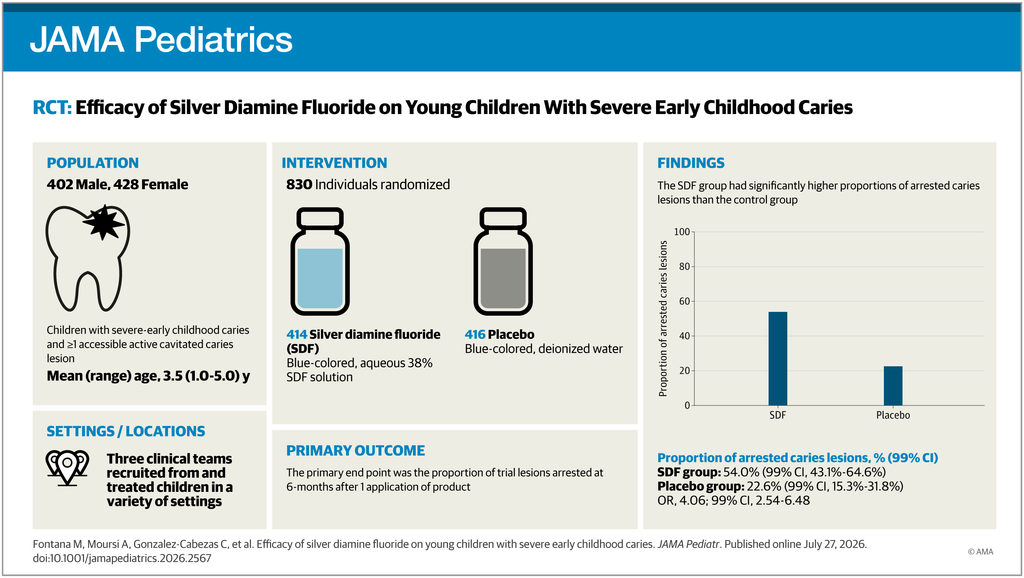
Visual Abstract.
For parents who have ever watched a toddler dissolve into panic at the dental chair, that number deserves attention.
SDF is currently FDA-cleared in the United States for tooth sensitivity only. Cavity treatment remains an off-label use, and this trial was designed specifically to generate the evidence that could change that.
How the Treatment Works
A small brush, no drill, no needle, no operating room.
A clinician paints SDF directly onto a cavity using a small sponge-tipped applicator. The process is fast and requires no removal of tooth structure, no injections and no sedation.
The catch is cosmetic: silver permanently darkens the decayed portion of the treated tooth. Some children need reapplication while the baby tooth is still in the mouth.
The treatment is most relevant for children too young to tolerate conventional restorative work, those with significant dental anxiety, or those with limited access to a dental office.
What the Trial Found
830 children, three states, eight months of follow-up data.
The University of Michigan-led study enrolled 830 generally healthy children aged 12 to 71 months with severe early childhood caries and active cavitated lesions. Recruitment spanned dental and medical clinics, Head Start programs and preschool programs across Michigan, New York and Iowa.
Children received either 38% SDF or placebo at baseline and again at six months, with examinations at three, six and eight months. Arrest rates in the SDF group were 57.5% at three months versus 18.8% with placebo, 54.0% versus 22.5% at six months, and 50.2% versus 17.4% at eight months.
Reported treatment-related adverse events were similar between the two groups, at 47.3% for SDF and 43.3% for placebo. The study was conducted with partners at NYU, the University of Iowa and Indiana University.
What It Means for Regulation and Your Child’s Care
FDA approval is not here yet, but the evidence now exists to pursue it.
SDF’s current FDA clearance covers tooth sensitivity, not cavities. Researchers designed this trial to support a formal drug-approval application, which a manufacturer would need to file separately with the FDA.
If that approval comes, the practical consequences could be significant. Insurers could reimburse more consistently, deployment in pediatric medical practices and school-based health settings would become easier, and clinicians who have used SDF off-label for years would have a clearer regulatory footing. These remain possible outcomes, not guaranteed results of any approval.
SDF is not a replacement for comprehensive dental care. Children who receive it still need professional monitoring, preventive treatment and referral for teeth that require restoration, extraction or management of complications.
No approval has been granted, and coverage changes remain speculative until a regulatory decision is made. The evidence is now strong enough to have an informed conversation with your child’s dentist or pediatrician about whether SDF is appropriate for your child’s specific situation. The next step belongs to regulators.