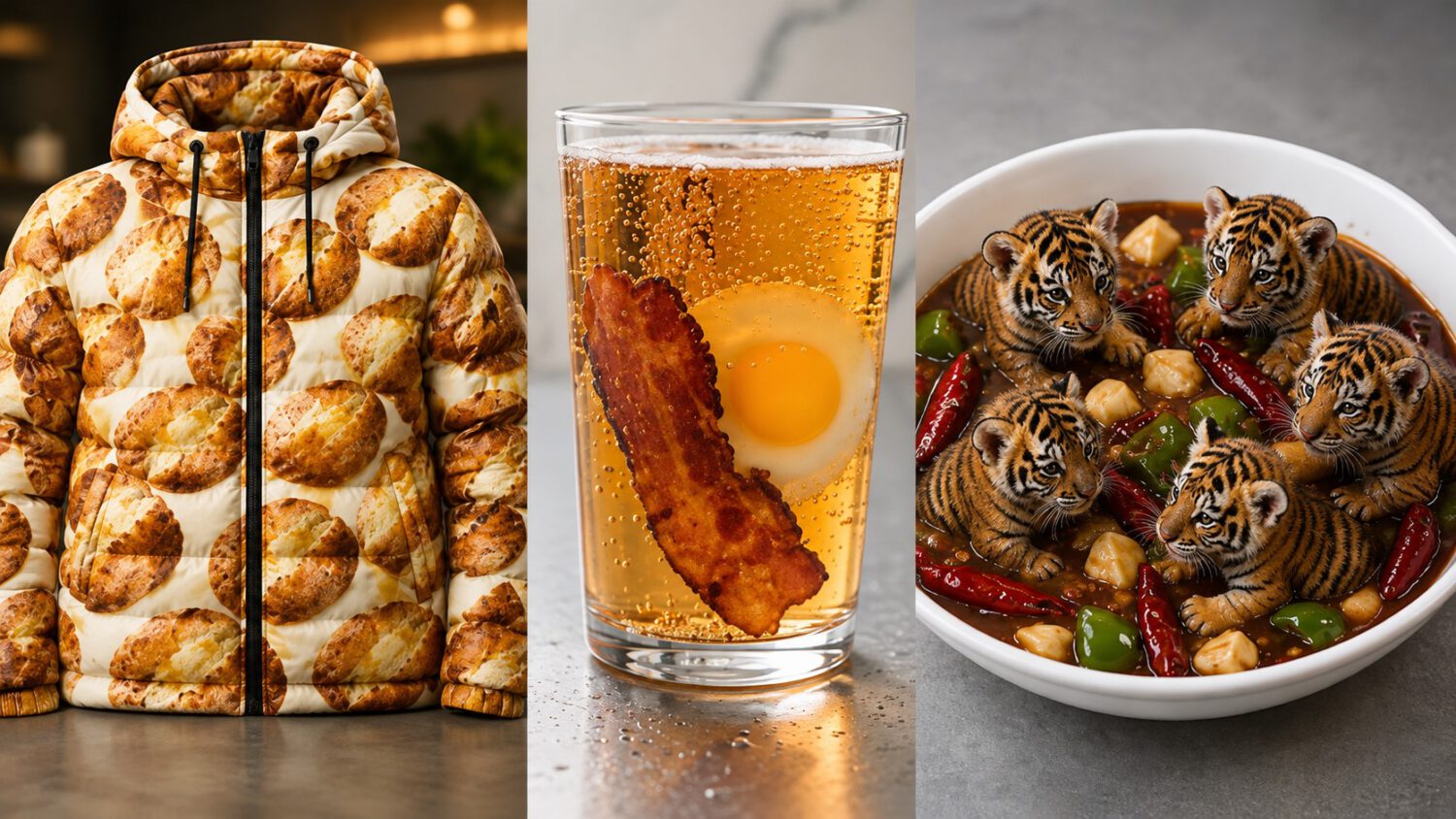
Somewhere in a Northern Ireland café, someone makes a perfectly reasonable bacon-and-egg soda bread. On Just Eat’s platform, that dish reportedly appeared as bacon and a fried egg floating inside a glass of cola. The AI read “soda” and committed fully to the bit.
This would be funnier if inaccurate food images were purely a visual quirk. They are not. When you order based on a photograph, you expect the food to match, and when it does not, the restaurant tends to absorb the frustration rather than the algorithm that conjured a fizzy drink.
When the AI Took Every Word Personally
The system was built to help small restaurants look more complete online; what it actually built was a surrealist art exhibit.
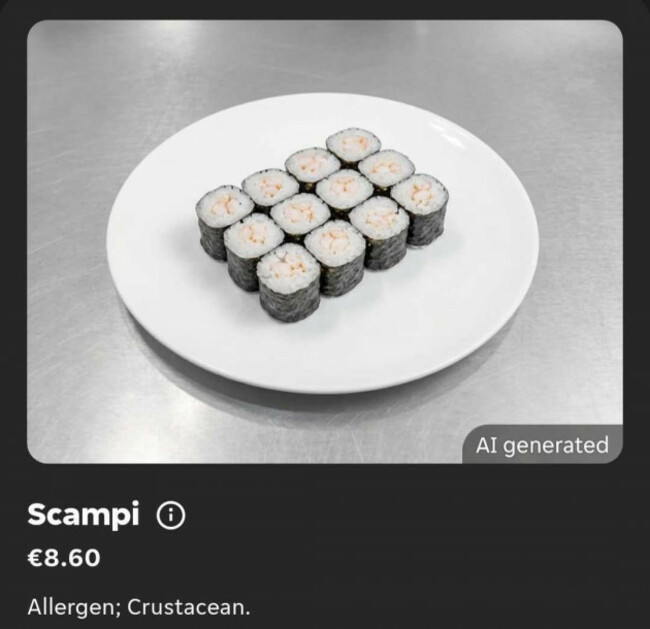
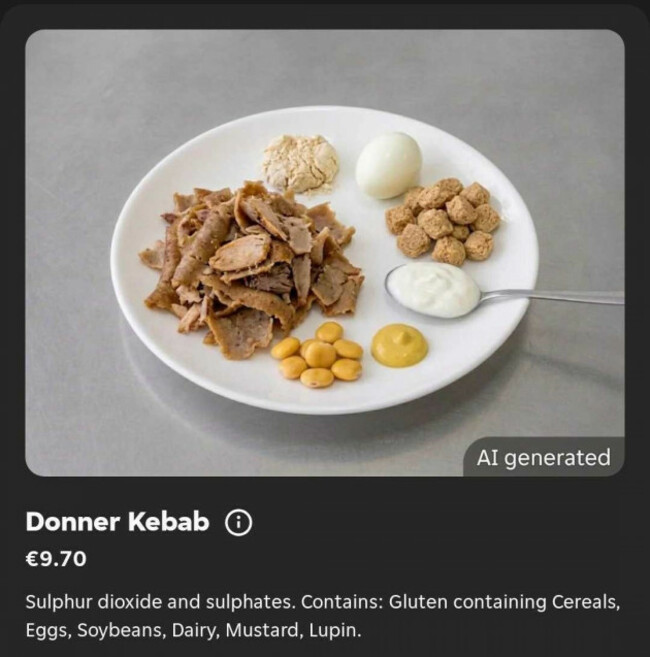
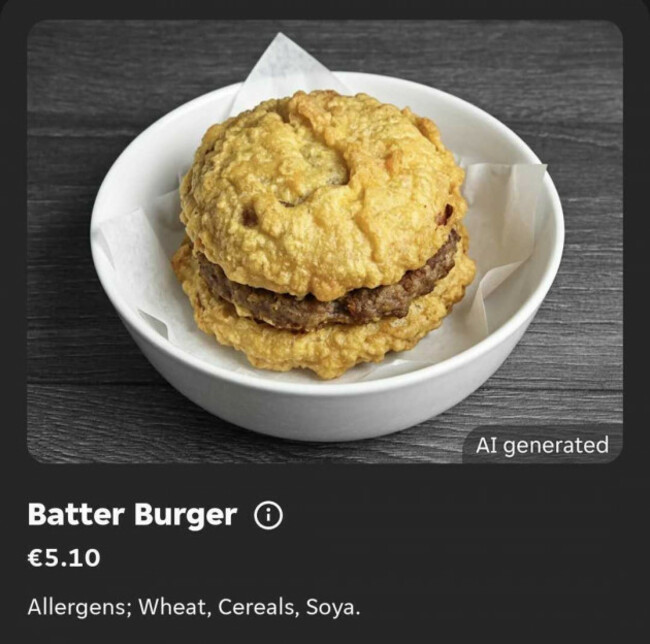
Just Eat’s intent was reasonable enough. Small restaurants often lack professional food photography, leaving menu listings bare. The company trialed an AI system to generate placeholder images for dishes that lacked photographs, labeled as AI-generated, to fill those gaps. Just Eat told The Journal that every image was manually reviewed before going live.
The results suggest those reviewers had a very different lunch experience than the rest of us.
A “jacket potato” reportedly appeared as a winter jacket covered in potatoes. “Tiger prawn” reportedly produced a bowl of tiger cubs in sauce, which is exactly as unsettling as it sounds. “Garlic bread plain,” apparently tripped up by a spelling or interpretation quirk, came out as an airplane constructed from garlic bread. Cheese rolls were rendered as sushi-style creations. Chips turned up poking out of muffins.
It has the same energy as feeding a recent-era chatbot a creative brief and watching it take every metaphor at face value: technically responsive, catastrophically wrong. The system appears to have guessed confidently whenever language was ambiguous, which, in the world of regional food names, is most of the time.
The Manual Review That Did Not Review Enough
Every image reportedly cleared a human check before publication, which raises an obvious and uncomfortable question.
Just Eat said every image was manually checked before going live, according to The Journal. That means a real person looked at tiger cubs simmering in sauce and either approved it or missed it entirely.
Manual oversight only works when reviewers have enough regional and culinary knowledge to recognize implausible outputs. If you grew up around soda bread, you catch the error immediately. If you did not, “bacon soda” might read as exactly the kind of eccentric modern dish name a trendy café would absolutely put on a menu.
Just Eat acknowledged that some examples circulating online were not actually produced by its tool, so the precise number of genuine errors remains unclear. The company said it was removing incorrect images and pausing the rollout while developing the system further. A spokesperson, as reported by The Independent, said customers should feel confident about what they are ordering and satisfied when the food arrives. That standard and the tiger-cub bowl are difficult to reconcile.
It is also worth noting that the cost of these errors falls most directly on restaurant owners, whose menus were publicly represented by images they did not commission. Just Eat says the tool is paused, not scrapped, and the underlying goal of helping smaller businesses populate listings is a credible one. Owners curious about better-vetted tools may find that AI-powered websites offer more reliable starting points for managing their digital presence.
Any next version needs restaurant sign-off before images go live. It also needs anomaly detection capable of flagging a bowl of wild animals as suspicious, and enough culinary grounding to understand that soda bread is bread, not a beverage, and definitely not a branding opportunity.