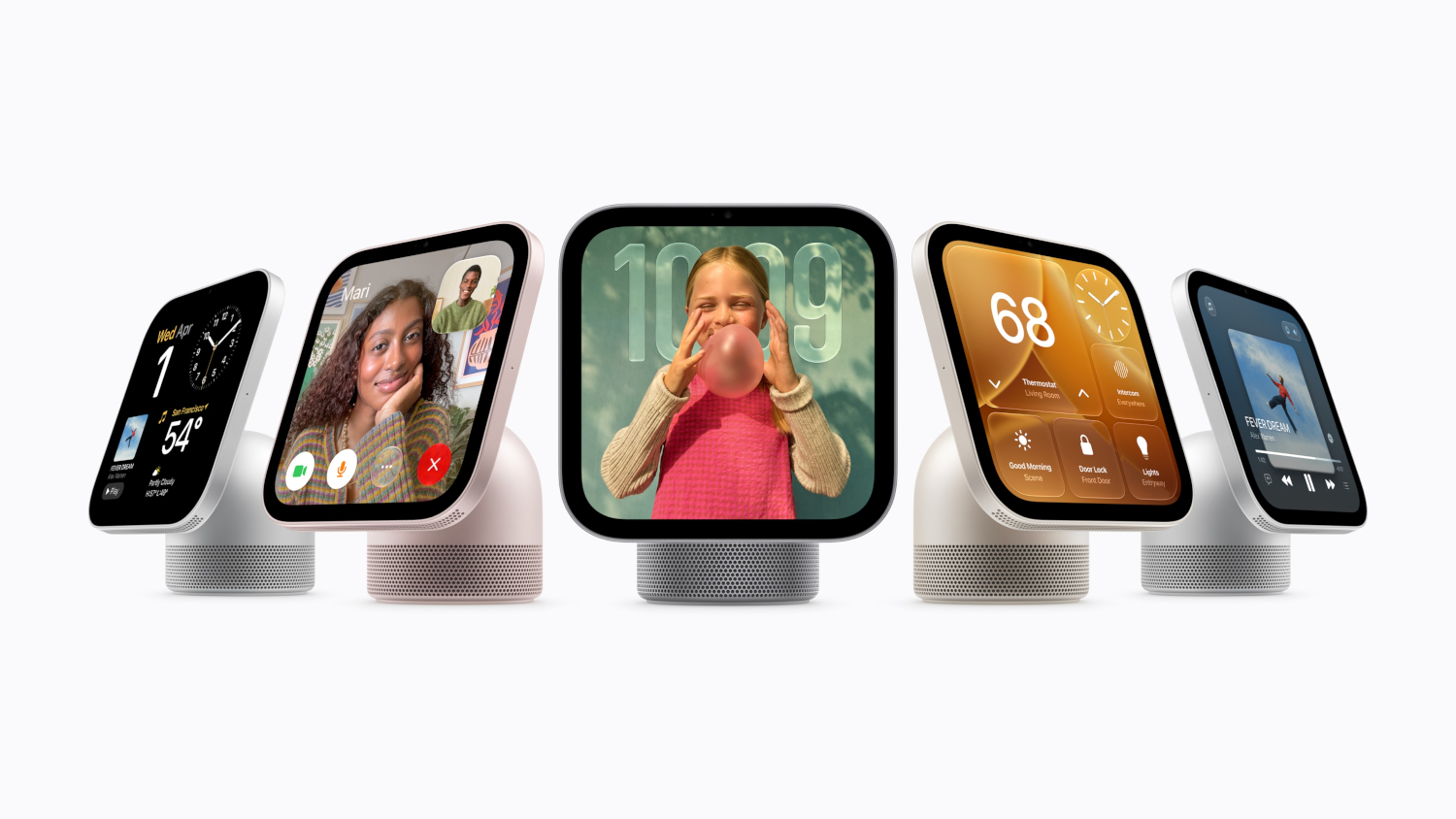
Many Apple households share a familiar frustration: one HomePod in the corner playing whoever’s music was last requested, with no idea who’s actually standing in the room. HomeView is Apple’s answer to that, available November 13 at $299 in the United States for both the tabletop and wall-mounted versions.
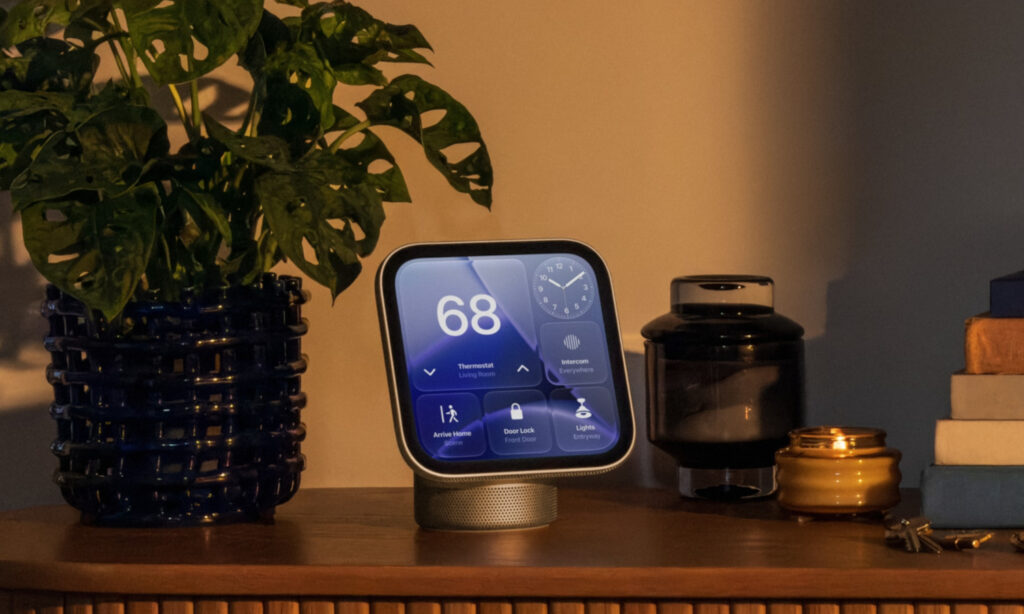
One Screen, Six Different Home Pages
Apple’s new home display adapts its interface to the person standing in front of it, not just the person who set it up.
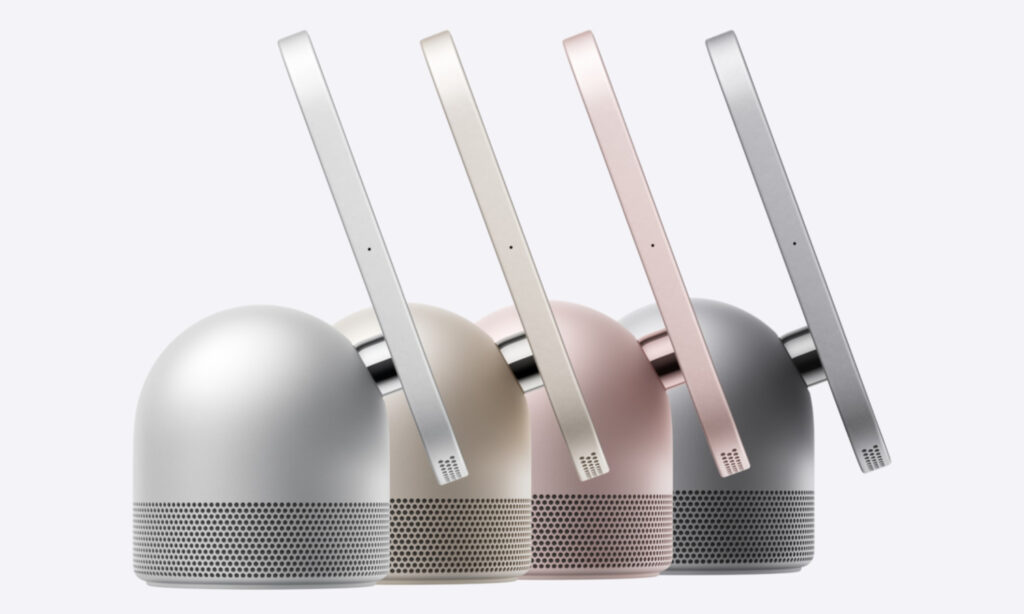
Apple’s hardware starts with a 7-inch Liquid Retina display running 1088-by-1088 pixels at 220 pixels per inch, True Tone, and brightness ranging from 0.3 to 500 nits. The tabletop version pairs an aluminum enclosure with a stainless-steel tilting hinge and a domed speaker base. It comes in silver, starlight, rose pink, and space gray, while the wall-mount option is offered in silver and space gray. HomeView runs Apple’s A18 chip across both configurations.
Your Home Screen, Not Theirs
Facial recognition gives each of up to six household members a personalized Home Screen, but personal content stays gated behind your phone.
HomeView’s facial recognition identifies up to six people and assigns each a personal Home Screen with individual apps and widgets. Your Messages and Calendar content appears only when HomeView recognizes you and your paired iPhone or iPad is nearby and recently unlocked. Shared content, including family albums, Apple Music, and home controls, stays accessible to all household members.
Siri Got an Upgrade, With Conditions
Siri AI on HomeView is more conversational than before, but the most useful features require a compatible paired device and are still in beta.
According to Apple, Siri AI on HomeView is a more conversational assistant with broad world knowledge, music discovery, and awareness of what is on the screen. Personal-context features require a paired Apple Intelligence-enabled iPhone or iPad; that is how Siri pulls from your Calendar, Messages, and Apple Music to tailor its responses. Siri AI launches in beta with HomeView software version 27.2, so its full capabilities are not yet final.
Entertainment, Calls, and Every Camera in Your House
HomeView handles streaming, FaceTime, kitchen timers, and up to nine live camera feeds from one device.
Apple Music, Podcasts, Apple TV, and compatible third-party apps all run on HomeView. The speaker system includes two full-range drivers, a down-firing woofer, passive radiators, and computational audio. Apple claims the system optimizes loudness and bass in real time, though no independent audio testing was identified in the sources reviewed. FaceTime includes Center Stage framing, Intercom reaches HomePod speakers along with your iPhone and Apple Watch, and the Home Camera view can display up to nine camera feeds simultaneously. Encrypted recognition of people, pets, packages, and vehicles is available through HomeKit Secure Video, but it requires an iCloud+ subscription and compatible cameras.
What You Should Know Before Ordering
Personal context, encrypted camera recognition, and a capable Siri each require additional hardware, subscriptions, or patience.
HomeView enters a crowded category alongside the Amazon Echo Show, Google Nest Hub, and an iPad propped on your counter. Several headline features are conditional: personal Siri context needs a paired Apple Intelligence device, encrypted camera recognition requires iCloud+, and the AI assistant launches in beta. No independent reviews or benchmarks were identified in the sources reviewed, so audio quality, recognition accuracy, and real-world Siri performance remain manufacturer claims for now.
Pre-orders are open in the US, Canada, UK, Australia, New Zealand, and India, with units arriving November 13. If your household is already deep in the Apple ecosystem, HomeView has a credible case to make. How well it actually makes that case remains to be seen.