Eighty-seven acres of Central Texas land changed hands in 1999 for $10, with written language stating it would become public parkland. In April 2025, that same land sold for $10 million to a data-center developer. Whether the original deed language carries any continuing legal force is now the central question before a Texas appeals court and the state’s attorney general.
The 1999 transfer conveyed the property from the Bland family to the Texas Parks and Recreation Foundation, with language stating the land was “to be held in trust for future use as parkland.” That language was absent from every subsequent deed. The City of Taylor says no legally enforceable restriction attached to the property, while Pamela Griffin filed suit arguing that the restriction remains enforceable.
A Promise in the Deed
The property passed through public and nonprofit hands for more than two decades before landing with a data-center developer.
According to the Texas Attorney General’s office, the land moved from the Texas Parks and Recreation Foundation to a Williamson County parks nonprofit in 2003. Shortly after, it transferred to the City of Taylor. In 2009, the city transferred it to the Taylor Economic Development Corporation for $15,000 and 39 acres.
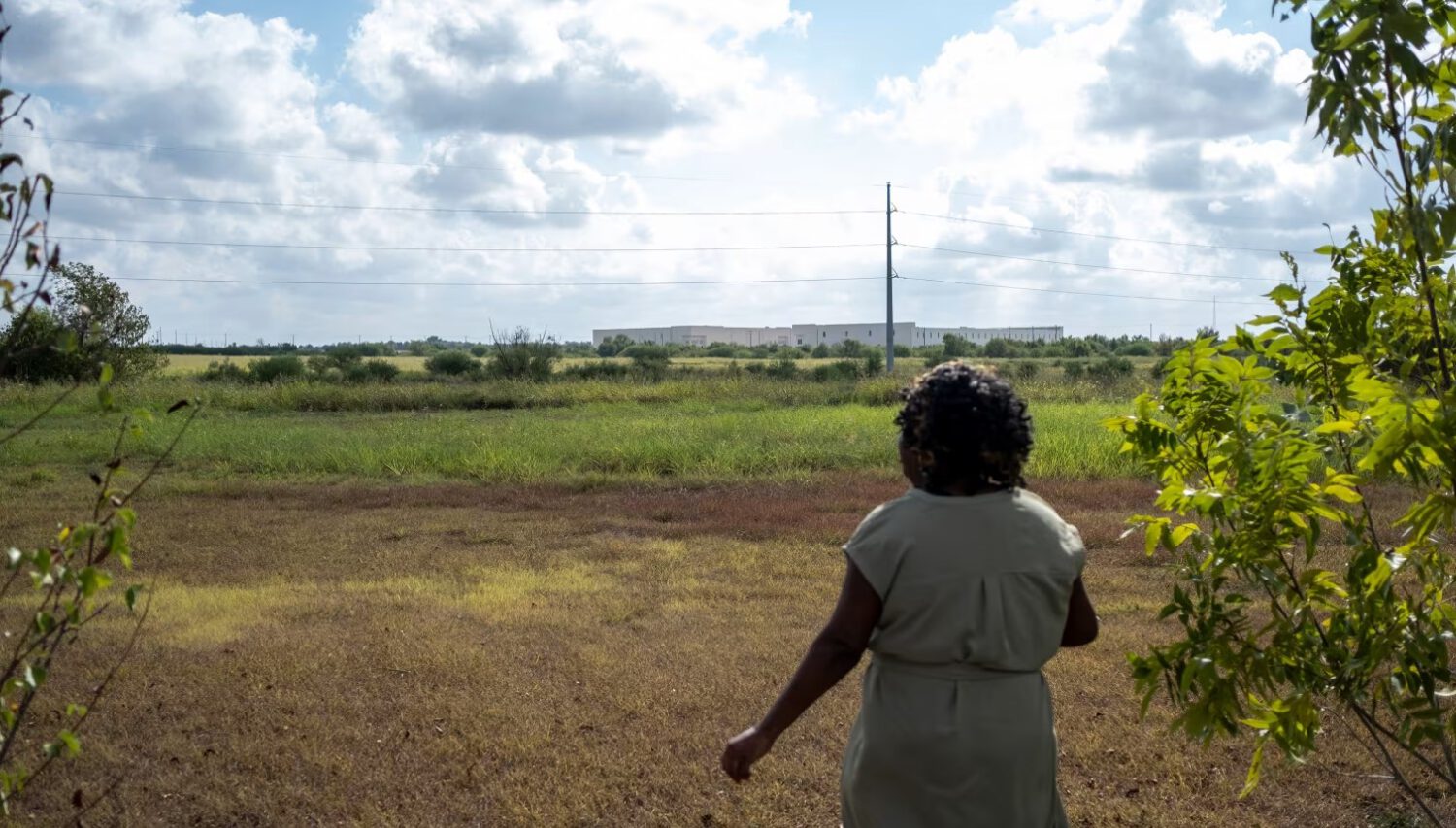
The economic development corporation sold the remaining parcel to NCP Travis TPP Project LLC, the entity associated with Blueprint Data Centers, for $10 million in April 2025. Griffin’s opposition extends beyond the legal question. Her grandmother, Addie Collins, bought property on Taylor’s south side after the Fair Housing Act prohibited housing discrimination, acquiring parcels for all eight of her children to build multigenerational economic security, according to CNN reporting.
Fannie Robinson Park, the first park serving Black residents in Taylor, had previously been a city dump and was associated with illness and rashes among neighborhood children, residents have said. The vacant lot near Griffin’s family home served as an informal playground for generations, according to CNN. “My daddy passed this land down to us and he told us to guard this land,” Griffin told CNN.
What Gets Built There
Blueprint Projects has received development approval for a three-building data center complex planned in phases on approximately 52 acres.
Blueprint Projects has approval for three data-center buildings totaling roughly 135,000 square feet, built in three 45,000-square-foot phases with an on-site electricity substation, according to Data Center Dynamics. The facility would sit roughly 500 feet from a neighborhood of predominantly Black and Hispanic families, per CNN reporting. Data centers concentrate servers, cooling systems and electrical infrastructure in large facilities, and nearby residents have raised concerns about equipment noise, backup generator emissions, light pollution and heavy electricity demand.
Residents including Griffin and Carrie D’Anna have argued that the neighborhood needed a grocery store or gas station more than a data center. City officials counter that the project could generate millions in tax revenue over 10 years, potentially supporting schools, teacher salaries and property-tax reductions. They also say the facility would use a closed-loop cooling system that would not create large water demands on the city.
Standing, Appeals, and the Attorney General
A standing dispute has moved the case to a Texas appeals court, while the attorney general opened a parallel investigation.
A Williamson County state district judge dismissed Griffin’s lawsuit in October 2025, ruling that she and her relatives lacked legal standing because they neither owned the disputed land nor held a direct financial interest in it. Griffin’s attorney, Chris Osborn, has maintained that the dismissal resolved only the standing question, leaving the enforceability of the original parkland restriction untouched. The case is now before a Texas appeals court.
Texas Attorney General Ken Paxton announced a separate investigation into whether the 1999 trust and park-use restriction were lawfully modified or terminated during the property’s chain of transfers. “I will not allow any person or entity to disregard the rule of law or obligations owed to the public,” Paxton said in the announcement. The AG’s office has indicated it may seek court intervention if the land is found subject to a charitable trust or enforceable restriction, while the City of Taylor said it would cooperate but declined further comment due to ongoing litigation.
Taylor’s dispute is unfolding alongside broader growth pressures. Samsung already operates a semiconductor fabrication plant on the city’s north side, and a separate 665-acre proposal called Project Mustang sits outside city limits, where much of the city’s regulatory authority does not reach. City officials say they are considering new rules covering noise, setbacks, emissions and water use for data centers in industrially zoned areas. The outcome of both the appeal and the AG investigation could determine whether the parkland language survives, and what written public commitments are legally worth in Texas.