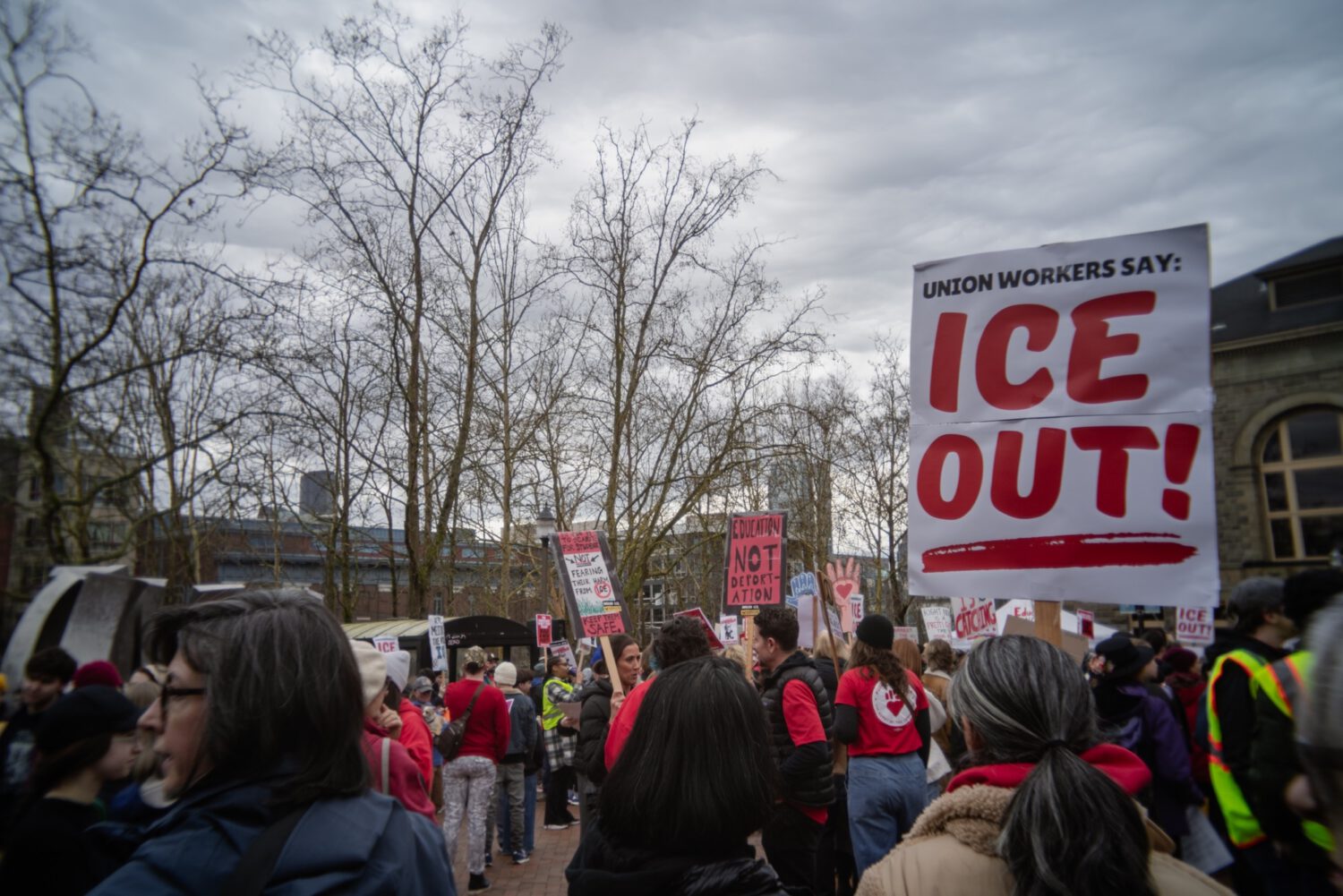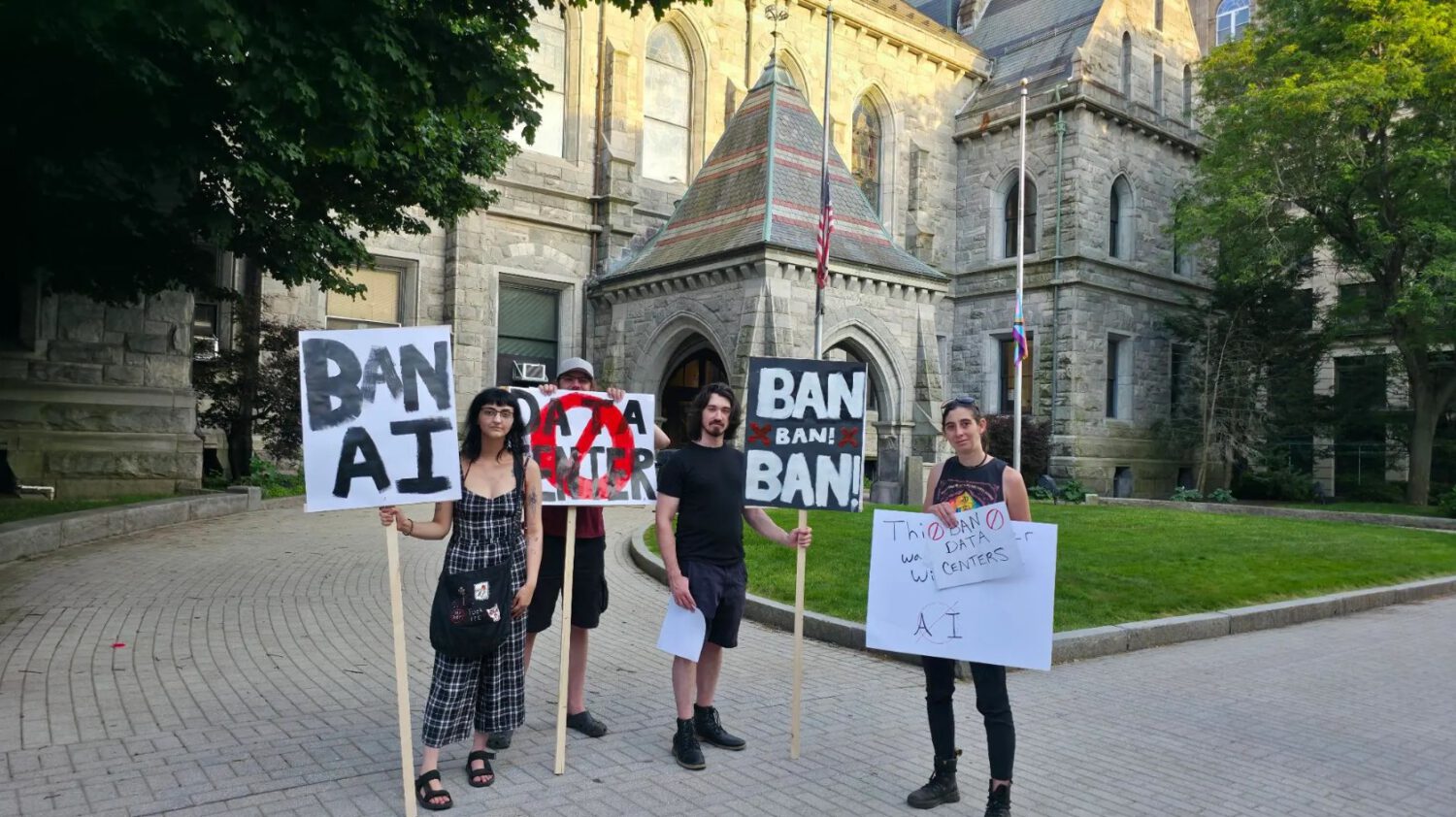
The American Infrastructure Alliance, a newly formed U.S. coalition, is bringing together AI companies, private-equity firms, data-center operators, and major building-trades unions to push back against state-level restrictions on AI data centers construction ahead of the 2027 legislative cycle. The coalition’s formation comes as local opposition to data centers has grown more organized, with concerns over electricity demand, water use, noise, and limited permanent employment driving calls for construction pauses in several states.
Who Is Behind This
A roster that mixes corporate capital with union grassroots reach, giving the AIA political depth that tech money alone could not assemble.
OpenAI, Blackstone, SoftBank Group, and QTS are among the inaugural members, according to reporting by Axios. Additional participants reportedly include CoreWeave, Digital Realty, Prologis, PowerHouse Data Centers, and Related Digital, among others, according to Yahoo Finance. The full membership list should be confirmed against AIA primary materials before publication.
On the labor side, reported participants include the International Brotherhood of Electrical Workers, the United Association of Union Plumbers and Pipefitters, SMART, the International Association of Iron Workers, and the International Association of Heat and Frost Insulators and Allied Workers. The coalition also includes the Ohio State Building and Construction Trades Council and ACT Ohio, two regional labor organizations. The AIA lists five national unions plus those two Ohio labor organizations; referring to all seven as “unions” may be imprecise, so “seven labor organizations” is the more accurate description.
Kenneth Cooper, international president of the IBEW, stated in the AIA’s launch release that “blanket bans on necessary infrastructure projects would set back our economy and threaten good middle-class jobs.” The quote appears in the coalition’s official announcement and has been reported by TechRadar.
What They Want and Where
Seven target states, one strategic goal: shape data-center standards before moratoriums become law.
The AIA’s initial campaigns focus on Texas, Georgia, Ohio, Iowa, Pennsylvania, Indiana, and South Carolina, where data-center proposals have become politically contentious. The coalition’s stated framework holds that large energy users should pay for the infrastructure their facilities require. Projects would also be expected to meet standards covering noise, lighting, construction impacts, and residential setbacks.
The strategy is not to oppose all regulation. Rather, the AIA wants negotiated guardrails in place of broad construction pauses. Michael Coleman, general president of SMART, said in the AIA’s launch release that “American workers and communities should have a seat at the table as this critical infrastructure is built.”
The Numbers Critics Are Watching
Construction jobs are temporary; the infrastructure costs that communities absorb can last far longer.
More than 230 national, state, and local organizations sent Congress a letter calling for a national moratorium, according to Food and Water Watch. That group’s research estimated roughly 23,000 people held permanent skilled trades data-center jobs nationwide in 2024, approximately 0.01 percent of U.S. employment. Over that same period, data centers accounted for more than 4 percent of national electricity use, according to the same organization’s analysis. Those figures come from an advocacy group rather than a government statistical agency and should be weighed accordingly.
Critics argue that communities may carry lasting costs in electricity rates, water consumption, noise, and infrastructure spending long after construction crews have moved on. The AIA’s total funding has been described as multimillion-dollar in some reports, but the exact amount, donor breakdown, and legal structure were not established by the sources reviewed.
The central policy question is not whether data centers get built. It is whether the standards governing them will be mandatory and independently monitored, or voluntary commitments shaped primarily by the industry paying for them.