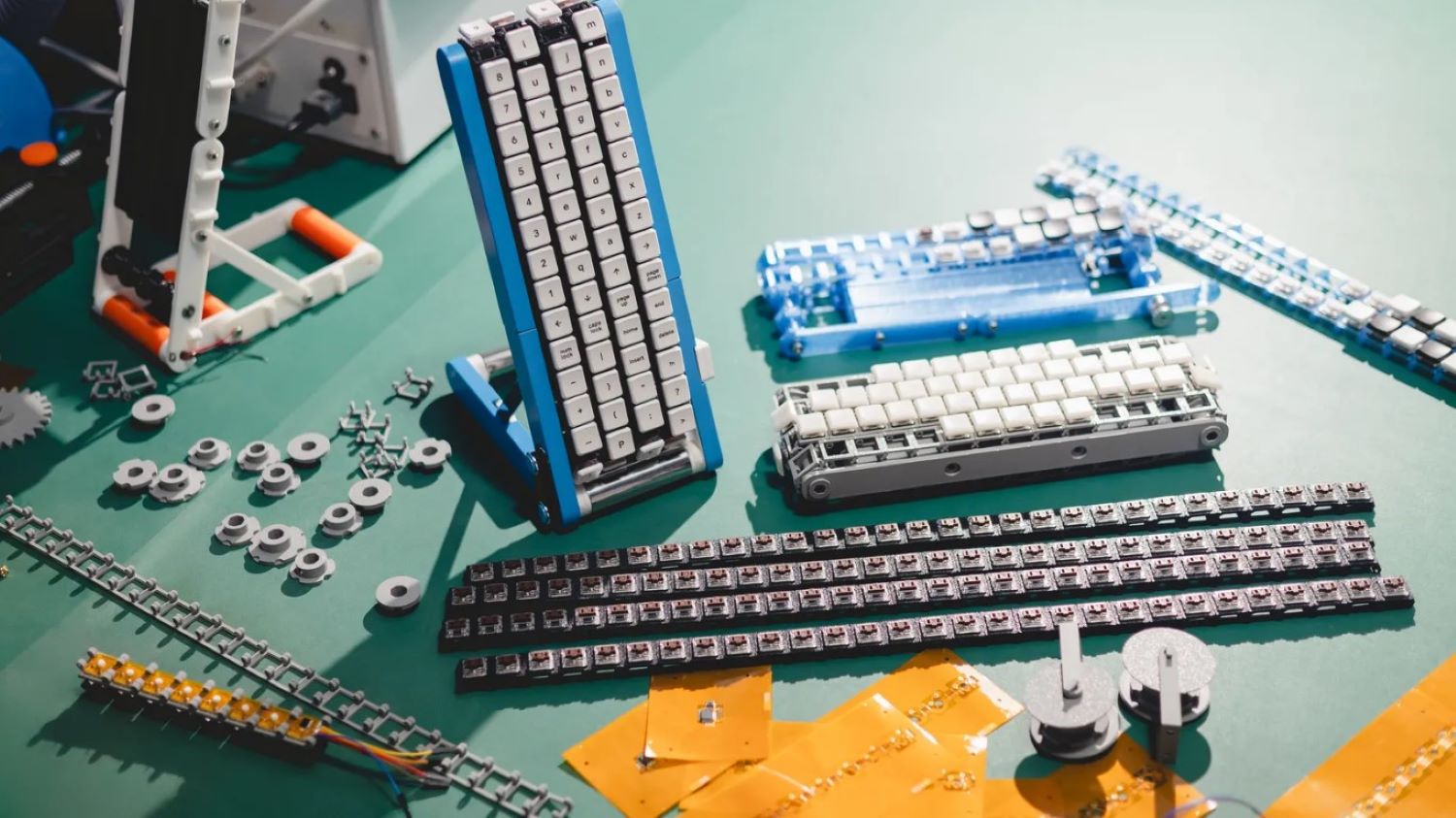
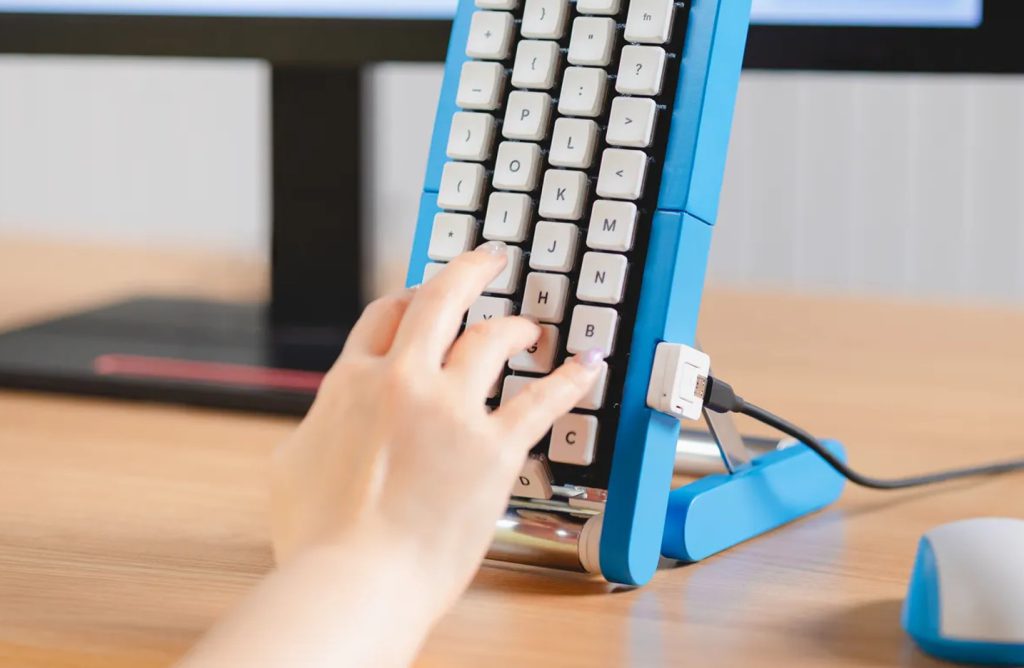
On October 1, 2026, Google Japan unveiled the Gboard Rotating Version (くるくるバージョン), an experimental keyboard that mounts characters on continuously moving conveyor belts. Google Japan has used October 1 as an annual occasion for unusual keyboard concepts, and the “10/1” date format is a reported nod to the classic 101-key keyboard layout. The company has no plans to sell the device.
Keys in Motion
Typing becomes a timing exercise: wait for your key, then press it.
The design uses four separate belts, each carrying 29 keys, for 116 keys in total, according to secondary reporting. You keep your hand relatively still while the belt cycles characters past your fingertip. When your desired key reaches the typing position, you press it.
Uppercase and lowercase input are both supported. The design targets one-handed or single-finger typists, offloading the spatial work from the hand to the mechanism. For two-handed operation, the option is to build a second unit.
Not a Product, Not a Promise
Construction plans are available as open-source materials; independent performance data is not.
This is not a commercial product. There is no release date, no price, and no retail channel. Google has published construction plans and design materials as open source.
Building your own version requires mechanical components, electronics, software, and real fabrication skills. No independent benchmark data on typing speed, reliability, or productivity was identified in the available reporting. Any implied suggestion that this outperforms a conventional keyboard should be treated as unverified until someone actually tests one.
The project is better understood as a design provocation than a product launch: a working physical object built to question an assumption, not to ship.
Why Google Japan Builds These Things
The date encodes the premise, and the premise has a serious point.
Google Japan has maintained an October 1 tradition for several years, using the date to release keyboard concepts that range from genuinely strange to conceptually pointed. The “10/1 equals 101” association is attributed to secondary reporting as the rationale behind the date choice. It gives the team a recurring creative brief: question something fundamental about how keyboards work.
This particular concept challenges the assumption that input devices stay still while humans move. The audience most likely to engage is a specific one: keyboard hobbyists, hardware makers, human-computer interaction researchers, and accessibility designers who think seriously about alternative input methods.
An Invitation, Not an Announcement
The open-source plans exist; the patience required to use them is your responsibility.
If you have the skills to build one, the construction plans and design materials are available. If you do not, the Gboard Rotating Version is still worth a moment of attention. It serves as a reminder that the keyboard in front of you is not the only possible answer to the question of how humans should type.