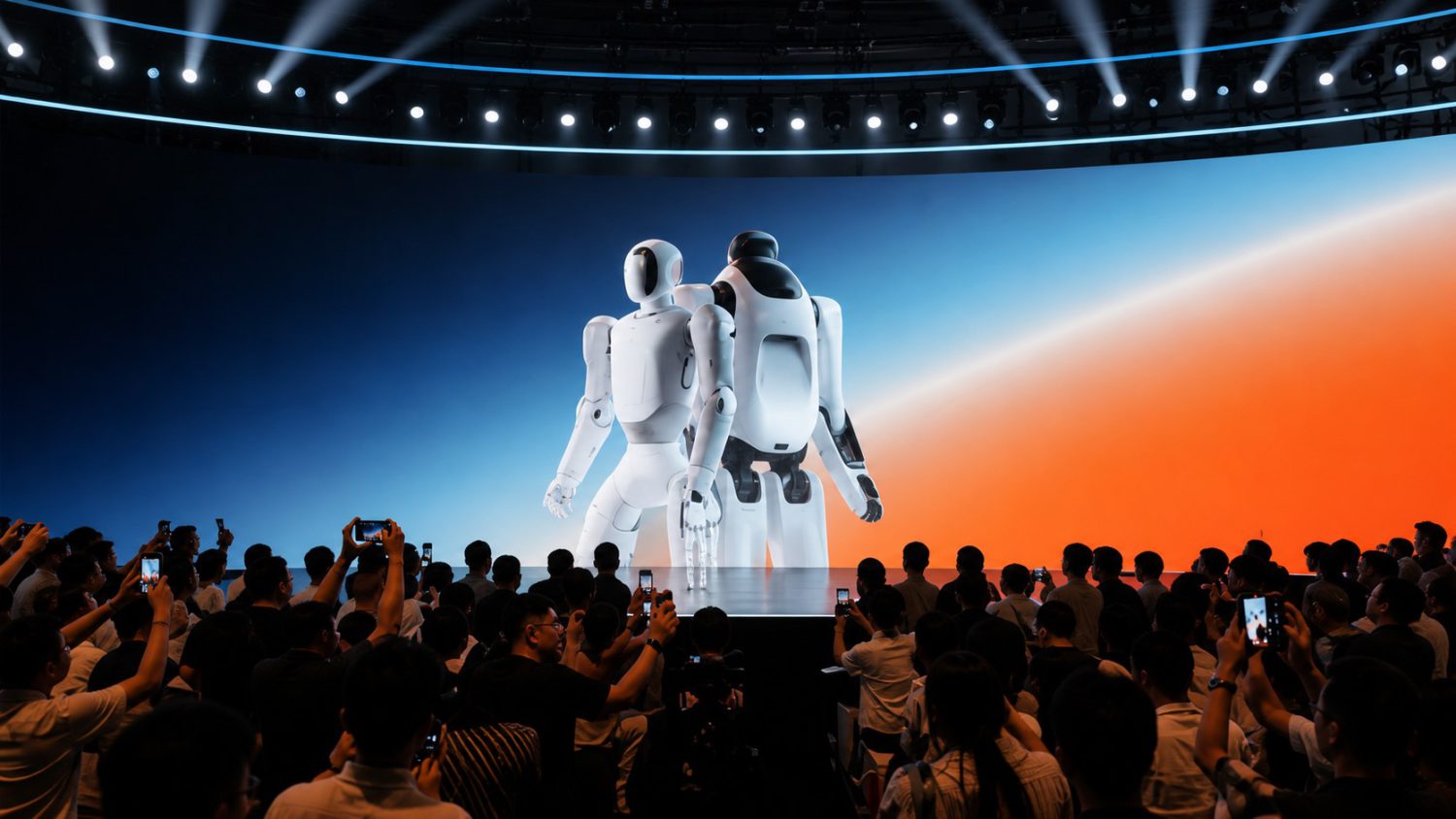
Consumer humanoid robots have spent years living on demo stages. PrimeBOT, also known as Qiyuan in China, changed that on September 20, 2026, when it formally opened Chinese consumer sales of two personal robots, with both standard models starting at RMB 19,999, roughly $2,800.
According to launch reporting, the robots were available for immediate shipment on that date, with sequential orders continuing to fulfill from October 1, 2026.
Two Robots, Two Different Bets
The Q1 and T1 take distinct approaches to personal robotics, one prioritizing programmability and the other transformable mobility.
The Q1 is the more compact of the pair. Standing 88 centimeters tall with 22 degrees of freedom, it is marketed for home companionship, education, and developer experimentation.
Open software and hardware interfaces reportedly let you customize the Q1’s appearance, voice, personality, and behavior, positioning it as a programmable platform rather than a fixed appliance. PrimeBOT says the robot supports more than 10 martial-arts movements, a showcase that reads more as proof of articulation than a core product feature. A higher-spec Q1 Explorer variant is priced at RMB 26,999, though a separate source lists that variant at RMB 29,999; PrimeBOT’s official sales materials should be consulted for confirmation.
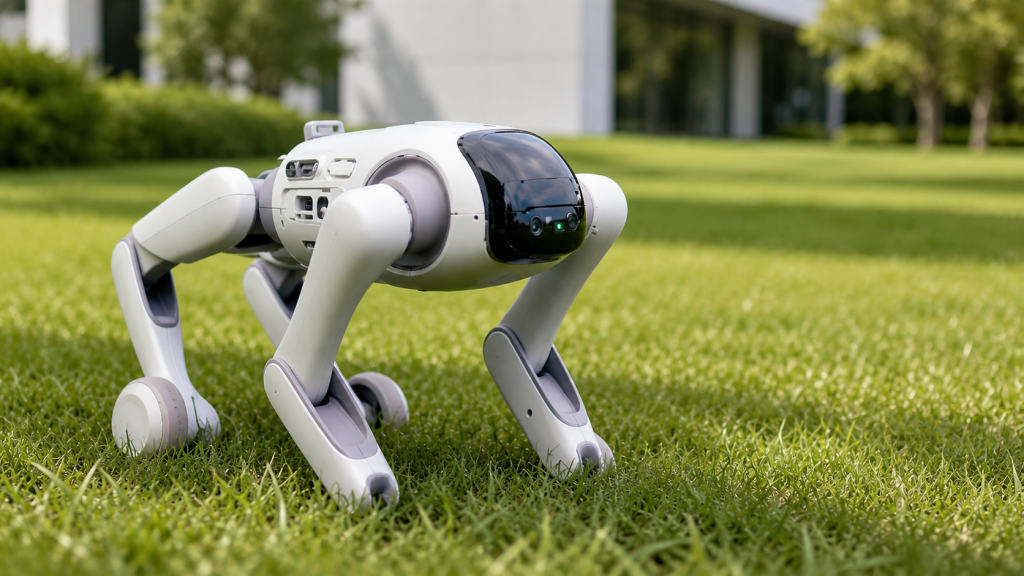
The T1 is the more unusual proposition. It switches between an upright wheeled humanoid configuration for indoor use and a four-legged quadruped configuration for outdoor and uneven terrain.
PrimeBOT’s pitch is that you get one platform instead of two separate robots for two separate environments. Earlier demonstrations reportedly showed autonomous mode-switching across grass, gravel, slopes, and stairs, but those remain manufacturer and demonstration claims. Transformation speed, terrain handling, and battery endurance have not been confirmed through independent testing. A T1 Pro variant is priced at RMB 29,999.
Manufacturing Is the Real Story Here
The production arrangement behind this launch may matter more than either robot’s spec sheet.
Consumer humanoid robots have historically been bottlenecked by low-volume, high-cost assembly. PrimeBOT is attempting to address that directly.
According to secondary reporting, the company has partnered with Lens Technology’s robotics unit on an initial production line planned at a 10,000-unit scale. That line reportedly covers precision components, joint modules, and final assembly. PrimeBOT cites a 2.5-minute takt time on that line, meaning the line is structured to advance one unit at that interval. Takt time is a production-planning metric, not a guaranteed delivered-output rate.
Think of it as the difference between hand-stitching sneakers in a workshop and running a Flyknit line: the gap between craft production and repeatable manufacturing defines whether a product reaches real people or stays a collector’s item. This partnership is PrimeBOT’s attempt to close that gap. Announced intent and sustained production are two different things, and the distance between them is where consumer hardware reputations are made.
What to Watch Next
Whether these robots perform outside controlled demonstrations will determine if this launch means anything beyond an order page.
Independent benchmark data for battery life, payload capacity, operating noise, and repairability are not yet available. No safety certification information was identified in the reviewed sources, and the base configuration’s exact contents have not been disclosed, nor has it been confirmed whether ongoing use requires subscriptions or cloud services.
Whether real-world performance holds up outside controlled demonstrations will tell you more than any spec sheet. For the T1, the durability of the transformation system across repeated indoor and outdoor cycles remains the open question. Snake Robots offer one instructive example of how robots trained in controlled settings can face unexpected challenges in the field.