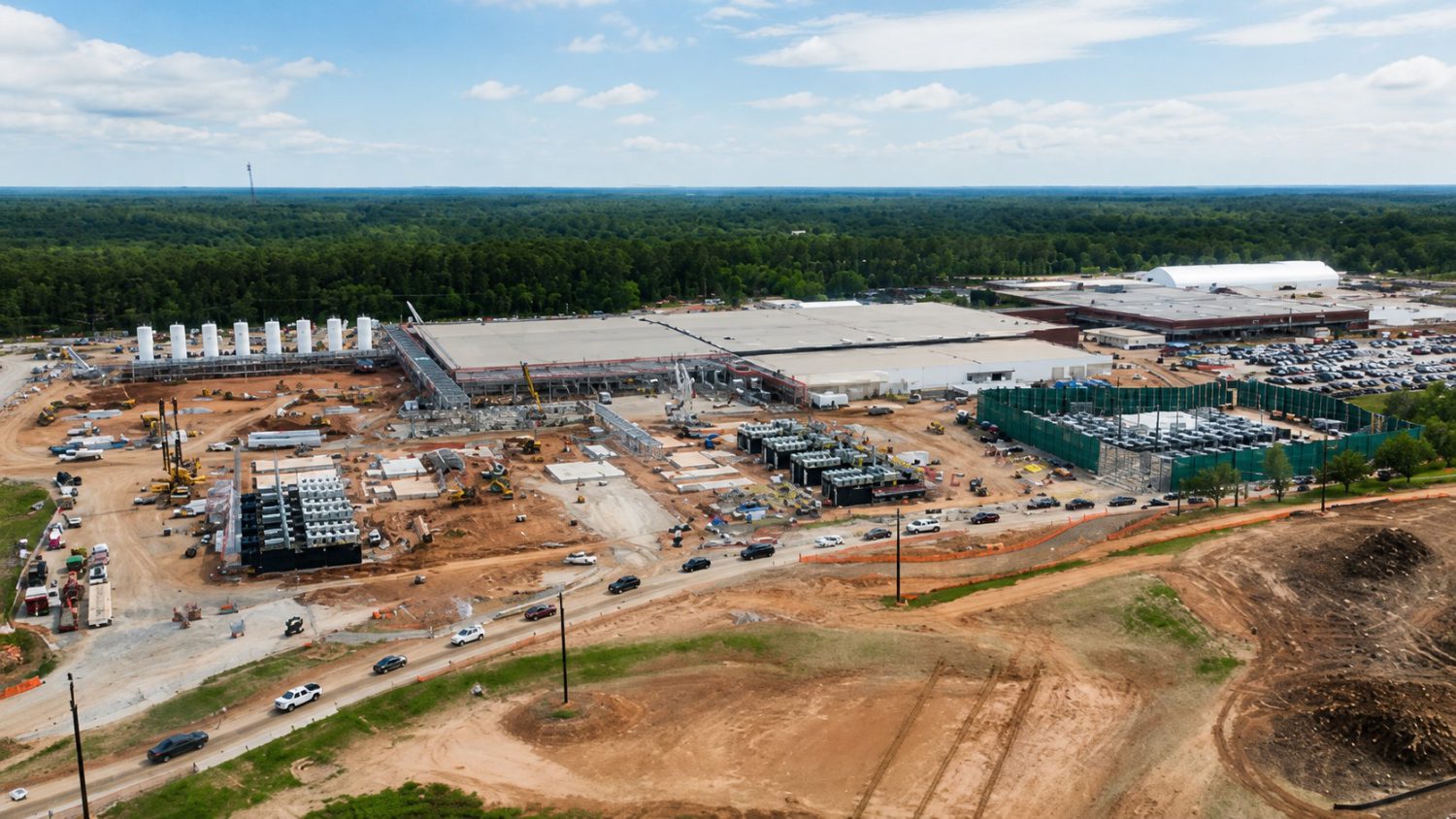
When an approximately $3 billion facility tells the public it needs one amount of water and later submits figures to the utility that are 2.6 times larger, that is not a rounding error. It raises a disclosure question, and Spartanburg County residents deserve a straight accounting of how it happened.
NorthMark Compute and Cloud now projects the Valara facility is expected to use an average of 1.2 million gallons of water per day at full buildout, with peak demand potentially reaching 1.6 million gallons. According to WYFF4, NorthMark attributed the earlier figure of approximately 459,000 gallons per day to a Phase I wastewater survey, saying it did not represent full-buildout demand. The company said it submitted the higher figures to Spartanburg Water on February 11, 2026, through the project’s Large Water Meter Questionnaire.
The revised average is roughly 2.6 times the original estimate. The possible peak is approximately 3.5 times the original projection.
Spartanburg Water previously described the 459,000-gallon figure as equivalent to the average daily use of roughly 2,200 to 2,500 single-family homes, according to local reporting via Yahoo News. Scaling that comparison to the revised figure requires an updated utility calculation, which has not been published. What local reporting has established is that the revised demand would make Valara one of the largest water users in the county.
About a month after NorthMark reportedly submitted the higher figures, Spartanburg Water asked residents to voluntarily restrict water use because of drought conditions. The utility later lifted those restrictions, though state assessments continued to identify early-stage drought in Spartanburg County. The facility had not yet opened, so the drought was unrelated to its consumption. Still, the sequence is context that your utility, your elected officials, and you as a ratepayer are entitled to weigh.
Dr. Octavia Amaechi, Spartanburg’s commissioner of public works, has raised pointed questions about the revised projection. Her concerns extend beyond whether the system has enough capacity. She has asked how the projections changed, what share of the revised figure reflects typical daily consumption versus peak scenarios, and what the long-term water implications are.
Significant gaps remain in the available record. The cooling technology planned for the facility is not identified in the public documents reviewed for this report. How much of the 1.2 million gallons would be discharged as wastewater has not been established. How often peak demand of 1.6 million gallons would occur has not been specified, and drought-contingency provisions, if any exist, have not been published.
What Transparent Infrastructure Disclosure Looks Like
The county moratorium offers a practical opening to set the disclosure standards this project and future proposals should have met from the start.
Spartanburg County Council voted 5-1 to pause new data-center development, according to WSPA. That moratorium does not apply to Valara, which already holds development approval. Its value lies in what the county can require going forward: full-buildout utility projections submitted before public hearings close, not after.
Counties that want accurate information should build that requirement into the approval process from the start. Asking for full-buildout figures only after a project is underway puts the public review process in the position of evaluating a teaser trailer instead of the actual film.
Before Valara opens, Spartanburg officials should seek public answers on cooling technology, wastewater volumes, drought-contingency provisions, and phased demand commitments. NorthMark Compute and Cloud has said, according to WYFF4, that Spartanburg Water confirmed sufficient capacity. That assurance deserves documentation the public can actually read.