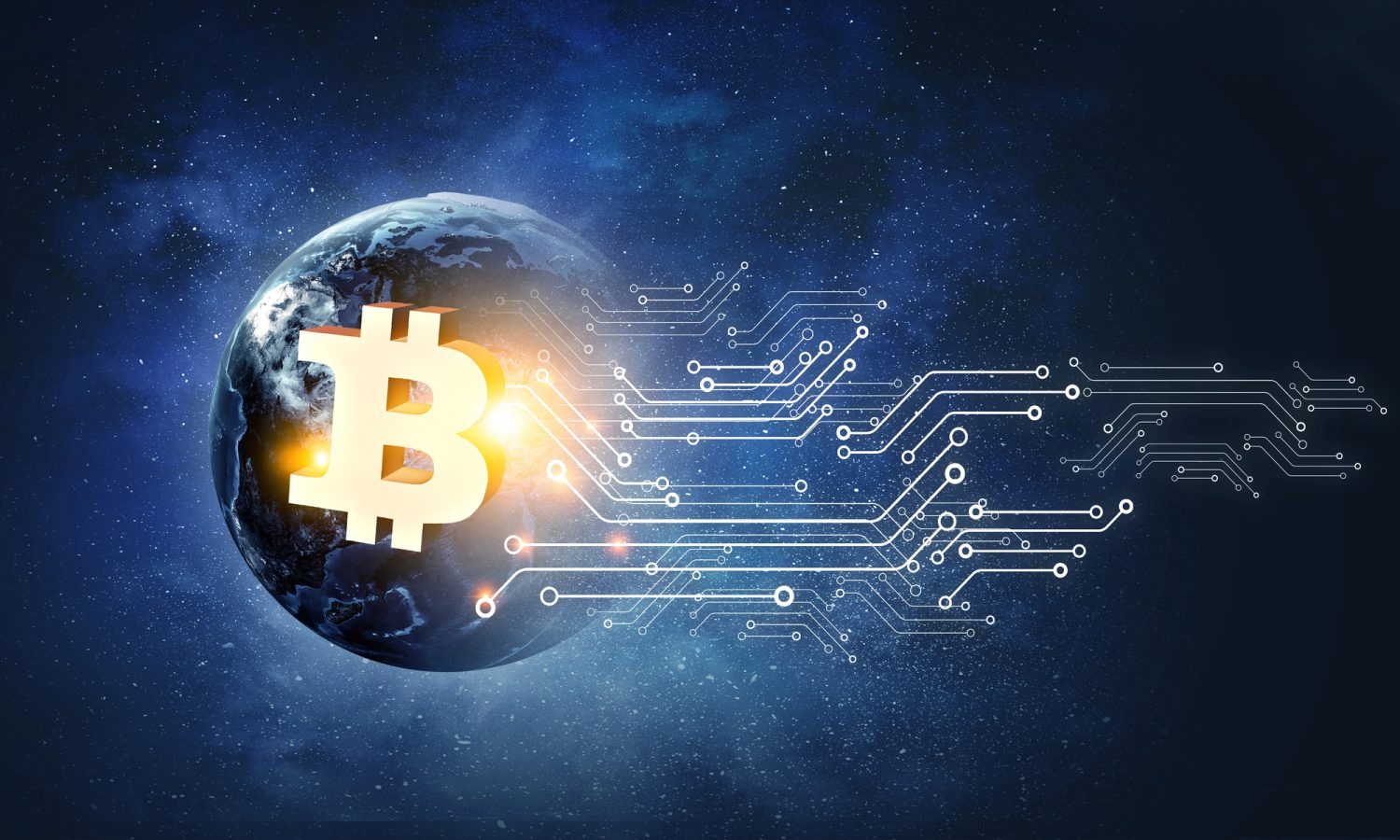
Space is cold. That intuition makes Bitcoin mining in orbit sound almost elegant: free sunlight, no electric bill, effortless cooling. The reality is more complicated, and Starcloud knows it.
The startup reportedly placed an Nvidia H100 GPU in orbit aboard Starcloud-1 in November 2025, described as a technology demonstration to show that compute hardware can survive and operate in space. Starcloud-2, the company’s next spacecraft, is expected to expand on that with GPU computing, persistent storage, and dedicated power and thermal systems. Bitcoin-mining ASICs are included as one payload among several.
CEO Philip Johnston has described the mission as an effort to become the first to mine Bitcoin in space. The target orbit is sun-synchronous, and the launch timing is provisionally set for 2027, though final spacecraft specifications remain subject to change.
Solar Power Is Abundant Up There. Profitable Is a Different Question.
Near-continuous sunlight, free of weather and grid constraints, is the core appeal of sun-synchronous orbit for energy-intensive computing.
Johnston has acknowledged that terrestrial miners can access electricity generated from natural-gas flaring at roughly two to three cents per kilowatt-hour, by his own estimate. A satellite mining operation must offset launch costs, spacecraft construction, communications infrastructure, and hardware replacement before orbital solar power becomes cheaper than that. The sunlight is free; getting the equipment there is not.
Cold Environment, Hot Problem
A vacuum eliminates convection, and that is where the real cooling challenge begins.
On Earth, fans and liquid systems move waste heat into air or coolant. In orbit, heat from ASICs must conduct through the spacecraft structure into radiator panels, which reject it by emitting infrared radiation into space.
Think of it like cooking on a cast-iron skillet with no way to blow off steam: the heat has to go somewhere, and the only mechanism for rejecting it across the spacecraft boundary into the vacuum is radiation. Radiator effectiveness depends on surface coatings, spacecraft orientation, view angle toward open sky, and the quality of heat-pipe connections between the chips and the panels.
A denser mining payload demands larger or hotter radiators, and radiator mass competes directly with payload mass. More mining hardware can mean less room for the panels needed to keep it running.
The Economics Still Need Proof
Johnston’s hardware-cost comparison between a B200 GPU at roughly $30,000 and an ASIC at roughly $1,000, both at a similar one-kilowatt power draw, reflects purchase price, not energy efficiency.
The ASIC is a cheaper and more appropriate tool for Bitcoin’s proof-of-work algorithm at that power level. Profitability for an orbital mission depends on a longer list of variables: launch and spacecraft costs, Bitcoin network difficulty, coin price, communications reliability, radiation tolerance, and hardware obsolescence.
Bitcoin ASICs can lose their economic edge quickly as newer, more efficient miners enter the market and network difficulty rises. Replacing outdated hardware in a terrestrial facility is generally far easier and faster than addressing the same problem in orbit, where servicing options may be impractical or unavailable.
Google Is Watching the Same Sky
Starcloud is not alone in seeing orbital solar power as a potential computing resource.
Google’s Project Suncatcher explores satellite constellations equipped with TPUs for machine-learning workloads, connected through free-space optical links. Google’s focus is AI infrastructure, not Bitcoin, but the project signals genuine industry interest in placing compute near persistent solar power.
What Proof Would Actually Look Like
A successful Starcloud-2 mission would need to clear several simultaneous hurdles, not just reach orbit.
Sustained operation, adequate thermal margins, reliable communications, and positive economics after accounting for the full spacecraft cost would all need to hold. If those conditions are met, orbital data-center services become a more credible market. If heat management or ASIC payback periods fall short, the mission would remain a technology demonstration rather than a proven business. A 2027 launch could provide early evidence about which direction it may go.