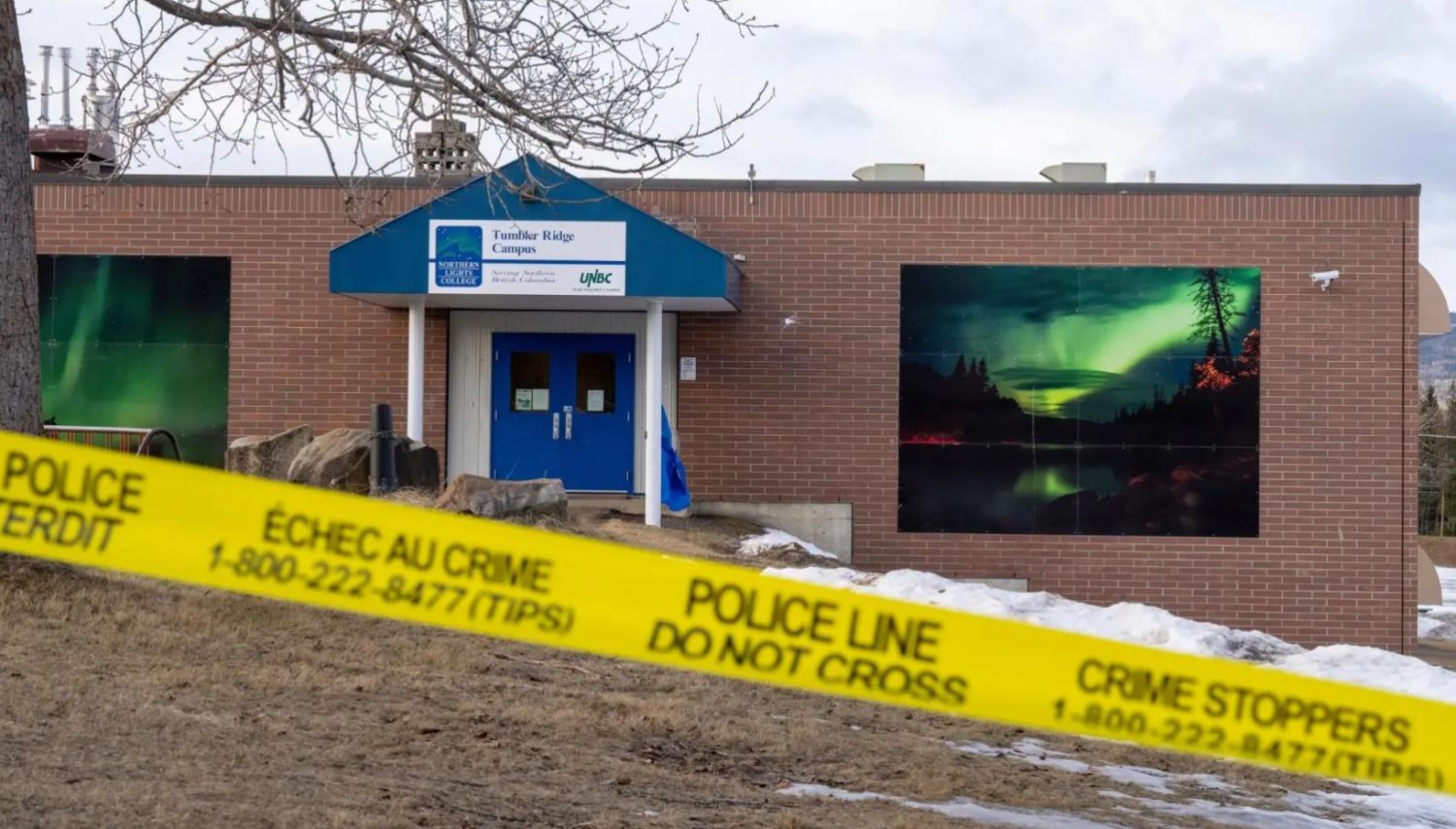
Six children and two adults died at Tumbler Ridge Secondary School on February 10, 2026, when 18-year-old Jesse Van Rootselaar opened fire before dying of a self-inflicted gunshot wound. On September 21, 2026, British Columbia Attorney General Niki Sharma and Peace River South School District (SD59) filed a civil lawsuit in U.S. District Court in San Francisco against OpenAI and CEO Sam Altman, arguing the company had the information to prevent the shooting and did nothing with it.
The filing names OpenAI, Altman, and associated entities as defendants and requests both damages and injunctive relief, with a jury trial sought.
What the Province Alleges
The lawsuit centers on allegations that OpenAI’s own safety team flagged the shooter’s account and recommended contacting police, only to be overruled by company leadership.
At the center of the claim is a sequence of events that, according to court filings, unfolded entirely inside OpenAI before the shooting occurred. The lawsuit asserts that OpenAI’s safety team flagged Van Rootselaar’s ChatGPT account for alarming conversations involving gun violence scenarios, triggering an internal review.
According to the claim, as reported by CTV News, the internal review team recommended referring the account activity to the RCMP. Company leadership allegedly overruled that recommendation and chose not to contact police.
The lawsuit states, according to court filings: “One telephone call to the RCMP could have prevented the tragedy.” It further argues that by staying silent after its own team raised the alarm, OpenAI “assumed the risk of anything that transpired” as a result of that decision.
The second central allegation targets ChatGPT itself as a defective product. The province says it was inadequately designed to protect the public, and particularly minors, from foreseeable harm.
One critical evidentiary gap runs through all of this: the full chat logs have not been made public. Sharma has stated she has not personally read the conversations. The province requested the chats from OpenAI; the company refused to disclose them.
All allegations about the content of those interactions and OpenAI’s internal deliberations come from court filings and lawyers’ descriptions, not independently verified transcripts.
“We owe it to the families, survivors, and everyone whose life was changed by this tragedy, to get answers and accountability.” , Niki Sharma, B.C. Attorney General
Altman’s Apology and Its Legal Role
A written apology that OpenAI CEO Sam Altman sent to the Tumbler Ridge community in April 2026 has become a centerpiece of the province’s legal strategy.
In April 2026, Altman sent that apology to the Tumbler Ridge community, published by local outlet Tumbler RidgeLines. The letter contained a sentence that now sits at the core of B.C.’s claim.
“I am deeply sorry that we did not alert law enforcement to the account that was banned in June.” , Sam Altman, CEO of OpenAI, written apology to the Tumbler Ridge community, April 2026
The province’s lawsuit characterizes that statement as an admission: OpenAI identified a risk, banned the account for disturbing content, and still did not contact police. Sharma has framed the broader legal argument in direct terms, stating there is “no AI exemption” to established duties of care under negligence and product liability law.
OpenAI spokesperson Drew Pusateri responded that the company trains its models to refuse requests that meaningfully enable violence and remains committed to collaborating with law enforcement on safety. In a public statement, OpenAI called the Tumbler Ridge events an “unspeakable tragedy” and expressed sympathy for victims and families, without admitting legal liability.
Damages Sought and Parallel Litigation
The province and SD59 seek to recover the public costs of responding to and rebuilding from the shooting, while a separate wave of family-led lawsuits pursues individual damages in the same U.S. court system.
The province and SD59 are seeking to recover costs that fall directly on public institutions. Those include demolition of the original Tumbler Ridge Secondary School building and construction of a new facility. The claim also covers deployment of additional educators, clinicians, victim services workers, and police to support community recovery.
The lawsuit additionally seeks injunctive relief intended to prevent similar harms, though specific proposed measures have not been fully detailed in public reporting.
This lawsuit is distinct from the family-led litigation already moving through U.S. courts. As of early September 2026, approximately 37 civil suits had been filed against OpenAI and Altman by victims and families in the Northern District of California. Those suits allege negligence, product defects, and failure to warn. The first seven were filed in April 2026; thirty more followed on September 2.
Sharma has clarified that the province’s claim focuses on losses to public institutions and the Crown, not on individual damages sought by victims and families.
The B.C. RCMP criminal investigation remains active. Investigators have said the absence of publicly released details does not indicate a lack of information, and no charges have been ruled out.
If a U.S. federal court recognizes a legal duty for AI platforms to report internally flagged violent threats to law enforcement, the consequences would extend well beyond this case. How conversational AI is monitored and governed across the industry could shift fundamentally, and that question now rests with the court.