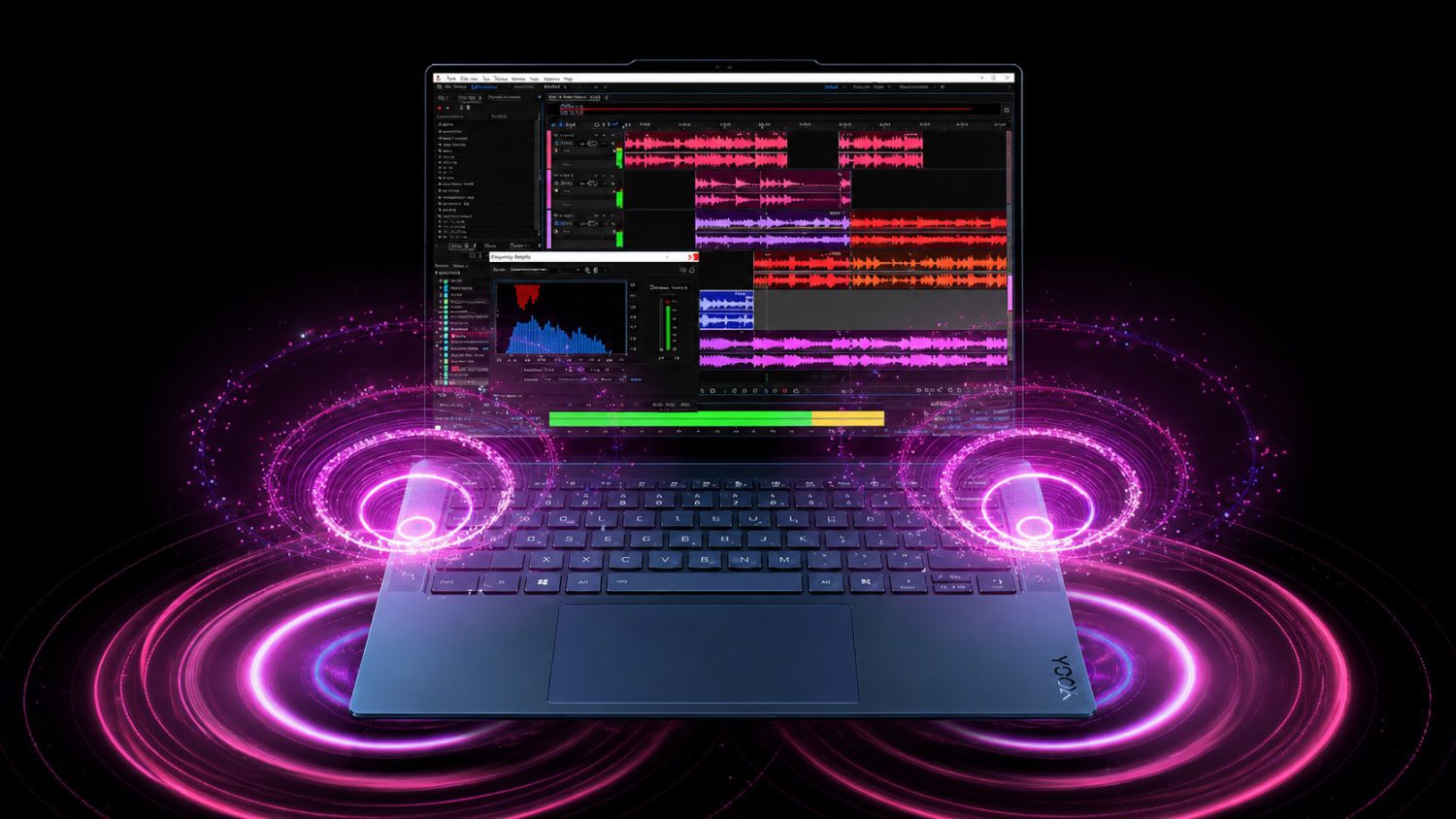
Microsoft’s Surface Laptop charges $1,399.99 for a 13.8-inch configuration with Snapdragon X Elite, 16GB of RAM, and 512GB of storage. Lenovo’s Yoga Slim 7X offers the same chip, the same RAM, the same storage, a larger 14.5-inch 3K OLED touchscreen, and Wi-Fi 7 for $200 less. That gap is the central question here: does the Yoga Slim 7X actually deliver on that value, or does something fall apart in real-world use?
What You Get for the Money
At its Lenovo list price of $1,199, the spec sheet reads like something from a laptop that costs considerably more.
The base configuration pairs a Qualcomm Snapdragon X Elite X1E-78-100 with 16GB of LPDDR5X RAM and a 512GB PCIe 4.0 NVMe SSD. The display is a 14.5-inch 3K OLED panel running at 90Hz. It delivers roughly 1,000 nits of peak brightness, 100% DCI-P3 color coverage, Dolby Vision support, and touch input. Reviewers at Tom’s Guide and Digital Trends consistently describe the screen as one of the best available on any laptop at this price.
The chassis weighs approximately 2.8 pounds and measures about half an inch thick. Multiple reviewers describe the build quality as MacBook-class, citing a rigid metal frame and tight tolerances throughout. A physical webcam privacy shutter, a 1080p IR camera for Windows Hello, and a 70Wh battery round out the hardware package.
What the $1,199 base configuration includes:
- Snapdragon X Elite X1E-78-100 processor with Qualcomm Adreno integrated graphics
- 16GB LPDDR5X RAM and 512GB PCIe 4.0 NVMe SSD
- 14.5-inch 3K OLED display, 90Hz, 100% DCI-P3, Dolby Vision, touch-enabled
- Three USB-C/USB4 ports with power delivery, Wi-Fi 7, Bluetooth 5.3
- 1080p IR webcam with physical privacy shutter
As Tom’s Guide reports: “The Lenovo Yoga Slim 7x starts at $1,199 on Lenovo’s website. This starting configuration features a 14.5-inch (2,944 x 1,840) OLED display, a Snapdragon X Elite chip, 16GB of RAM and 512GB of SSD storage.”

Battery Life and Real-World Performance
The Snapdragon platform’s efficiency advantage shows up where it counts most: how long the machine actually lasts.
LaptopMag measured 14 hours and 14 minutes in their standard endurance test. “The Lenovo Yoga Slim 7x showed fantastic battery life in our first test, clocking in at 14 hours and 14 minutes,” the outlet reported. Thurrott’s long-term review, covering a full month of varied use, recorded an average closer to 10.5 hours per day, with peak days reaching roughly 13.5 hours. Both figures place the Yoga Slim 7X well ahead of most comparable x86 ultrabooks.
Day-to-day performance in web browsing, Microsoft Office, video calls, and streaming is consistently described as fast, cool, and quiet. The Snapdragon X Elite handles standard productivity workloads without thermal throttling or fan noise that users would notice, helping to supercharge your productivity. Windows-on-Arm compatibility has improved substantially, and most mainstream applications run without issues.
The caveats are real. Legacy or niche Windows software without native Arm builds can run slower or encounter compatibility problems, and the integrated Adreno GPU handles casual and indie games adequately but is not built for AAA titles at high settings.
The port selection requires advance planning. Three USB-C/USB4 ports cover charging and data transfer, but there is no USB-A, no HDMI, and no SD card reader, making a dongle or hub a practical necessity for most users. RAM is soldered to the motherboard and storage is not designed for user replacement, which limits future upgradability.
Mobile professionals, students, and everyday users seeking a premium OLED display and strong battery life without paying Surface Laptop prices will find the Yoga Slim 7X a hard machine to dismiss at its $1,199 Lenovo list price. Anyone dependent on specific legacy Windows applications or requiring a dedicated GPU should look elsewhere. For those curious about the newer Snapdragon X2-based Gen 11 models, entry pricing starts near $999, though higher-end configurations climb well past $2,000.