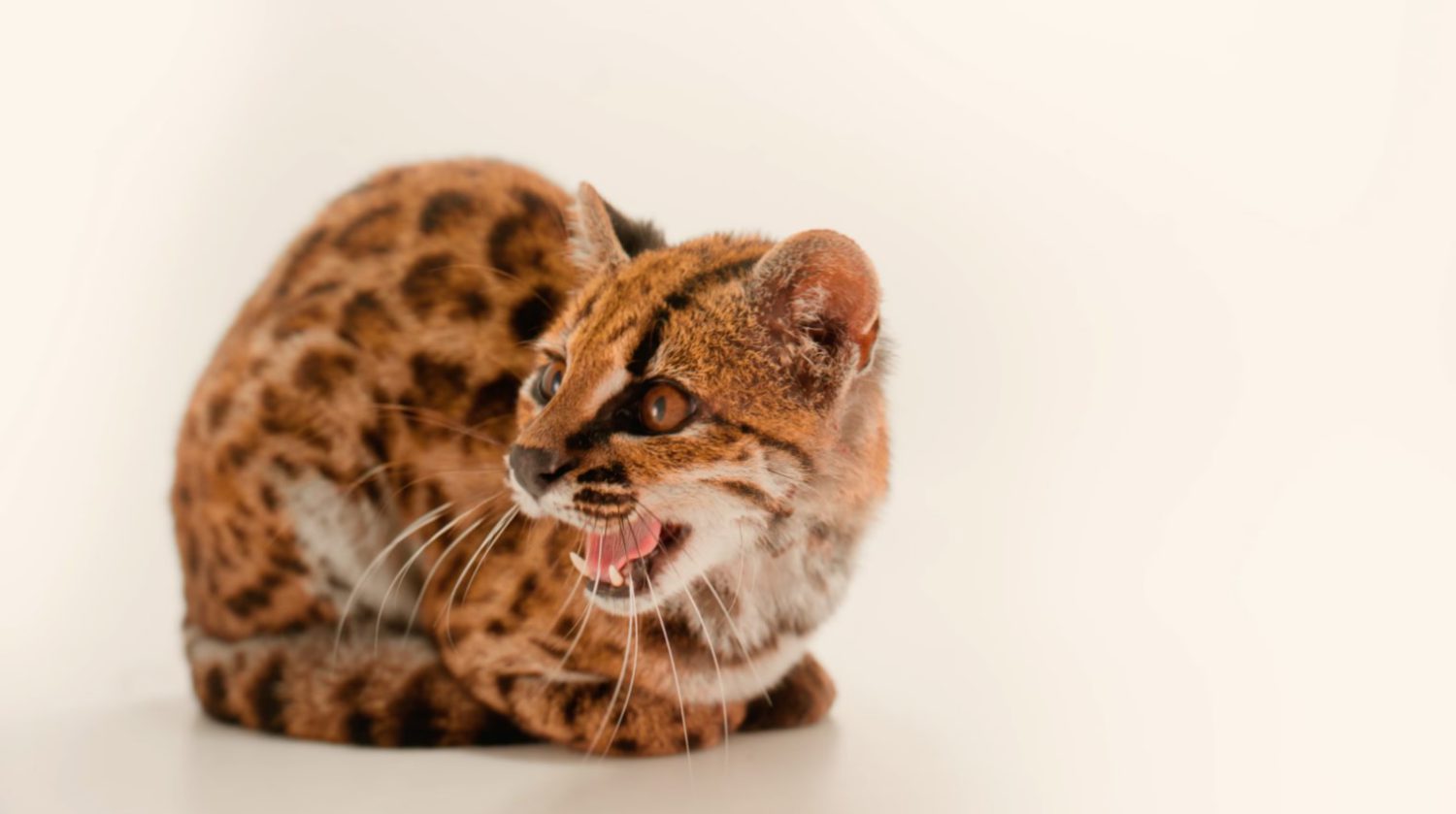
The last time scientists formally recognized a new living cat species, it was 1923. Now, more than a century later, a Bolivian researcher’s encounter with a single weird cat at a wildlife sanctuary has added a new entry to the official list of living cat species for the first time in more than a century.
Published September 17, 2026, in Current Biology, the study formally describes Leopardus tilcayo as a distinct species, separate from all other tiger cats. Species boundaries are not academic housekeeping: they determine which populations get counted, assessed, and protected under conservation law.
A Sanctuary Encounter That Changed Everything
A chance meeting with an unfamiliar spotted cat at a Bolivian wildlife sanctuary set off a years-long investigation that would rewrite felid taxonomy.
Paola Nogales-Ascarrunz, a Bolivian wild-cat conservation researcher and National Geographic Explorer, first noticed the animal at Senda Verde, a wildlife sanctuary in Bolivia. Something about it did not fit the known species profiles she carried in her head.
“I took a hundred pictures of it,” she said, as reported in coverage of the discovery. That obsessive documentation was the thread she pulled to unravel a century of misclassification.
She began comparing the cat’s appearance and genetics against other tiger cats in the Leopardus genus. The differences held up at every level of scrutiny.
The Genomics Behind the Name
Whole-genome sequencing across 38 individuals confirmed that this small Bolivian cat had been a distinct species for more than a million years.
To confirm what Nogales-Ascarrunz suspected, researchers conducted genomic analysis: a comparison of complete DNA sequences to determine evolutionary relationships. The team analyzed genomes from 38 individuals across the Leopardus genus. Participating institutions included the Pontifical Catholic University of Rio Grande do Sul and the University of Antwerp.
The finding was unambiguous: Leopardus tilcayo diverged from its closest relatives approximately 1.4 million years ago.
Eduardo Eizirik, a co-author involved in tiger-cat research, noted that scientists have been working on this group “for 25 years or so,” as reported in coverage of the study. He added that the genus remains more complex than previously understood. That complexity is the point: what looked like one broadly distributed tiger-cat group is, genetically, five distinct species.
Why One Cat Changes the Map
Recognizing five tiger-cat species instead of one means each population now requires its own conservation assessment and protection strategy.
The reclassification carries direct conservation consequences. A single species counted across a wide range looks resilient on paper. Break that range into five narrower species and each population suddenly needs its own threat assessment and its own protection strategy.
“This time, it’s a cat. That’s really novel. And it hasn’t happened in 100 years,” Nogales-Ascarrunz said, as reported in coverage of the discovery. The rarity is not rhetorical: coverage of the study identifies the early 20th century as the last time a new living cat species was formally described, a point echoed consistently across reporting on the research.
The species name carries cultural weight too. Tilcayo preserves the local name used by communities in the region, grounding a global scientific finding in the knowledge of the people who shared territory with this cat long before any researcher arrived.
The genomic methods behind this discovery may not stop at Bolivia’s cloud forests. Other small cat populations across South America now warrant a second look, and what currently passes for one species elsewhere could turn out to be several.