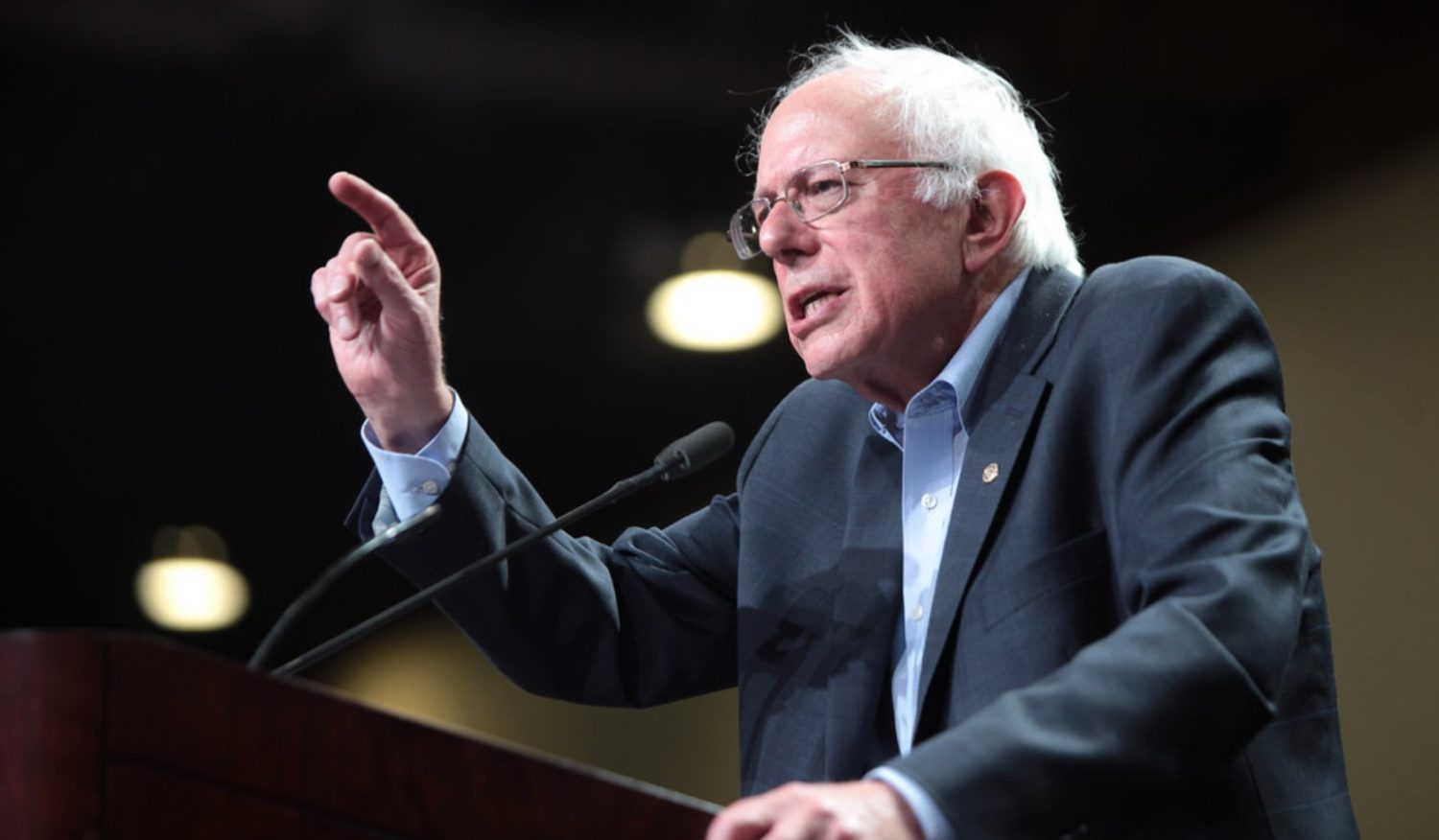
Your employer’s AI tools are already doing more work in fewer hours. Under legislation reintroduced by Sen. Bernie Sanders and Rep. Mark Takano, that efficiency would have to cost your boss something if they still want you at your desk past 32 hours. The Thirty-Two Hour Workweek Act would amend the Fair Labor Standards Act, lowering the federal overtime threshold from 40 hours to 32. Covered workers would keep their current weekly pay and benefits.
A four-year phase-in eases the transition: overtime kicks in at 38 hours in year one, then drops to 36, 34, and finally 32.
What the Bill Does
This is not a hard cap on hours. It is a price increase on long ones.
Beyond the weekly threshold, the bill adds daily overtime protections that federal law currently lacks. Workers would earn time-and-a-half after eight hours in a single day and double pay after 12.
Employers can still schedule longer weeks; they would just pay more for every extra hour beyond those thresholds. Nonexempt workers, those currently covered by FLSA overtime rules, are the primary beneficiaries. Salaried managers and certain professional employees would remain exempt.
The AI Argument at the Center of This Bill
Based on Economic Policy Institute data Sanders cites regularly, net productivity has risen roughly 90% since 1979 while typical worker pay has grown only about 33%.
That gap is the foundation of his argument. AI and automation are accelerating output across industries, and his position is direct: workers should see those gains as free time, not just as proof that fewer of them are needed.
A 2026 Juliet Schor analysis for the University of Massachusetts Amherst’s Political Economy Research Institute estimates AI-driven productivity increases could shift roughly 35 million U.S. workers to a 32-hour week within a decade. That figure represents about 28% of the workforce, and it assumes the gains get redirected toward shorter hours rather than absorbed entirely into profit margins.
Rep. Takano framed the legislative logic plainly, according to reporting: “Cell phones, the internet, and now AI have increased worker productivity. Work has fundamentally changed. It’s time that labor standards caught up.”
Trial Evidence Supports the Concept
In a study tracking nearly 3,000 workers across six months, burnout fell and output held.
Coordinated by 4 Day Week Global and co-authored by Schor and sociologist Wen Fan, the multi-country study tracked about 2,900 workers across 141 companies. Participants worked roughly five fewer hours per week and reported lower burnout, better physical and mental health, and higher job satisfaction.
Companies in the study did not report declines in perceived performance.
The Opposition’s Case
Sen. Cassidy called the proposal “fringe,” warning it would squeeze small businesses and push jobs overseas.
At a Senate HELP Committee hearing on an earlier version of the bill, Sen. Bill Cassidy of Louisiana argued that mandating overtime after 32 hours would raise labor costs and risk pushing jobs overseas. The Republican ranking member added that small businesses operating on thin margins would face the sharpest pressure.
He characterized the 32-hour proposal as bad policy and a fringe position relative to mainstream labor economics.
The Longer Arc
Ford moved to a 40-hour week in 1926; the New Deal made it federal law by 1940.
Sanders frames this bill as the next chapter in a line running from Eugene V. Debs’ fight for the eight-hour day through Ford Motor Company’s five-day week and the Fair Labor Standards Act’s codification of 40 hours. The federal standard has not moved significantly in nearly nine decades, despite computers, the internet, and now generative AI reshaping what an hour of work can produce.
If the bill passes, your employer faces a real financial incentive to restructure long workweeks. If it fails, the proposal still marks the direction progressive labor policy intends to take every time a company announces another humanoid robot efficiency milestone.