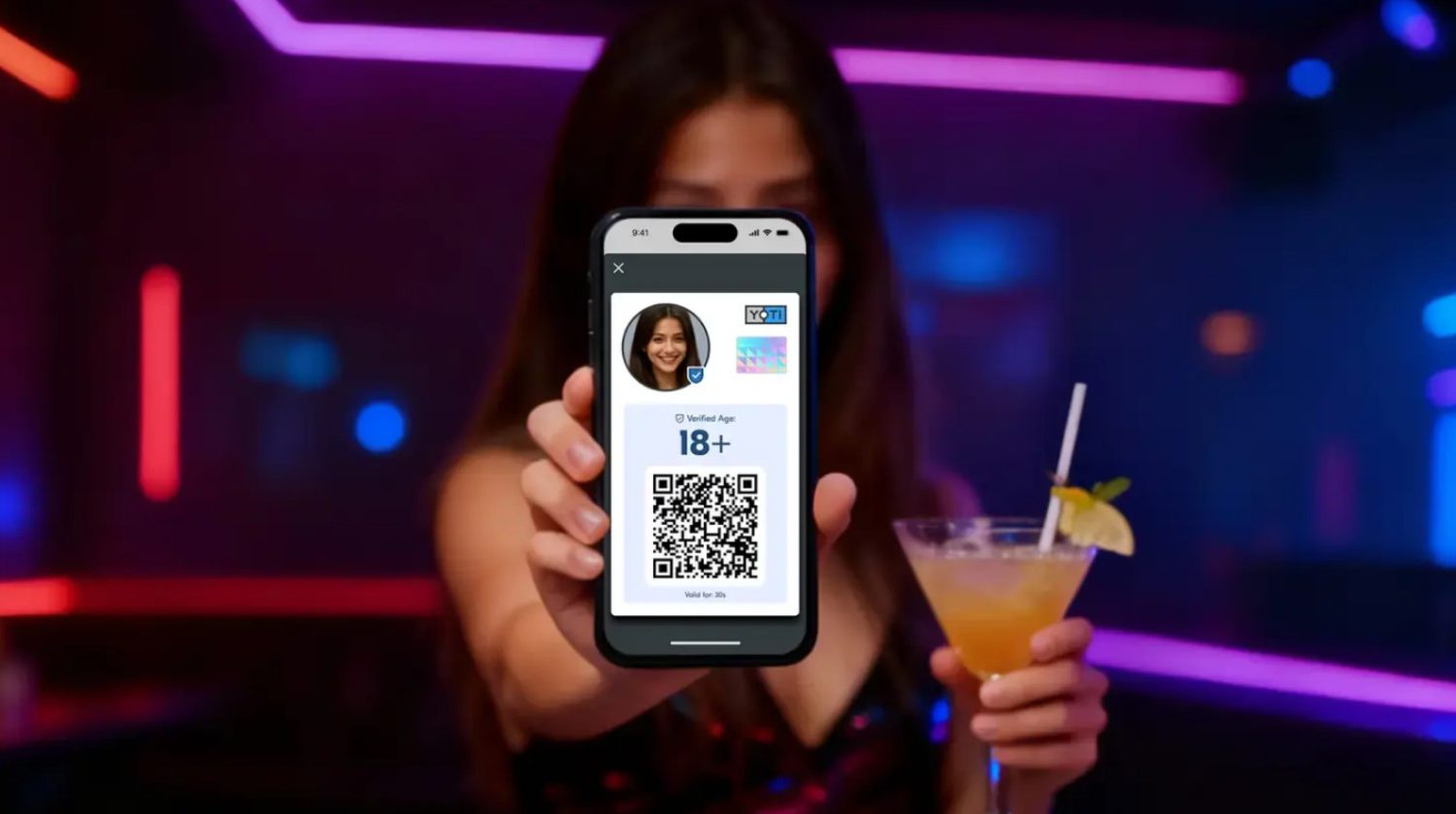
It’s Friday night: you pull up your Yoti QR code at the door, phone out, ready to go, and the bouncer stares at your screen, then back at you, then at the screen again. The rules changed on 15 September 2026, but readiness across venues is another matter entirely.
Certified apps including Yoti, Post Office EasyID and Luciditi are now legally accepted alongside passports and driving licences under amendments to the Mandatory Licensing Conditions of the Licensing Act 2003. More than seven million digital IDs have already been downloaded across the Yoti network. The infrastructure exists. The problems are elsewhere.
The Clever Bit (and Why It Actually Works)
The core technology is genuinely more privacy-conscious than the average door check, and that deserves acknowledgment before the criticism begins.
At setup, the app performs a face scan that binds your identity to your device. At the bar, it generates a time-limited QR code that staff scan with a free checker app, which returns a yes-or-no answer on age, not your full name, address or date of birth. That is genuinely more privacy-preserving than handing a passport to a bouncer who squints at it under a UV light for four seconds.
Yoti’s ID Checker app also works without an internet connection, which is a real practical win for rural pubs where reliable connectivity is more aspiration than infrastructure.
“Having the option for digital ID will mean you do not need to carry a physical ID, nor hand over sensitive personal information, meaning people could feel safer on a night out.” Stephanie Peacock, digital government minister, via the BBC
Where the Rollout Needs Work
Four concrete gaps undermine the “voluntary” framing that government and industry keep reaching for.
The new rules mean venues are no longer legally required to accept physical ID if they switch to digital verification. Government frames that as customer choice. Big Brother Watch’s Jasleen Chaggar, quoted in the Guardian, frames it differently.
“Many people have legitimate reasons for relying on physical ID, whether out of choice, privacy and security concerns, or because they lack the digital skills or means to use digital ID. The Government should expressly prohibit businesses from requiring digital IDs for age checks without offering reasonable alternatives.”
The concrete fix is straightforward: require every venue that goes digital to keep accepting physical ID by law.
The enrolment process is the part that ministerial press releases skip over entirely. The Home Office acknowledges that customers need to set up a DVS account before using it in a pub, meaning a document scan, a face scan, an app download and account verification before a single pint gets poured. That friction falls hardest on older customers, people with lower digital literacy and anyone without a compatible smartphone.
Scope creep is already baked in. Luciditi is openly positioning its platform for the generational smoking ban, and government commentary suggests tobacco and vapes could come next. Extending the scheme is a defensible policy call; getting the inclusion safeguards right now, rather than patching them in later, is urgent.
Then there is the political baggage. A national digital ID programme linked to former Prime Minister Keir Starmer was abandoned by Andy Burnham, and that is not ancient history. Public trust in government-adjacent identity infrastructure is genuinely fragile, and apps have been caught secretly tracking users in ways that erode confidence, so providers like Yoti and Luciditi need to communicate clearly that this scheme is decentralised, that app choice is open, and that no single database holds everything.
The Bottom Line
The technology is solid; the policy floor beneath it is not.
The privacy design here is credible, which makes the missing piece more frustrating. Without a clear statutory guarantee that every venue going digital must still accept physical ID, “voluntary” is just a word on a press release.