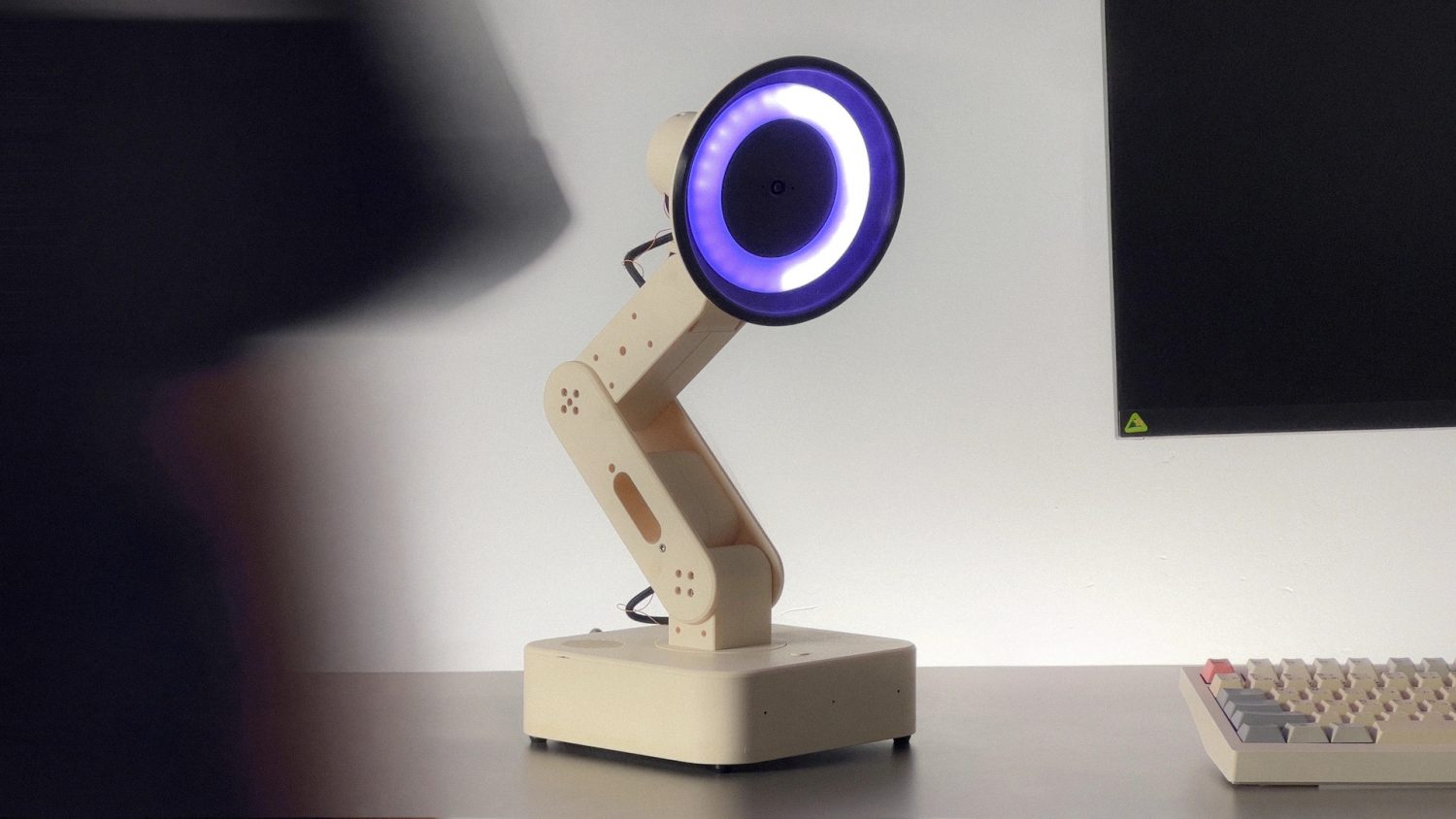
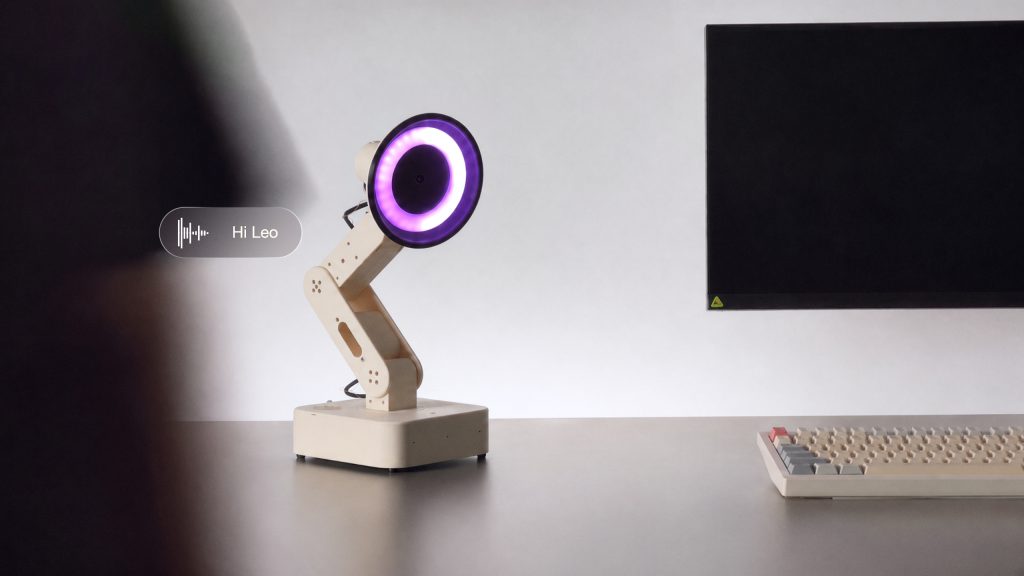
Sit down at your desk and Lamp looks up. Not instantly: it hesitates first, the way a cat might register your presence before deciding to acknowledge it. Tell it something alarming and it flinches, flashes white, then breathes slow blue. Leave for a few days and come back to a “Hey, been a while.” Biologically, Autonomous Lamp is a machine running software on an 8-core ARM64 chip. Experientially, Autonomous built it to sit right at the edge of something harder to dismiss. Pre-orders are open now at $499, with shipping expected by late October 2026 according to the official product page.
Motion Is the Message
The behavioral layer is what separates Lamp from a smart speaker with ambitions.
Five position-feedback servos drive the motion. Dee, Head of AI Hardware at Autonomous, says most development time was concentrated there: “That half second before she looks up, the startle, the way she settles after. That is the part people feel, and it is what took us the longest to get right.” The result is a set of cues your brain reads as intentional, not mechanical.
In practice, those cues cover a lot of ground:
- Tracks faces, notices repeat visitors, and asks consent before saving a name (“mind if I remember you?”)
- Flinches and flashes in response to emotional content, using light and timing to perform surprise
- Watches posture and interprets yawns as tiredness, suggesting breaks or calm music before acting
- Spots a stranger at the door and calls it out verbally, describing what it sees
Saying “stop watching me” makes it look away. Saying “I have a meeting” silences the mic until a wake word. Autonomous frames these as social boundaries, not just settings.
Useful, Not Just Uncanny
A physical presence is only half the product; the software stack is where Lamp earns desk space.
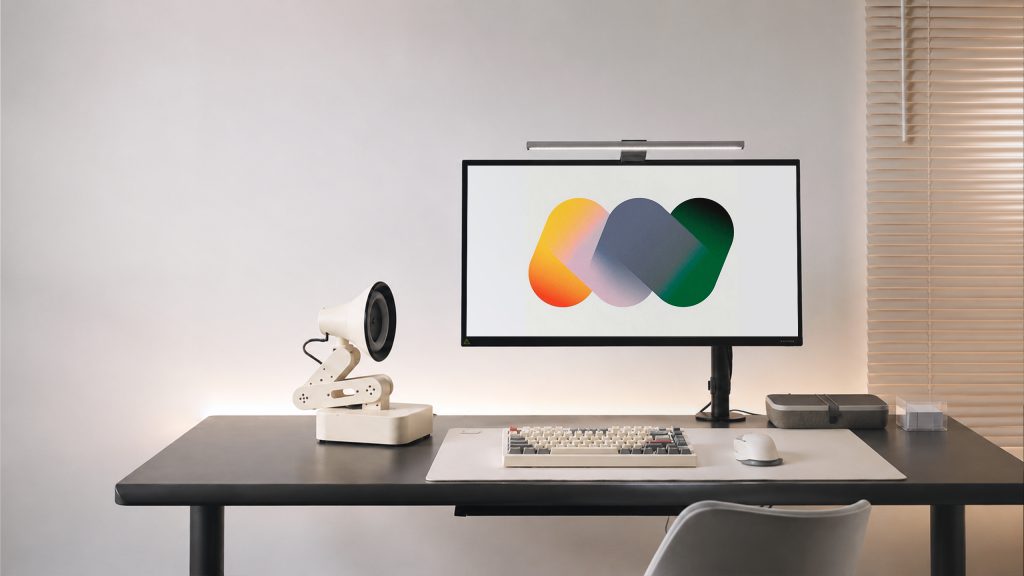
Lamp runs Autonomous OS, which is open source and available on GitHub, with swappable AI models including Claude Code and Codex. Skills connect it to Gmail, Google Calendar, WordPress, and GitHub, with a growing Skill Store. Hardware specs include 6 GB RAM and Wi-Fi 6; it runs on 12V DC and stays plugged in. Independent long-term reviews are still emerging, so real-world reliability remains an open question.
Perceived aliveness is a stated design target here, not a biological claim. If you want an AI assistant with presence on your desk, Lamp is a genuinely novel take on what that means. Just know that presence cuts both ways: a camera and microphone that live at eye level, all day, every day, deserve a harder look than the charming hesitation gets.