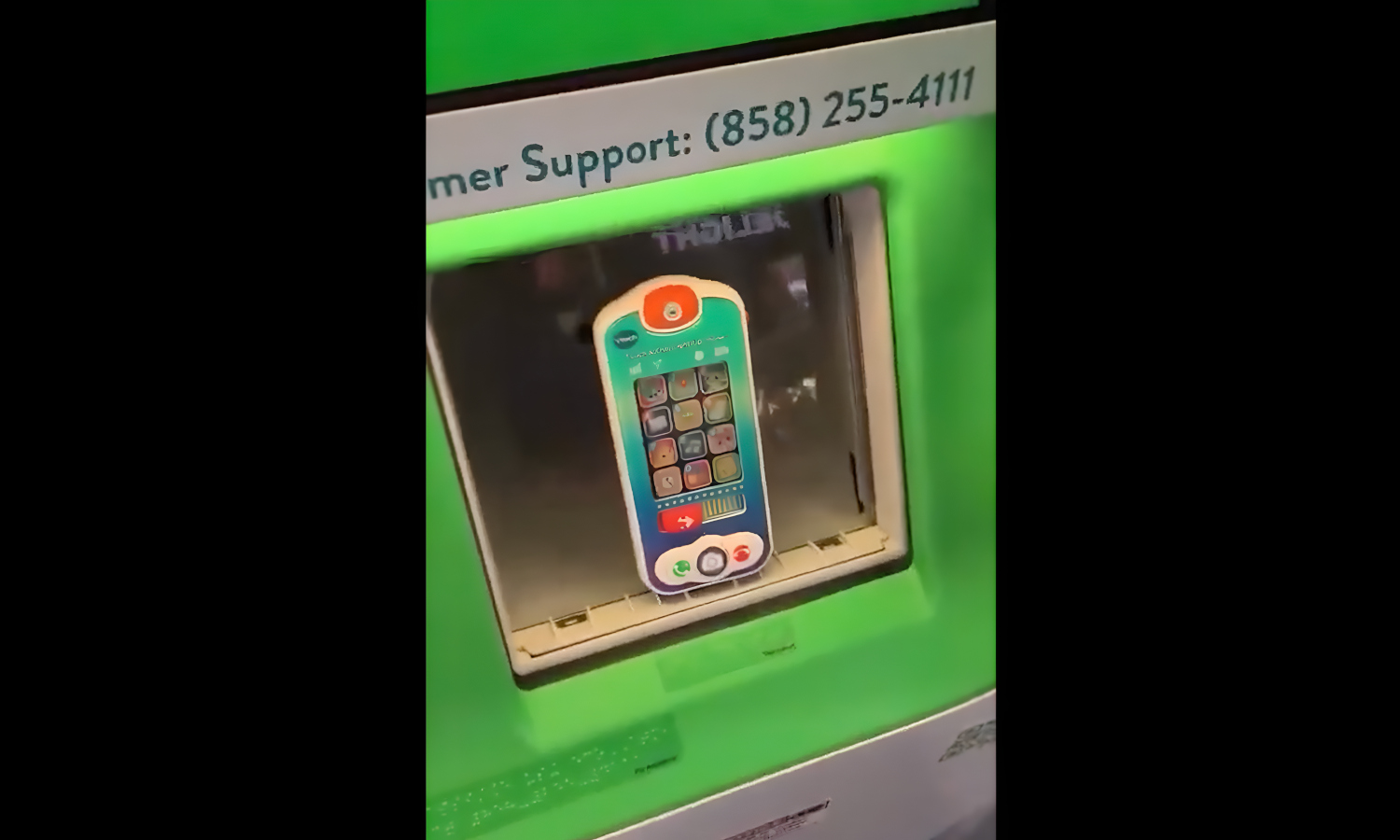
A kiosk. A toy phone. An offer for one of the most expensive iPhones on the market. According to an unverified Reddit post making the rounds, an ecoATM machine allegedly identified a children’s toy as a non-working iPhone 17 Pro Max and offered real money for it. EcoATM has not confirmed the incident, no major outlet has independently verified it, and the claim originates from a single social post. But the fact that it feels completely plausible? That’s the story worth paying attention to.
EcoATM’s kiosks are designed to accept phones in any condition — cracked screens, water damage, completely dead batteries. According to ecoATM’s public FAQ, the system takes devices of “all shapes, colors, sizes and working conditions,” including phones that no longer power on. The kiosk examines the device and generates an offer based on condition. Bringing a charged phone helps the system identify it more accurately, but a dead device still gets a quote.
Which means the machine is sometimes making financial decisions without being able to confirm what it’s actually holding.
Here’s what ecoATM’s own materials confirm:
- Non-working and damaged phones still carry value for parts or raw materials
- Kiosks can generate price quotes without a powered-on device
- A charged device enables more accurate identification and typically a better offer
- The toy phone claim is unconfirmed — single Reddit post, no ecoATM statement, no corroborating report
- EcoATM maintains a formal contact and dispute process for unusual or failed transactions
When the Algorithm Holds the Cash
Automated trade-in systems move fast — and speed has a cost when the device in the tray isn’t what the machine thinks it is.
Think about how airport self-checkout bag scanners routinely stall on anything that doesn’t match their expected weight and shape profile. EcoATM’s kiosks face a version of the same constraint. According to ecoATM’s public FAQ, the kiosk uses physical examination to assess devices — a process that works reliably for a cracked Galaxy S22, and reportedly less so when an object merely resembles a smartphone in form factor. That parenthetical “reportedly” is doing real work here: the toy phone incident is unconfirmed, but the underlying limitation it exposes is not.
This isn’t a scandal. It’s a design tension that scales. As trade-in kiosks absorb more volume by removing human review, edge cases multiply. A toy built to mimic a phone’s form factor could, plausibly, clear that bar. It’s the same kind of friction you see when a content-recommendation algorithm confidently decides your entire viewing personality based on one documentary you watched at 2 a.m. — fast, confident, and occasionally very wrong.
Before you approach any kiosk, know what it can and cannot verify. Document your device’s model and condition beforehand. Understand that automated systems are optimized for speed and volume, not for catching the one-in-a-thousand edge case. As trade-in automation expands, those edge cases will keep arriving — and the question of who’s responsible when the machine gets it wrong deserves a clearer answer than a Reddit thread.