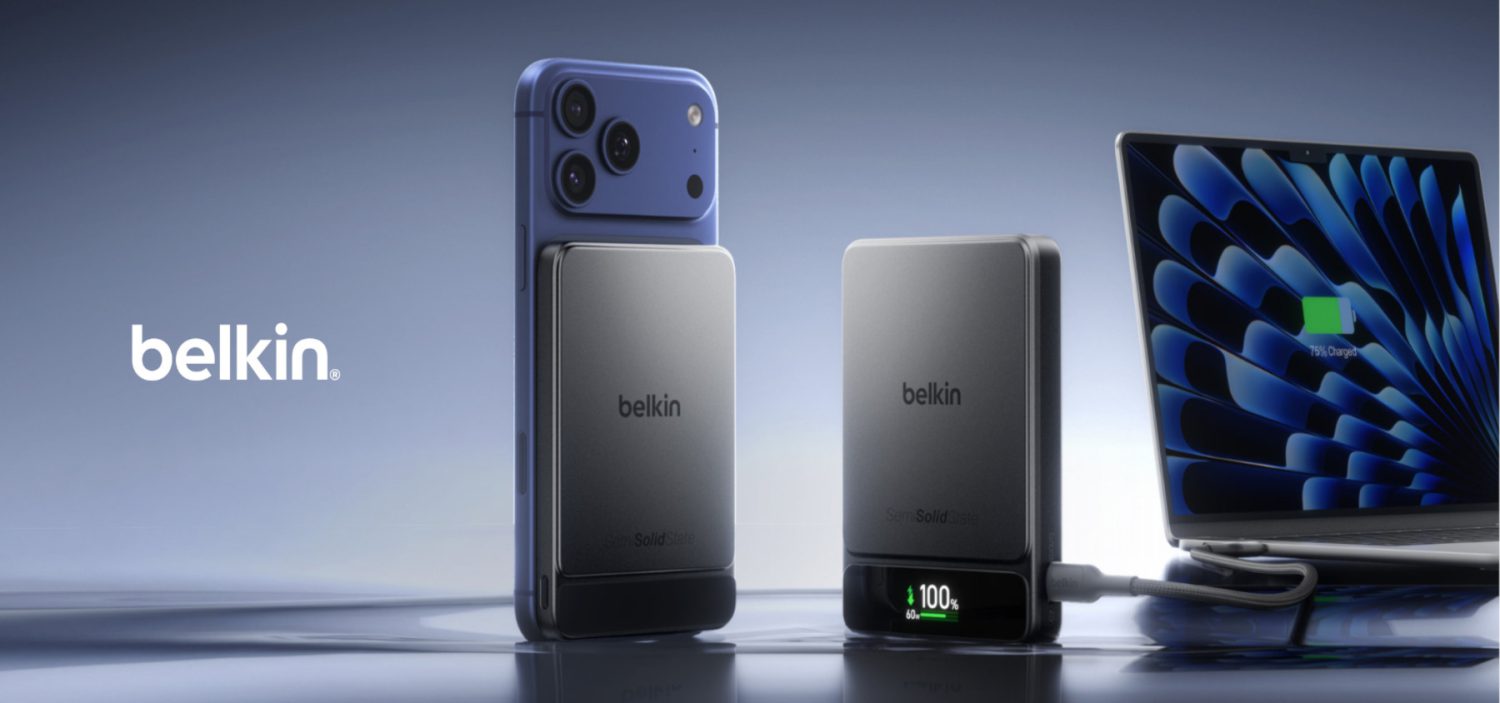
Accessory replacement cycles have been quietly accelerating for years, and the average power bank is one of the worst offenders — degrading, swelling, and landing in a drawer long before it should. At IFA 2026 in Berlin, Belkin debuted its BoostSolid architecture across two new UltraCharge Pro models, betting that battery chemistry can cut through a commoditized market. The pitch is real, if carefully qualified, and the broader IFA lineup — including four SureFind trackers and refreshed UltraCharge banks — gives the story more substance than a single chemistry update. For those looking to get the most out of their devices, these charging tips are worth keeping in mind.
What Semi-Solid-State Actually Means
BoostSolid adds a gel-like layer alongside the conventional liquid electrolyte, placing it between standard lithium-ion and true solid-state batteries.
Belkin claims 80% capacity retention after 1,000 charge cycles, marketed as “up to 3x longer” than typical magnetic power banks — roughly five years at one full cycle every two days, according to 9to5Google. Treat those figures with appropriate skepticism: they come from Belkin’s internal testing, not independent multi-year verification. Still, for anyone who replaces accessories on a frustrating eighteen-month rotation, that trajectory is worth tracking.
Specs at a glance:
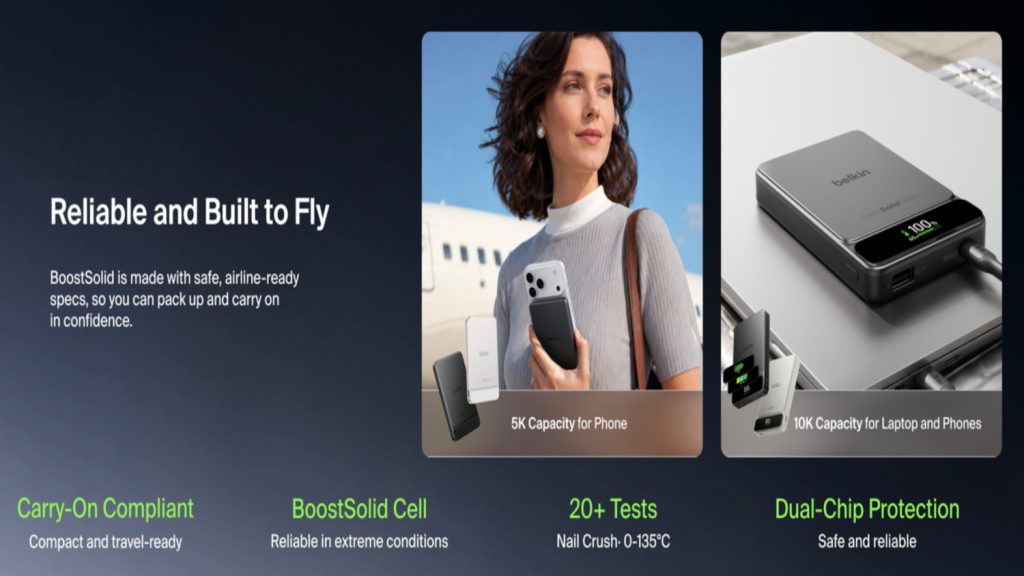
BoostSolid models — slim, safety-focused, and built for everyday carry:
- UltraCharge Pro Slim 5K: 5,000mAh, 8.8mm thick, credit-card footprint, Qi2 15W wireless, 22.5W USB-C, $69.99
- UltraCharge Pro 10K: 10,000mAh, dual USB-C + USB-A, 60W USB-C PD, Qi2 15W wireless, front thermal display, $89.99
High-capacity UltraCharge models — built for laptops, tablets, and long hauls:
- UltraCharge 22K: 22,000mAh, 120W combined output, 65W retractable 70cm cable, digital display, $100
- UltraCharge 11K: 11,000mAh, 60W integrated cable, charges iPhone 17 from 0–50% in 24 minutes, $60
- SureFind trackers: four form factors, $14.99–$39.99, Apple Find My and Google Find Hub compatible
The BoostSolid Models Up Close
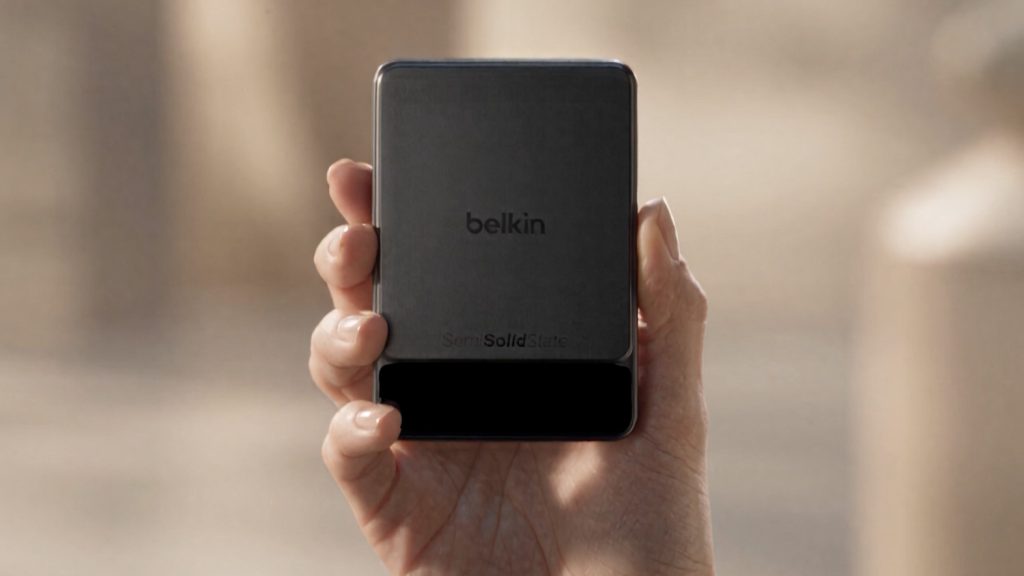
The 8.8mm thick, Belkin claims 40% thinner than rivals — while the 10K adds 60W laptop-capable output and a thermal readout display.
Carrying a bulky power bank in 2026 feels as dated as stuffing an iPod Classic into your jeans when a Spotify subscription lives in your pocket. The 5K’s credit-card footprint and Qi2 magnetic alignment make it genuinely pocketable in a way most 5,000mAh packs simply aren’t. Step up to the 10K for laptop charging, multi-port flexibility, and a front display showing battery status, output wattage, and temperature — a small but useful transparency feature, per early hands-on coverage from TechRadar and The Next Web. Readers concerned about USB Charger Risks will appreciate this level of real-time visibility into what their devices are drawing.
Beyond the Battery: SureFind Trackers and the Rest
SureFind’s Loop Cable Tag and Wallet Stand stand out by combining item tracking with everyday functions — a USB-C charging cable and an RFID-blocking card holder, respectively.
Both work across Apple Find My and Google Find Hub, which is a rarer cross-platform commitment than it should be in 2026. Spot, Card, and Loop Cable Tag ship September 2026; Wallet Stand follows in October. Pricing runs $14.99 to $39.99 — competitive with Tile and AirTag accessories, and without requiring ecosystem loyalty on either side. If you’re building out a kit, these pair well with other essential travel gadgets worth considering.
Trusting a brand’s multi-year battery lifespan claim is a bit like trusting an influencer’s skincare routine: the before-and-after looks compelling, but results depend entirely on real-world conditions nobody has tested at scale yet. BoostSolid is not a chemistry overhaul — the liquid electrolyte is still present. The $69.99 and $89.99 price points carry a modest premium over generic competitors, one that early hands-on reviewers suggest feels justified in build quality and slimness, but that independent endurance data will ultimately decide.
If you cycle through cheap power banks every eighteen months, the math on a claimed five-year BoostSolid lifespan starts making real sense. The technology is promising. The proof arrives after a few years of actual pockets, actual drops, and actual charge cycles.