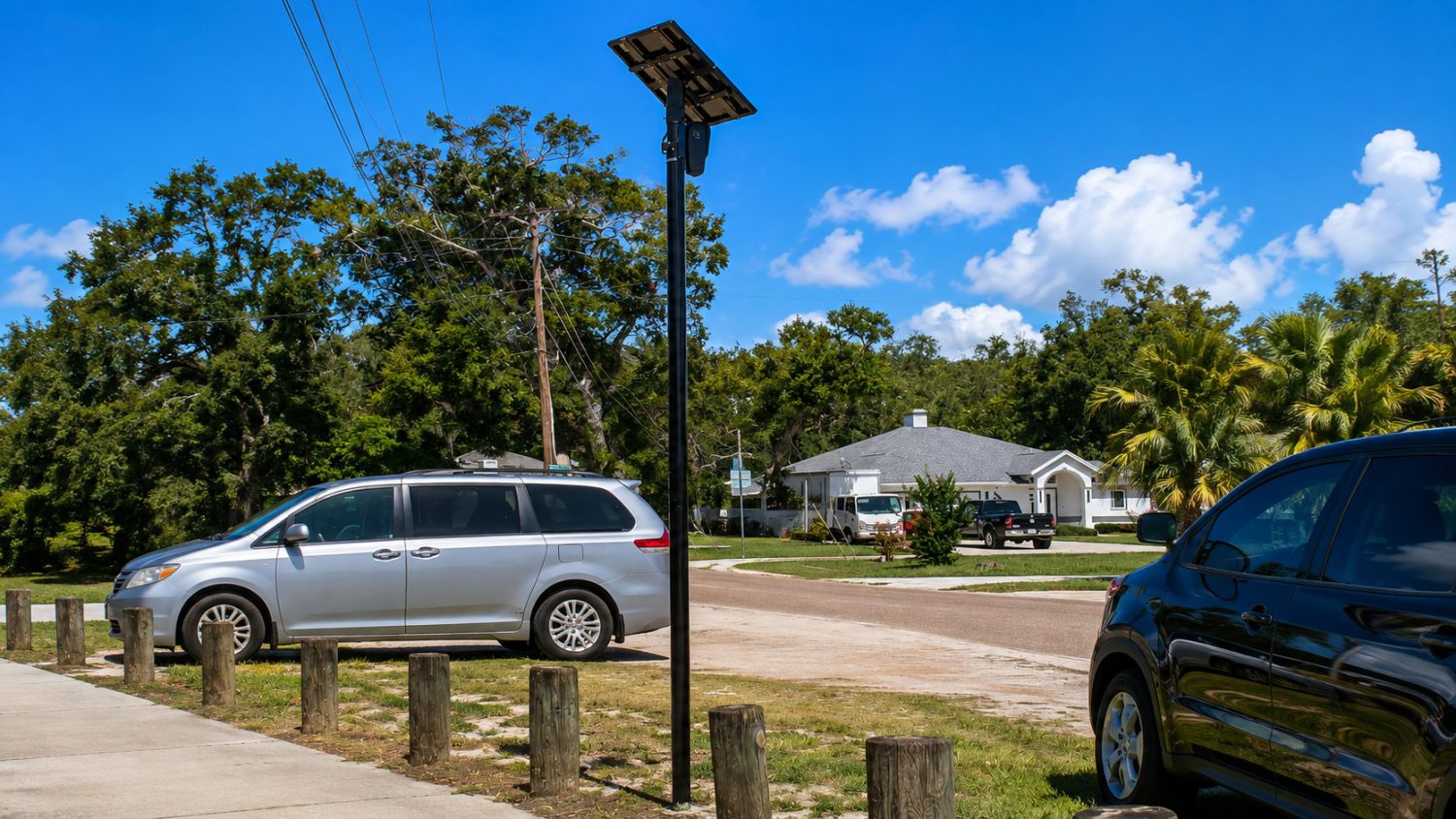
Before scheduling a walkthrough, a Minneapolis-area buyer pulled up DeFlock — an open-source, crowdsourced map of automated license plate readers — and found two pins tied to the HOA: one at the entrance, one by the pool. They canceled. Didn’t reschedule. Real estate professional Lydia Kauppi shared the incident publicly, and it landed like a warning shot across the real estate industry.
This isn’t a quirky anecdote. Surveillance infrastructure is now part of the home-buying calculus, and sellers and HOAs have no playbook for it yet.
More Than a License Plate Reader
Flock Safety’s system doesn’t just read plates — it builds a searchable profile of every vehicle that passes through.
The company’s own materials describe a “Vehicle Signature” capability: machine learning that captures make, color, alterations, and other identifying features, paired with real-time alerts and “plate or no plate” detection. This isn’t a passive security camera watching a parking lot. It’s a system engineered to make vehicle movement data queryable — think less Ring doorbell, more neighborhood-scale data collection.
A few details worth understanding before your next showing:
- DeFlock is publicly accessible and crowdsourced, mapping ALPR locations across the U.S. — no login required.
- The buyer found tracking points at two locations — entrance and pool — meaning movement through the community was logged at multiple checkpoints, not just one.
- Multiple jurisdictions across several states have since canceled or deactivated Flock contracts over privacy concerns, according to reporting from Politico and GovTech.
A Reddit post from the listing agent corroborated Kauppi’s account, describing the same setup: an HOA with Flock cameras at both entrances, including one near the pool. That was enough to make the buyer walk.
The cancellation wasn’t hesitation. It was a hard no.
This buyer isn’t an outlier. They’re early. The same backlash reshaping city council votes is now showing up at open houses — a pattern that mirrors the Flock problem playing out in cities across the country. A tool sold as crime deterrence can double as a movement-tracking system for anyone who lives — or tries to live — there.
What HOAs Never Had to Disclose Before
Privacy-conscious buyers now have a due-diligence tool that works before they ever reach the front door.
Anyone who already audits app permissions before installing them can now audit a neighborhood the same way. DeFlock surfaces what HOA disclosure documents typically don’t mention. Who accesses the footage, whether it’s shared with law enforcement, whether residents were informed before installation — those questions remain largely unanswered for most communities running Flock cameras. Cases like a surveillance app built to track political dissidents show how readily such tools can be repurposed beyond their stated intent.
HOA disclosure requirements vary by state, and surveillance infrastructure rarely appears on standard seller disclosure forms. That gap is exactly where buyer anxiety lives. Concerns about secretly tracking users have moved well beyond niche privacy circles into mainstream scrutiny. The DeFlock map didn’t create this tension between security technology and residential privacy expectations. It just made the tension impossible to ignore — and for at least one Minneapolis-area buyer, impossible to overlook before a showing.