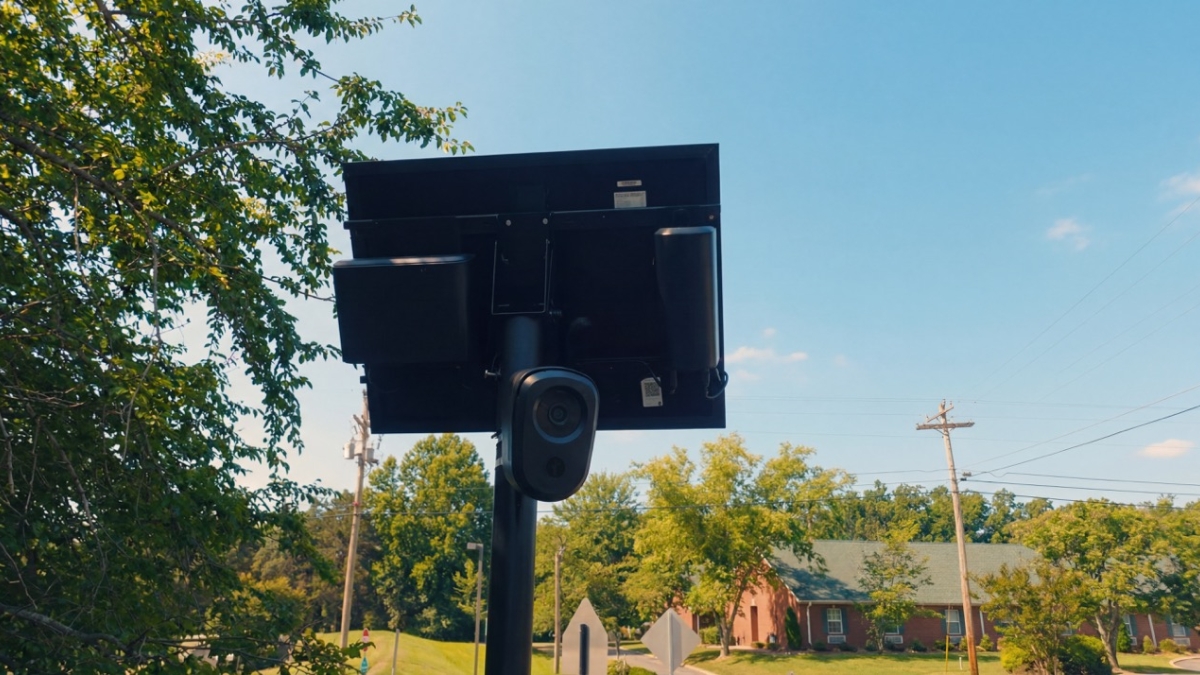
You drive past a camera bolted to city property and assume someone in a council meeting approved it. Permits were filed. Contracts were signed. Adults were in the room. In Millcreek, Utah, that assumption just collapsed. A Flock automated license plate reader — hardware that captures your plate and vehicle details every time you pass — turned up near Millcreek Common with no paper trail. No city contract. No authorization. When 2News contacted Flock Safety for comment, the company had not responded by publication time.
Nobody Signed Off on This
A surveillance device appeared on public land, and the city that owns that land had no idea it was there.
City Council member Thom DeSirant confirmed Millcreek did not authorize the installation and doesn’t know who did. The camera is now in storage while the city investigates. Neither Millcreek nor Unified Police holds a Flock contract tied to this device. City leaders are also auditing other Flock units in the area to determine whether those were legally placed.
Residents still don’t know:
- whether any plate data was captured before removal
- who installed the device and under whose authority
- which agencies could have accessed that data
- how long any records may have been retained
Local parent Sarah Whitley surfaced the concern after spotting the camera near Millcreek Common. Her question was simple and uncomfortable: who is accessing this footage, and did the public ever approve it? This isn’t a passive security camera. It reads plates, logs vehicle characteristics, and makes that data searchable by authorized users afterward. That word — “authorized” — is doing enormous heavy lifting when nobody authorized anything.
The Data Problem Is Bigger Than the Camera
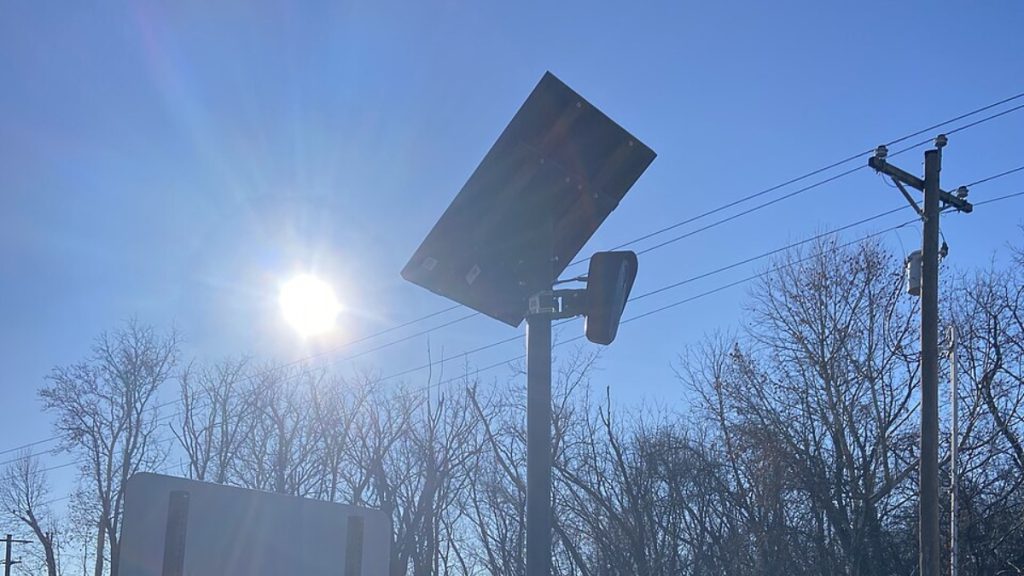
One unauthorized device is a mystery; an unregulated data pipeline is a policy crisis.
Utah state Sen. Stephanie Pitcher cut straight to it: the physical device is almost beside the point. The real issue is the data — who collects it, how long it sits on servers, and who can run searches against it. Pitcher has flagged that lawmakers may need to establish transparency requirements before any meaningful policy can follow.
Compare that to Garfield County Sheriff’s Office, which installed eight Flock cameras along major highways and states that searches must be tied to legitimate law-enforcement investigations. At least there’s a stated framework.
Think of the Millcreek camera like a Roomba nobody bought showing up in your house, quietly mapping every room. Flock’s own materials describe the system as a law-enforcement tool, not general-purpose CCTV. When one appears on public property with no owner, no contract, and a manufacturer that hasn’t answered questions, the question isn’t just “who put that there?” It’s how many others are already watching — and who, exactly, said they could.