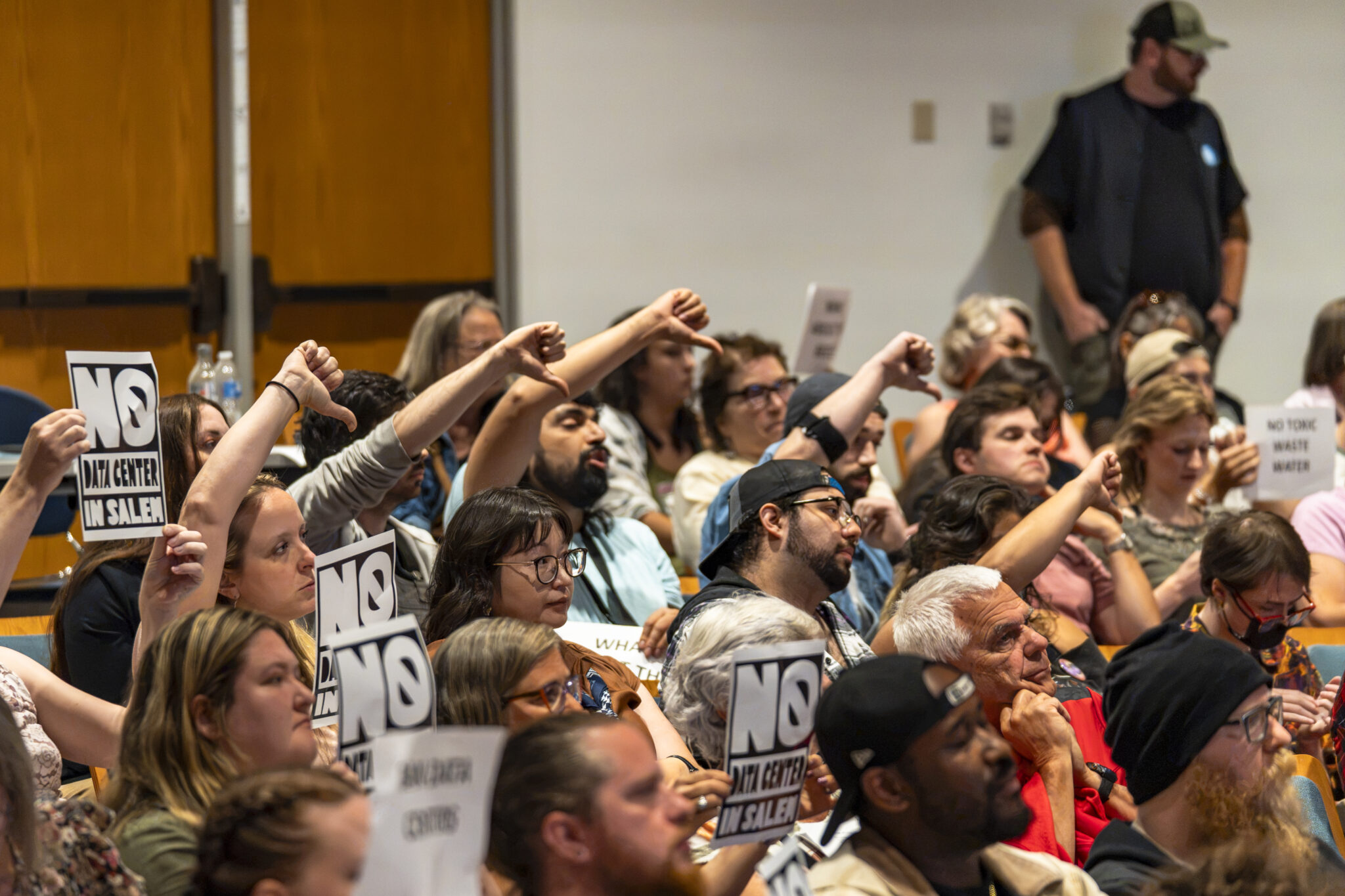
Someone brought a guillotine to a city council meeting in Salem, Oregon on July 27, 2026. Not a sign shaped like one. Not a drawing. According to community accounts and social media posts, an actual guillotine structure appeared at the protest outside Loucks Auditorium, where hundreds of residents had gathered to oppose a proposed multi-billion-dollar AI data center. Company representatives reportedly assessed the scene and left, citing safety concerns — though that detail hasn’t appeared in formal news coverage or official minutes.
What did make the official record: a unanimous council vote to direct staff to begin developing a moratorium on data center development, confirmed by Salem Reporter and KATU News.
The Fight Behind the Fury
A multi-billion-dollar proposal collided with a community already watching Oregon’s complicated data center track record closely.
The proposed facility — roughly $5.1 billion according to civic discussions, though that figure hasn’t surfaced in official city documents — would bring hyperscale AI and cloud infrastructure to Oregon’s capital. The developer remains unnamed in public sources. Residents arrived at Loucks Auditorium ready to fight it, delivering hours of testimony about:
- energy consumption
- water use
- the slow industrialization of their neighborhoods
Oregon already knows this story. The Dalles and Prineville hosted hyperscale facilities that later drew scrutiny over water use and corporate secrecy. Salem is the latest front, and its residents showed up knowing exactly what they were pushing back against. Residents questioned whether the city should become an “AI energy hub” and warned about the strain “mega-data centers” place on power and water supplies, according to the Salem Reporter.
The council’s unanimous vote didn’t enact a permanent ban. It directed staff to develop moratorium policy — a temporary brake while zoning, environmental review, and regulatory options are studied.
What Happens After the Pause Button
The moratorium process is just beginning, and other mid-sized cities are paying close attention to how Salem’s playbook unfolds.
The guillotine carries its own context. Oregon protesters have used similar imagery at demonstrations targeting federal authorities, where it functions as charged revolutionary shorthand — less a literal threat than a signal of deep anger at perceived corporate and governmental power. That symbolism creates genuine tension under Oregon public meetings law, which gives presiding officers authority to remove disruptive items while also protecting broad public access. It’s a line that’s genuinely hard to draw in real time.
The practical consequences are more straightforward. If Salem formalizes the moratorium, it could redirect hundreds of megawatts of planned AI capacity to other jurisdictions — or force developers to offer more substantive community benefits to get projects approved anywhere. Coverage from Salem Reporter and KATU both note the council’s move came directly after sustained public pressure. That’s the part worth sitting with.
The unnamed developer’s investment timeline is now in limbo. The moratorium process has barely started. Salem just reminded the industry that community consent isn’t a formality you schedule around — it’s a variable that can stall a $5.1 billion project before a single permit clears.