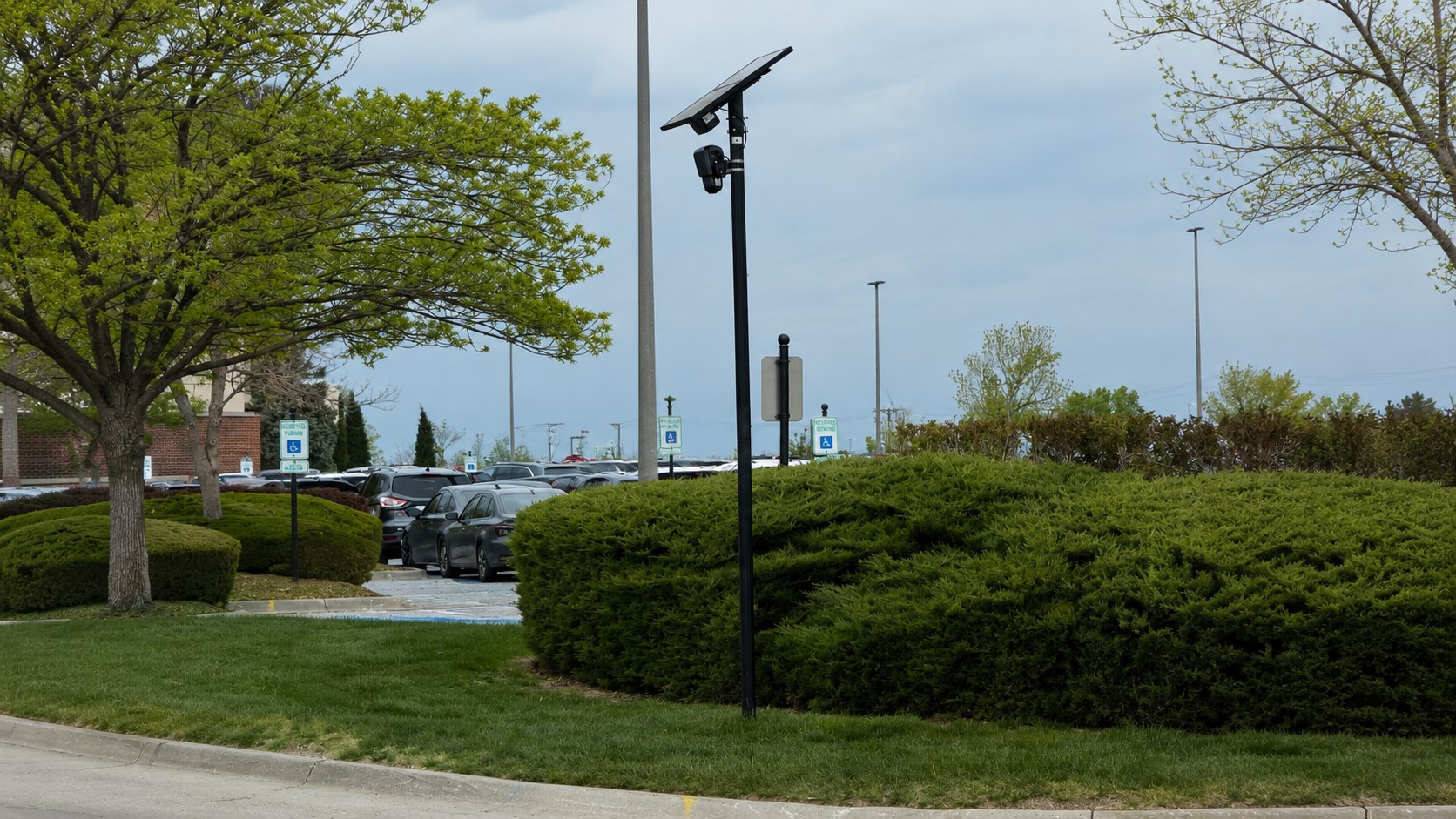
A driver crosses from Wisconsin into Michigan. He buys something legal there. He heads home. Somewhere on Interstate 41, an automatic license-plate reader — an ALPR, a camera that photographs every passing plate and feeds it into a searchable database — logs his car. Then another does. Then another. That’s what happened to Edward Abrams-Phillips in April 2025, according to court records reviewed by 404 Media.
Brown County deputies tracked his vehicle through Flock Safety’s nationwide Flock cameras: northbound hits on Highway 41, a hit on Bridge Street crossing into Michigan, then southbound on I-41 at 3:56 p.m. They coordinated an intercept. The criminal complaint’s probable-cause section spells it out with startling bluntness: “Based on prior flock hits, the vehicle travels to Michigan frequently which is a known source State for Marijuana as it is legal there.”
That sentence deserves a second read. Driving to a state where cannabis is legal became, in a Wisconsin courtroom, part of the justification to search a car.
The deputy claimed to smell raw marijuana. The search happened. Abrams-Phillips was originally wanted for bail-jumping tied to domestic violence charges. That charge was dismissed. His only conviction? Marijuana possession — the crime the entire travel-surveillance apparatus was deployed to find.
Brown County’s Flock audit logs from April 26, 2025 show the department ran dozens of queries that day, searching thousands of cameras at once, with most entries labeled generically as “warrant” or “traffic inv,” according to 404 Media. Less surgical strike, more digital dragnet.
The Bigger Problem Isn’t One Search
When surveillance infrastructure built for kidnappings gets repurposed for weed busts and abortion investigations, the mission creep stops looking like an accident.
This case isn’t isolated. Consider the following examples:
- Texas police reportedly used Flock to scan more than 83,000 cameras nationwide while searching for a woman accused of a self-administered abortion, according to a surveillance app parallel that highlights congressional correspondence on mission creep.
- In Madison Heights, Michigan, a cannabis dispensary called JARS was required to install a Flock camera at its parking lot entrance and give police “unhindered live access” just to keep its operating license.
- When JARS put up a “No Flock Zone” sign to block the camera’s view, the city sent a demand letter threatening sanctions.
The ACLU notes that Flock’s default nationwide data-sharing lets police in one state track drivers in another without a warrant or individualized suspicion — your location history treated like a streaming watch profile, except the algorithm recommends handcuffs. Law enforcement and Flock point to genuine wins: recovered abducted children, flagged homicide suspects. Those cases are real. The question is whether infrastructure built for those emergencies should be running pattern analysis on everyone who crosses a state border to visit a dispensary.
Courts are starting to ask the same thing. One federal court warned that denser ALPR data could trigger Fourth Amendment protections under the Carpenter precedent. Washington state already restricts ALPR use to stolen vehicles, missing persons, and active felony warrants — banning collection near health-care facilities and houses of worship. If your state hasn’t drawn those lines yet, your travel pattern may already be sitting in a database, secretly tracking users and waiting for someone to call it suspicious.