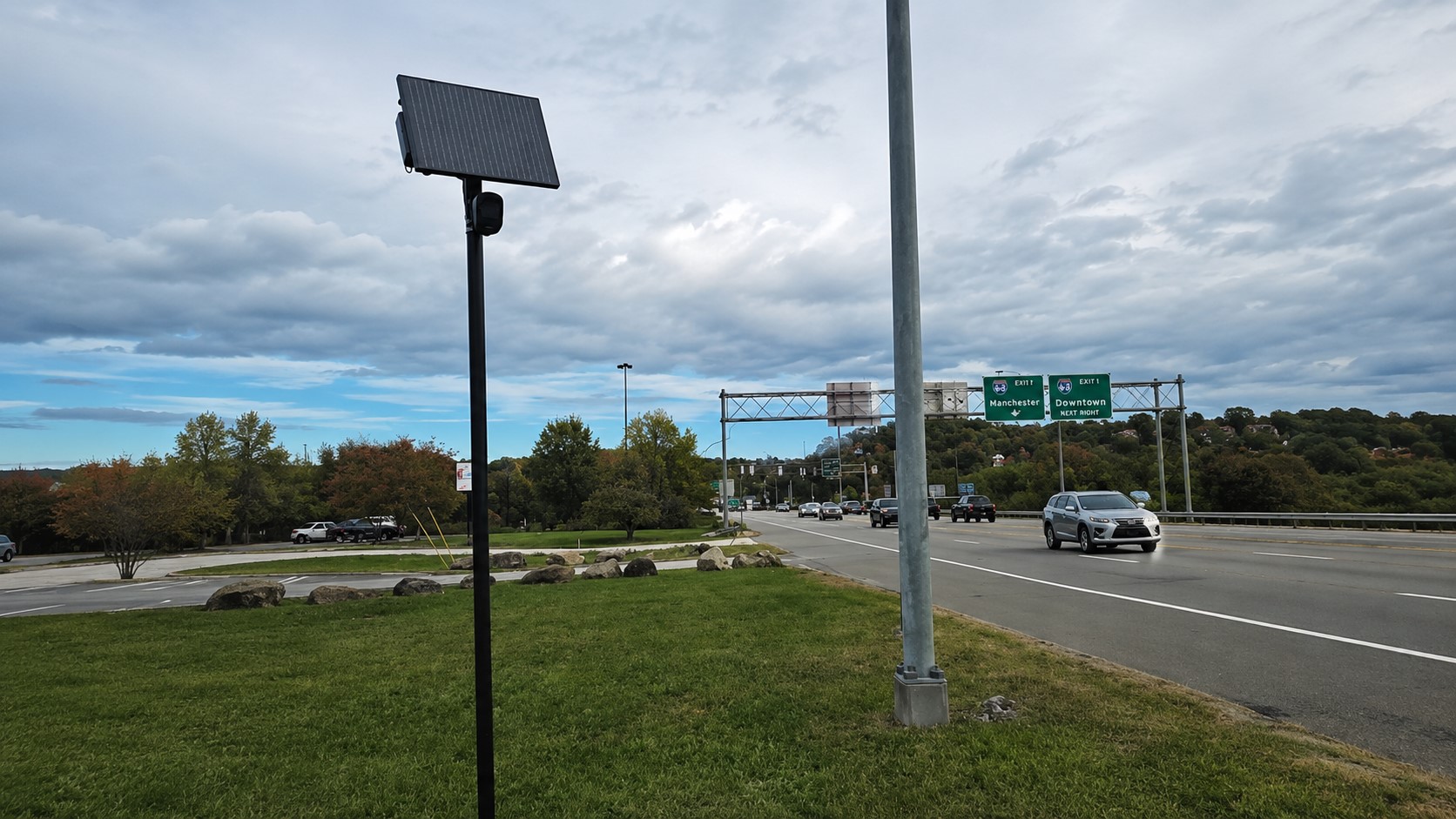
Imagine a company that sells Flock cameras to police departments across the country, then describes itself as “the first public safety operating system that eliminates crime,” according to its Y Combinator profile. That’s Flock Safety. Somebody really believes in it — to the tune of roughly $960M raised across multiple rounds, per TSG Invest and Forge Global.
The March 2025 numbers tell the story clearly:
- $275M raised at a $7.5B valuation, with the round led by Bedrock Capital, according to TechCrunch
- Andreessen Horowitz, Greenoaks, Meritech Capital, Matrix Partners, Founders Fund, Kleiner Perkins, Tiger Global, and Y Combinator all returned as investors
- Flock’s own blog credits a16z as lead, while TSG Invest characterizes Andreessen Horowitz as Flock’s largest institutional backer
- Peter Thiel’s Founders Fund participated, though reporting confirms Thiel is an indirect minority investor — not an owner or board member
Enter Toka – Where It Gets Uncomfortable
An Israeli cyber firm reportedly sells tools that hack cameras and erase the evidence, raising questions a viral post connected directly to Flock’s backers.
Toka, an Israeli cyber-intelligence firm, reportedly offers something far stranger than surveillance. Per Haaretz reporting summarized by Truthout and the New York Post, Toka’s product suite lets government clients locate networked cameras in a target area, hack into them, watch live feeds, and alter or erase both live and recorded footage — without leaving forensic traces. Unlike NSO’s Pegasus or Intellexa’s Predator, which typically leave detectable digital fingerprints, Toka reportedly doesn’t. A human-rights attorney quoted by Truthout called the expansion “deeply alarming,” stressing that its tech lets clients alter camera feeds and recordings, undermining transparency. This parallels the emergence of a covert surveillance app built by US operatives to target political dissidents — a reminder that such tools rarely stay confined to their stated use cases.
An X post from @OrwellDay alleges that Flock’s lead investor also backs Toka. Where the claim gets complicated is exactly here: available Tier-1 and Tier-2 sources confirm Flock’s lead investors clearly. What those same sources do not confirm is whether any of those investors holds a documented stake in Toka. That gap between allegation and evidence is the story — not a footnote.
The Technical Reality Is Already Here
Researchers have demonstrated camera-feed hijacking for over a decade — Toka’s reported capabilities would simply be the commercial, untraceable version.
Demonstrated at Black Hat, Forescout researchers intercepted real camera feeds and pushed pre-recorded video to network video recorders — genuine footage swapped for fake, invisibly, according to Forbes. Think less sci-fi thriller, more quiet administrative override. SecurityWeek documented Dahua camera vulnerabilities enabling remote footage tampering. Body-camera systems, per POAM reporting, allowed footage download, editing, and re-upload with zero indication of changes. The ACLU has warned that mass camera deployment combined with hackable infrastructure creates serious risks — footage can be breached, edited, or misused, with strong oversight often absent, much like apps caught secretly tracking users with little transparency or accountability.
If you live in a city running Flock cameras — and statistically, your odds keep climbing — the question isn’t just who’s watching. It’s whether what they recorded can be quietly rewritten. Reviewing vetted home security systems may offer some measure of control in an environment where public infrastructure grows harder to trust. That unverified gap between what cameras capture and what can be silently altered is the question residents and policymakers in Flock-equipped cities now face.