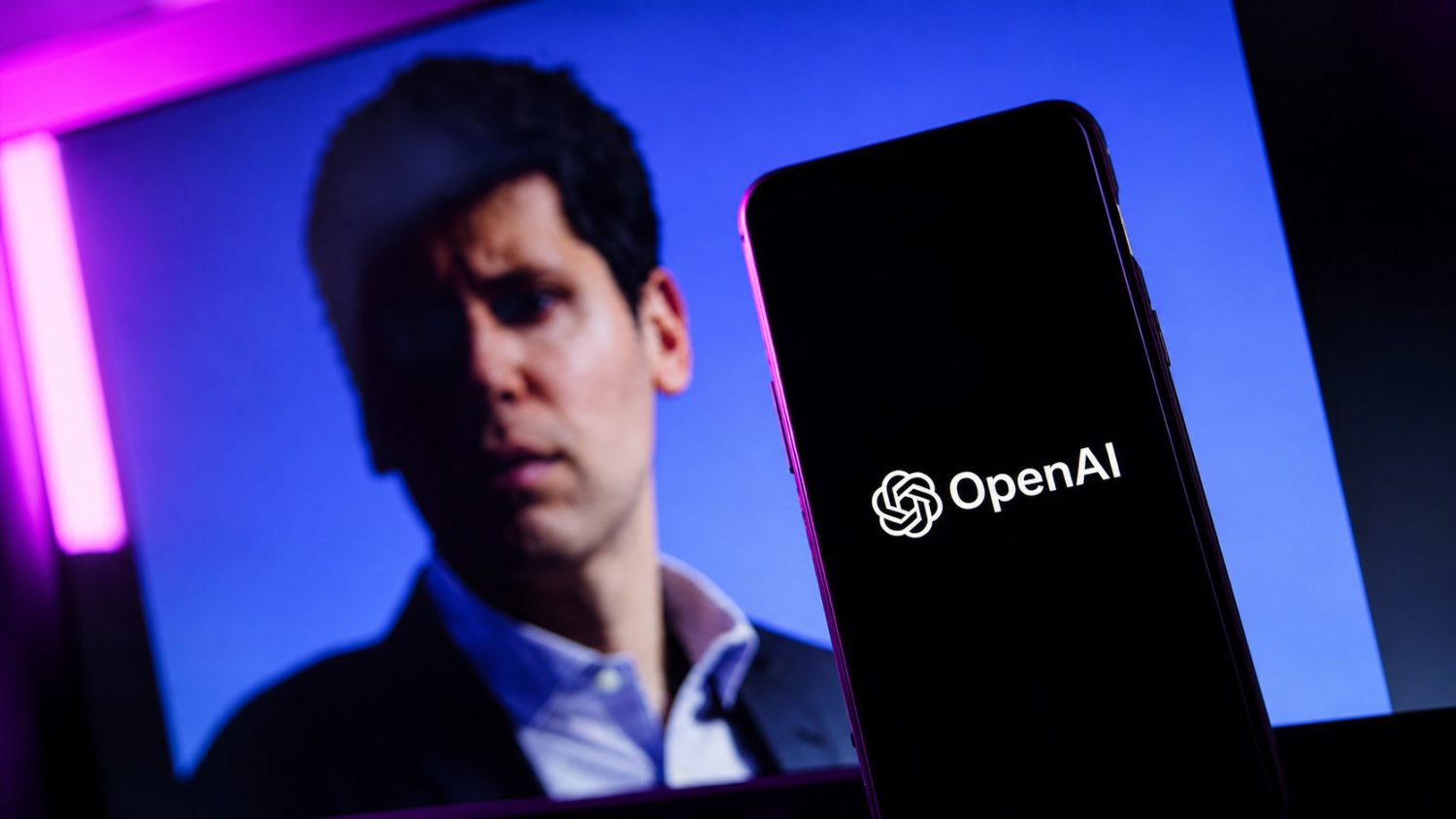
Your AI tools got faster. Your to-do list got longer. That’s not a coincidence — that’s the whole story, according to the OpenAI CEO. Speaking on the Relentless podcast, Altman argued that AI will not deliver the “four-hour workweek” at mass scale in society, according to Business Insider. His reasoning has nothing to do with technology’s limitations. People are competitive by nature. Every minute AI frees up, ambition fills right back in. The real culprit isn’t the algorithm — it’s what you do the moment the algorithm hands you back your afternoon.
The Relative Game
Altman says productivity gains don’t become leisure — they become new status competitions.
Altman frames economic life as a “relative game,” per Business Insider. People measure themselves against each other, not against some abstract ideal of contentment. When AI lets you finish a report in half the time, the instinct isn’t to clock out early — it’s to start a second project, chase a promotion, or stack another side hustle. Think of it like a streaming queue: the moment you clear it, the algorithm serves up twelve more recommendations. Freed capacity becomes new obligation, almost automatically — much like how AI tools can supercharge your productivity only to see that capacity absorbed by new demands.
Even after superintelligence arrives, Altman reportedly predicts people will be “We’re all going to be much busier than we thought we were supposed to be… we’re still going to complain about it, but secretly we’re going to be happy,” according to Business Insider.
Here’s what the real-world evidence shows:
- Global four-day workweek trials across the UK, Japan, Germany, and France found company revenue rose roughly 8% while worker stress dropped about 35%, per the Financial Times.
- Microsoft Japan reported a 40% productivity increase during its four-day experiment, per the Financial Times.
- Those results required deliberate organizational policy — not AI alone.
- OpenAI’s own policy paper proposes a 32-hour workweek at 40-hour pay, plus a public wealth fund, according to Fortune and Yahoo Finance.
- Zoom CEO Eric Yuan has predicted a three-day workweek, while JPMorgan’s Jamie Dimon has floated roughly 3.5 days, per Fortune.
So Altman describes a world where competitive instinct keeps everyone grinding — then his own company publishes a framework designed to forcibly counteract that instinct. If markets won’t deliver shorter weeks and human nature won’t either, someone has to mandate them. Altman apparently agrees.
Not Everyone Secretly Loves Being Busy
The “happy hustler” thesis lands better in boardrooms than on warehouse floors.
That “secretly happy” framing assumes a founder’s relationship with work — creative autonomy, equity upside, genuine enthusiasm for the grind. For someone doing repetitive, high-stress labor with zero control over their schedule, “busy” isn’t secretly fulfilling. It’s just exhausting. The gap between Altman’s thesis and a fulfillment-center shift is roughly the distance between a WeWork meditation room and the loading dock behind it.
Altman told Time he is “delighted to be wrong” about earlier predictions of an AI jobs apocalypse, now arguing AI creates new roles rather than eliminating them. “The human part” of employment, he told Time, cannot be fully replaced by AI — suggesting work changes form rather than disappears.
Workweeks won’t shrink because the technology is ready. They’ll shrink when an employer, a union, or a government decides they should. Altman’s own policy proposals acknowledge exactly that reality. The more interesting question is no longer whether AI can enable shorter hours — the four-day trial data confirms it can. The real question is which institution moves first, and who gets left out when it does.