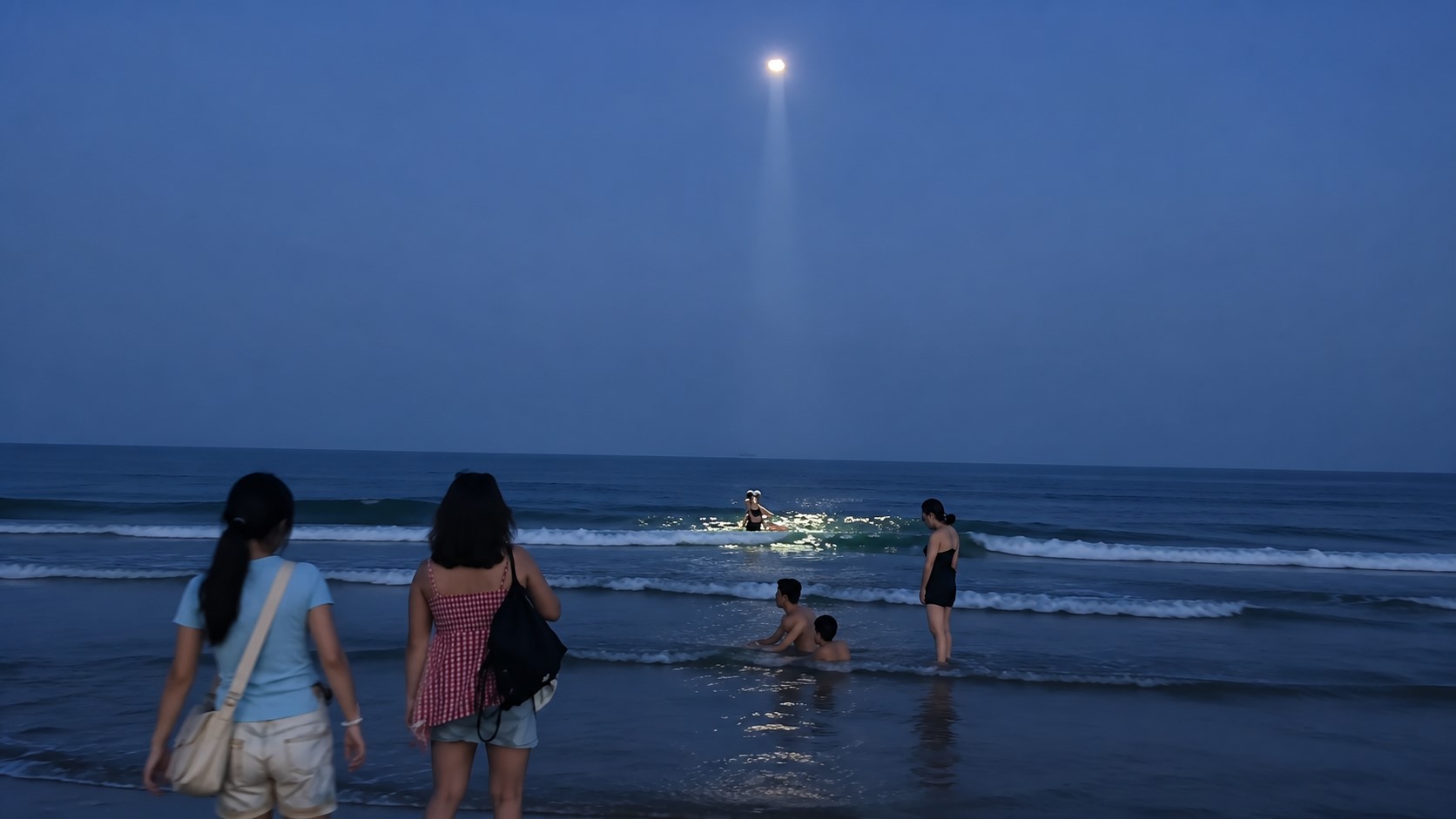
A man walks toward the dark water on a Qingdao beach. A spotlight hits him from above. Then a voice — not human, not nearby — orders him out of the sea. He turns around. No lifeguard sprinting across sand, no whistle blast. Just a drone, a loudspeaker, and total compliance. The viral video, circulating widely since late July 2026, captures something that reads like a deleted scene from a Black Mirror episode but is, in fact, deliberate municipal policy in this Shandong province coastal city — part of an expanding drone patrol program that has sparked a genuinely unresolved global debate about where safety enforcement ends and surveillance begins.
Hardware From the Sky
Qingdao’s patrol drones pick up where human lifeguards leave off each evening.
The drones carry spotlights and integrated loudspeakers, with thermal imaging reportedly fitted on some units. Qingdao authorities deploy them after sunset, when lifeguards clock out and drowning risk spikes due to low visibility. Once a drone detects someone entering prohibited waters, it swoops close and broadcasts a pre-recorded warning ordering the person to leave immediately. The man in the video complied on the spot. According to O Globo and Turkish outlet Haberler, similar drones operate across Chinese beaches, parks, and tourist areas — monitoring rule compliance, guiding visitors via voice messages, and supporting emergency teams with aerial lighting and rapid communication.
Lifeguard or Big Brother?
The framing depends entirely on where you stand — geographically and philosophically.
Brazilian and Turkish outlets described the system as a “technological lifeguard,” noting these drones “are employed in beaches, parks and tourist areas to monitor compliance with rules, guide visitors via voice messages and assist emergency teams,” per O Globo’s reporting. Greek outlet Newsbomb took a sharper read, calling it “Big Brother on the beach.” Neither framing is entirely wrong. China’s regulatory environment permits broad municipal drone use for public security — this deployment is legal, accepted, and expanding. Outside that framework, the identical hardware immediately triggers questions about privacy rights, airspace rules, consent, and proportionality of enforcement that regulators in Europe and North America are still working through, echoing concerns raised when a White House app was caught secretly tracking users every 4 minutes.
The Pattern Is Older Than You Think
The Qingdao beach drone is the same surveillance logic China has applied for years, just with a new backdrop.
This isn’t a novel concept — just a new setting. China has spent years layering CCTV networks, facial recognition systems, and UAVs into everyday governance. Drones broadcast COVID lockdown reminders. They directed traffic and monitored crowds. The Qingdao incident simply applies that same infrastructure to a man in swim trunks on a summer night. Looking ahead, combining drone patrols with AI-based detection could automate not just warnings but evidence gathering — potentially issuing fines without any human involvement, deepening debates about algorithmic governance and due process. No specific drone manufacturer has been identified in any reporting on this case. Meanwhile, coastal cities and Mediterranean or Southeast Asian tourist destinations may explore comparable systems, shaped and constrained by their own legal frameworks on surveillance, data retention, and public-space enforcement.
The sky just became part of the lifeguard stand. What that means for your next beach vacation — safer, creepier, or both simultaneously — is a question worth sitting with before the summer crowds arrive.