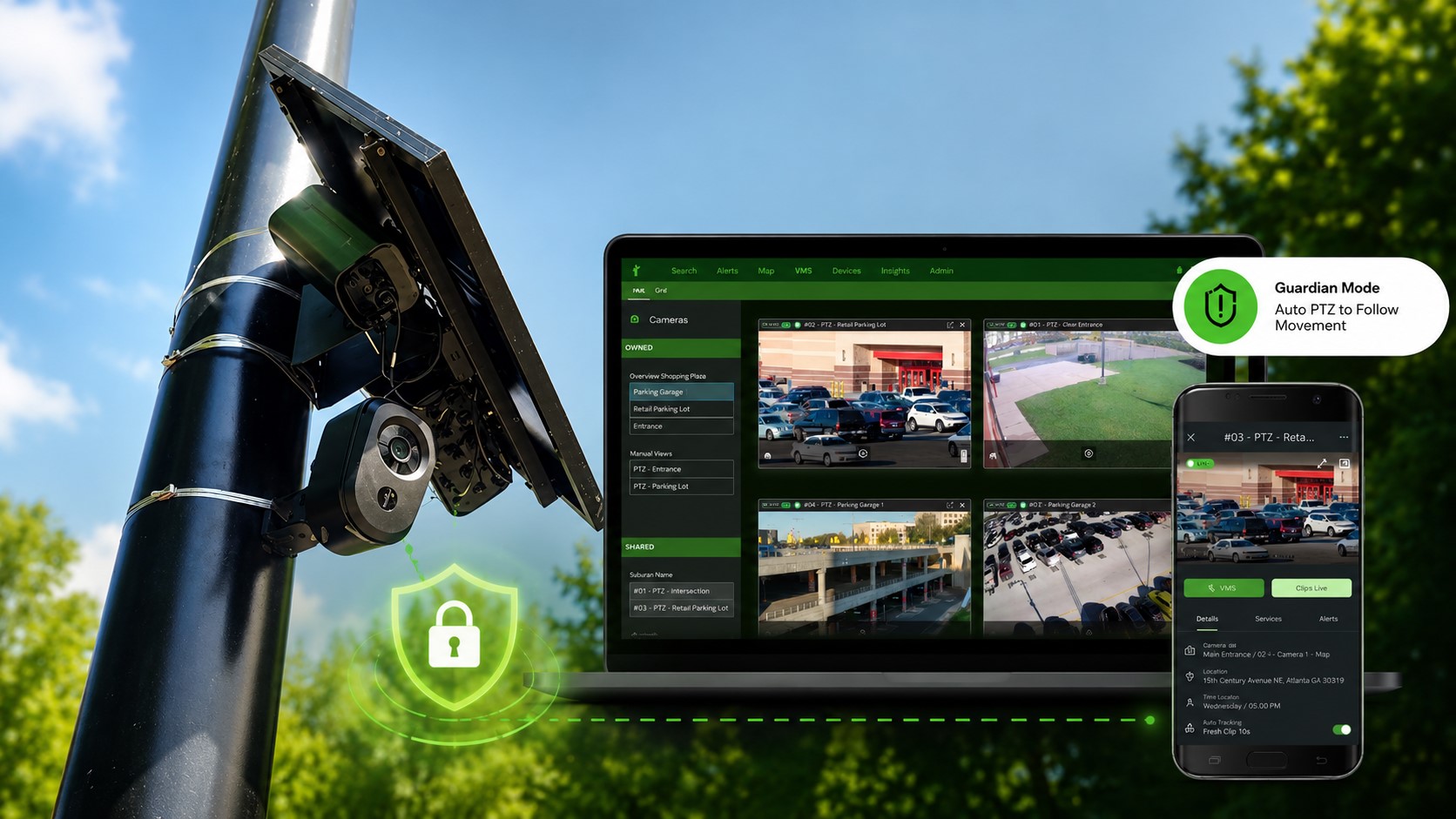
When LAPD allowed its Flock Safety contract to expire, CEO Garrett Langley went on ABC7 with a reassuring message. “A car drives by, we take a picture,” he said. “It’s a static picture of a car, and then we read the license plate.” Simple. Harmless. Except roughly a year earlier, Langley told Forbes something quite different: in a 911 scenario, Flock would “just open up the five nearest cameras in real time and say, here’s what’s happening right now.” That’s not a static picture. That’s live video.
The Paper Trail Flock Left Behind
Company blogs, executive quotes, and a Georgia police pilot all contradict the “no video” claim.
The contradiction runs deeper than one interview. Flock’s own materials — some now deleted — built a clear marketing trail:
- A Flock blog promised “all existing Flock LPRs will soon stream live video and capture clips with a free, optional software update. No new hardware, no permits, no extra cost. Free and optional to opt in.”
- A separate, now-deleted post titled “LPR Cameras Can Become Video Cameras” quoted Chief Strategy Officer Bailey Quintrell: “This will be a no-cost software update we push over the cloud.”
- Flock launched Condor, a subscription service offering live-streaming and 30 days of recorded video, integrated into its broader surveillance platform.
- Text messages obtained by 404 Media show a Dunwoody, Georgia police officer confirming in January 2026 that live ALPR video was already active: “It’s been about a month and it’s pretty cool feature.”
Think of it like a feature flag — that trick apps use to hide capabilities until launch day. The video was always there, sitting behind a software switch Flock controlled.
A Pilot That Vanished Without Announcement
Five agencies quietly tested live video on Flock ALPR devices before the feature was discontinued for law enforcement with no public explanation.
Five law enforcement agencies ran a “limited pilot” for live video on ALPR devices, a Flock spokesperson confirmed after 404 Media pressed for answers. The feature was quietly tested and then discontinued for law enforcement in March. No public announcement accompanied the rollback — the kind of quiet Google-killing-a-product move that tends to resurface later in a different form.
The ACLU has documented a broader pattern. Flock previously told city officials it didn’t create “heat maps” of vehicle movements, then later admitted it does, according to ACLU reporting. The organization has characterized Flock’s expansion as a troubling move into traditional video surveillance and audio analytics. Meanwhile, city FAQs in Bartlesville, Woodburn, and Cheyenne still tell residents Flock cameras “do not record video” — language that traces directly back to Flock’s own talking points.
Your neighborhood almost certainly has these cameras. The underlying hardware capability is unchanged, and a software update already turned live video on for at least five agencies. What keeps it off now is a company policy — from a company whose public statements have repeatedly needed revision.