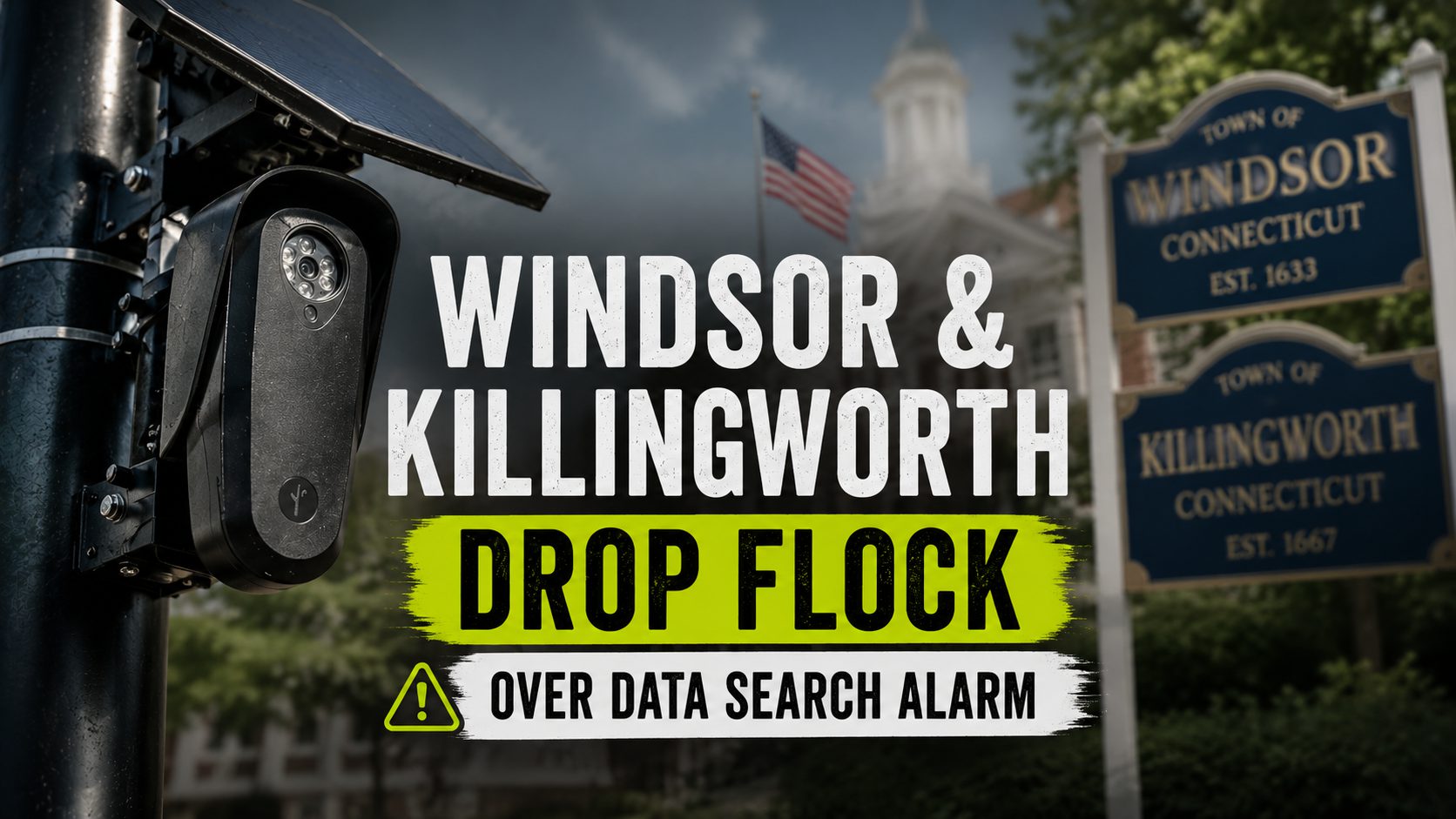
Someone searched Windsor’s license plate data 590,000 times in nine weeks. That number, unearthed by local activist Eric Weiner through a public records request, landed like a cold splash of water on a town that thought it was just catching car thieves — not unlike how a surveillance app built to monitor civilians can quickly exceed its stated purpose. Windsor’s Town Council voted to keep its 16 Flock Safety cameras permanently off, with removal scheduled by fall. Killingworth also ended its contract, citing privacy concerns and limited policing value. A new Connecticut law restricting ALPR data use takes effect in October, and the timing feels less like coincidence than inevitability.
The Cameras Worked – And That’s Part of the Problem
Windsor’s plate readers helped solve cases, but the volume of data access spooked officials and residents alike.
Windsor officials acknowledged the cameras produced results, including at least one stolen-vehicle recovery. But Mayor Nuchette Black-Burke was direct: “The vendor is not what we want.” The system captured license plates, timestamps, and locations alongside vehicle images — yet the sheer scale of queries suggested something far broader than targeted investigations.
Key findings from public records requests and official statements include:
- Windsor’s plate data was searched approximately 590,000 times over nine weeks, according to Weiner’s FOIA findings
- Killingworth ended its contract citing privacy, security concerns, and limited practical value for local police — prompting some residents to explore vetted Home Security Systems as alternatives
- Flock Safety states its technology has contributed to roughly 700,000 crime investigations nationwide
- The cameras recorded plates, metadata, and vehicle images — not interior photos of occupants
- Connecticut’s October ALPR law is expected to restrict data use, including limitations on immigration-related searches
Flock Safety contends that local agencies control their own data-sharing preferences. Critics counter that the company’s cloud-based network enables access well beyond what residents anticipated — like discovering your neighborhood watch had been quietly filing detailed logs with every precinct in the state.
Connecticut’s New Rules May Accelerate the Rethink
Incoming state restrictions on plate reader data could push more towns toward the exit.
Where local discretion once governed ALPR use, Connecticut’s October law introduces hard limits. The expected immigration enforcement restrictions are the headline provision, but broader data-sharing rules matter just as much for towns weighing vendor renewals. Reports of apps secretly tracking users far beyond their disclosed scope have sharpened public skepticism, and Flock faces real contract churn in privacy-conscious markets if Windsor and Killingworth become a pattern rather than an exception.
The deeper issue is whether a camera on a pole should quietly build a searchable record of every vehicle’s movements — and who gets to look.