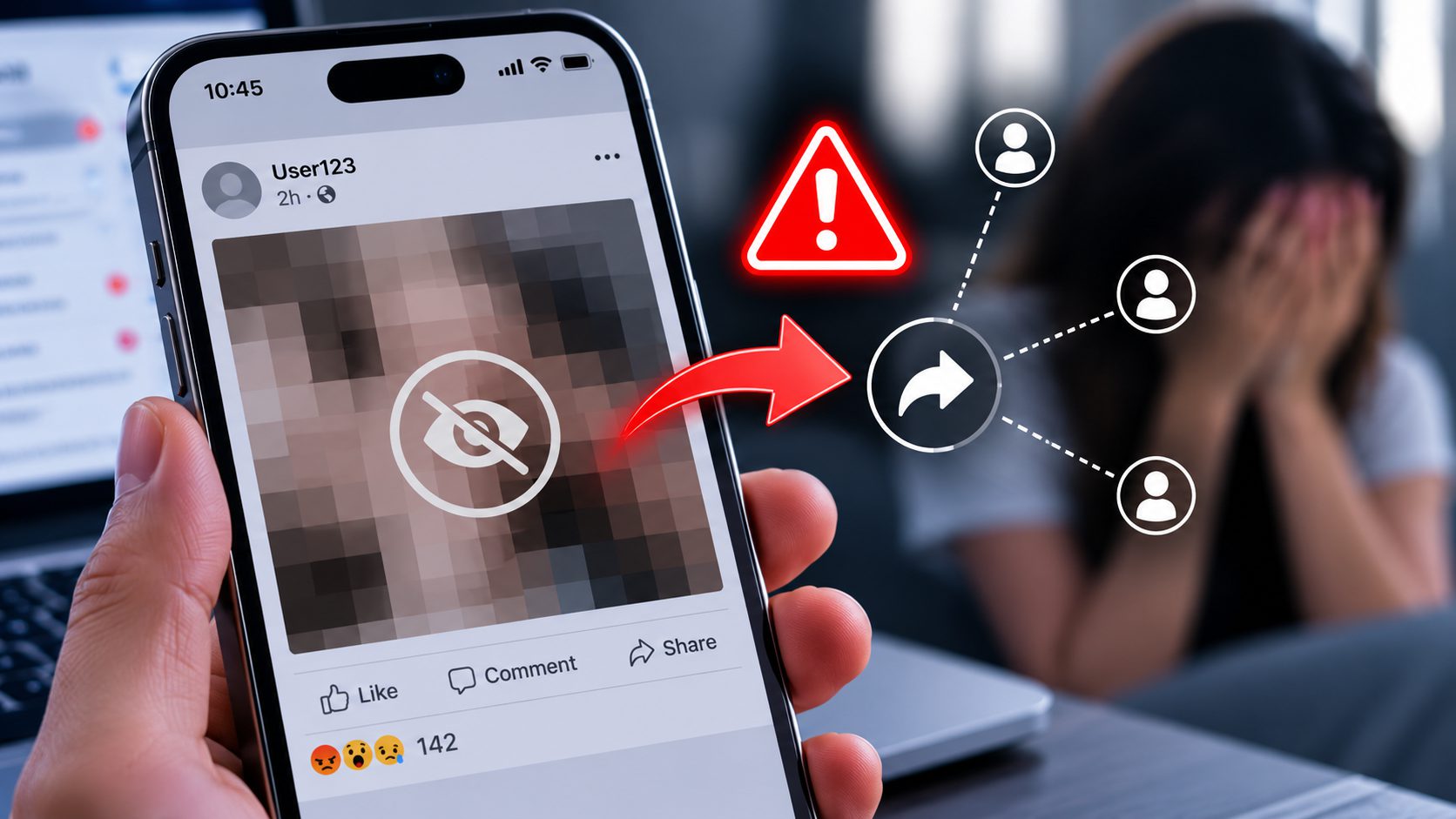
Outside a club, a woman agreed to a simple stunt — someone would lift her while a friend filmed. Normal enough, the kind of thing that fills your Instagram feed on any given Saturday night. What she did not agree to was that video landing on accounts with tens of thousands of followers, her underwear and partially exposed buttocks visible to anyone scrolling past. One clip was filmed up her skirt. She was identifiable. That gap between agreeing to a moment and having your body broadcast as content is exactly what B.C.’s Civil Resolution Tribunal priced at $20,000 in damages against Sherif Elbishlawi, according to CTV News.
What the Tribunal Actually Decided
The award breaks into three parts, each targeting a different dimension of harm.
CRT member Maria Montgomery ordered $10,000 in general damages for the woman’s humiliation and ongoing anxiety about re-posting. Another $5,000 in aggravated damages followed because Elbishlawi refused to remove the videos unless she met him in person first — he reportedly said he “doesn’t do favors for strangers” — never apologized, and maintained he did nothing wrong. The final $5,000 came as punitive damages. Meta removed the videos twice and deactivated his accounts; he reposted them anyway, and the tribunal noted he may have profited from the content. Montgomery’s ruling makes one principle explicit: consent to a stunt does not constitute a content license.
This case breaks the typical mold. Most intimate-image claims involve explicit content weaponized by ex-partners. Here, the tribunal found Elbishlawi appeared to use a stranger’s body as engagement bait — treating her like free stock footage for his clout economy. Wide accessibility to tens of thousands of followers substantially increased the assessed harm, according to Montgomery’s written reasons.
“His conduct is deserving of rebuke and markedly departs from ordinary standards of decent behaviour.” — CRT Member Maria Montgomery
The Law Behind the Award
B.C.’s Intimate Images Protection Act gives victims concrete legal tools — and the damages ceiling is significantly higher than it used to be.
B.C.’s Intimate Images Protection Act, in force since January 29, 2024, gives the CRT power to order images deleted and de-indexed, and to award damages up to $75,000. Before the Act expanded those powers, the tribunal’s damages cap sat at just $5,000 — which is precisely why a $20,000 award is now possible. An intimate image under the Act covers any footage where someone appears nude or nearly nude, or with visible genitals, anal region, or breasts, according to the Act’s published provisions. Partial exposure counts. Non-compliance carries real consequences:
- Penalties can reach $10,000 for individuals
- Penalties can reach $100,000 for platforms
Your Follower Count Is Not a Defense
This ruling draws a hard line for anyone filming strangers at clubs or events for social media engagement.
If you post people at clubs or events for reels and follower growth, the Elbishlawi decision signals exactly where the legal line sits. A Saskatchewan court previously ordered $160,000 in a revenge-porn case, according to CBC — the largest Canadian award at the time. B.C.’s $75,000 cap means future tribunal awards could climb well beyond $20,000, particularly where monetization and defiant reposting are factors. The era of treating strangers’ bodies as free content is running out of legal runway. The audience size that motivated Elbishlawi to post may be precisely what cost him most.