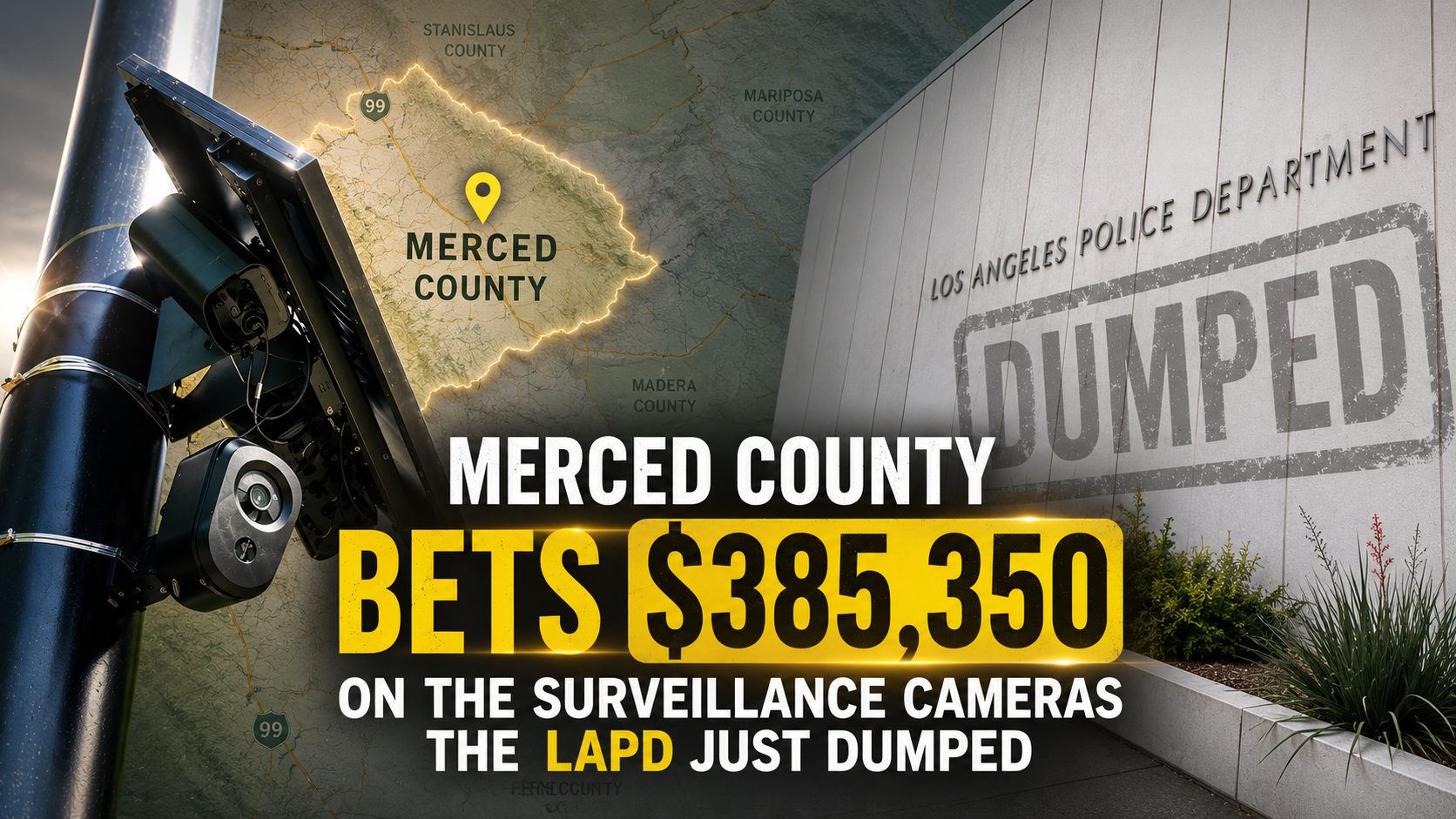
The Los Angeles Police Department walked away from Flock Safety. Merced County just signed up for three more years. The Board of Supervisors voted unanimously to extend its contract with the automated license plate reader company, capping the deal at $385,350. That buys a camera network the Sheriff’s Office calls essential to investigations — and that critics call an unjustifiable drain on county resources. Your car, your route, your daily patterns. All captured. All stored.
What the Cameras Actually See
The system logs vehicle details and holds them for 30 days — with rules about who gets to look.
The Flock cameras don’t record faces. They capture vehicle images: make, model, color, license plate. Data sticks around for up to 30 days, then gets deleted. Deputies need a case-related reason to access the system. Information can be shared with local agencies but not federal law enforcement, according to county officials.
The Sheriff’s Office has run the network since 2022. Here’s what the extension covers:
- Contract capped at $385,350 over three years
- System used for cases ranging from homicides to thefts since 2022
- Vehicle data retained up to 30 days before automatic deletion
- Local agency sharing permitted; federal sharing prohibited under current policy
- Eight new Animal Services cameras included — these are not license plate readers
Deputy Garcia told the board the system helps both detectives and patrol staff across case types. Supervisor Jim Pacheco defended the renewal more directly, saying public-safety benefits outweigh the cost and that cameras could help solve crimes or save victims. Residents weighing their own safety options may also want to look at home security systems that security experts recommend.
Not everyone agreed. Critics at the meeting argued the money should fund county services instead. Others raised sharper concerns: that a networked camera system effectively maps community movement for any agency with access. Opponents at the meeting warned that policy guardrails are only as durable as the officials who choose to honor them — a concern no policy document resolves on its own.
Guardrails Written in Policy, Not Law
The 30-day retention limit and federal-sharing ban sound reassuring — until you ask what actually enforces them.
Flock Safety says its searches rely on vehicle characteristics, not identity, and that it doesn’t sell customer data. Critics have questioned how broadly that data can actually be accessed. The LAPD’s decision to end its own Flock relationship suggests Merced County isn’t operating in a vacuum — similar debates have played out across California jurisdictions, and the pattern is worth tracking with tools like a surveillance app that has drawn scrutiny elsewhere.
The vote was unanimous. The questions aren’t. What happens when a case demands data older than 30 days? Attendees at the meeting also questioned what would prevent a quiet revision to the federal-sharing ban — and who would be notified if that policy changed. Broader patterns of secretly tracking users at the federal level make those questions harder to dismiss. The surveillance infrastructure is in place. Whether the oversight keeps pace with it is the part still being written.