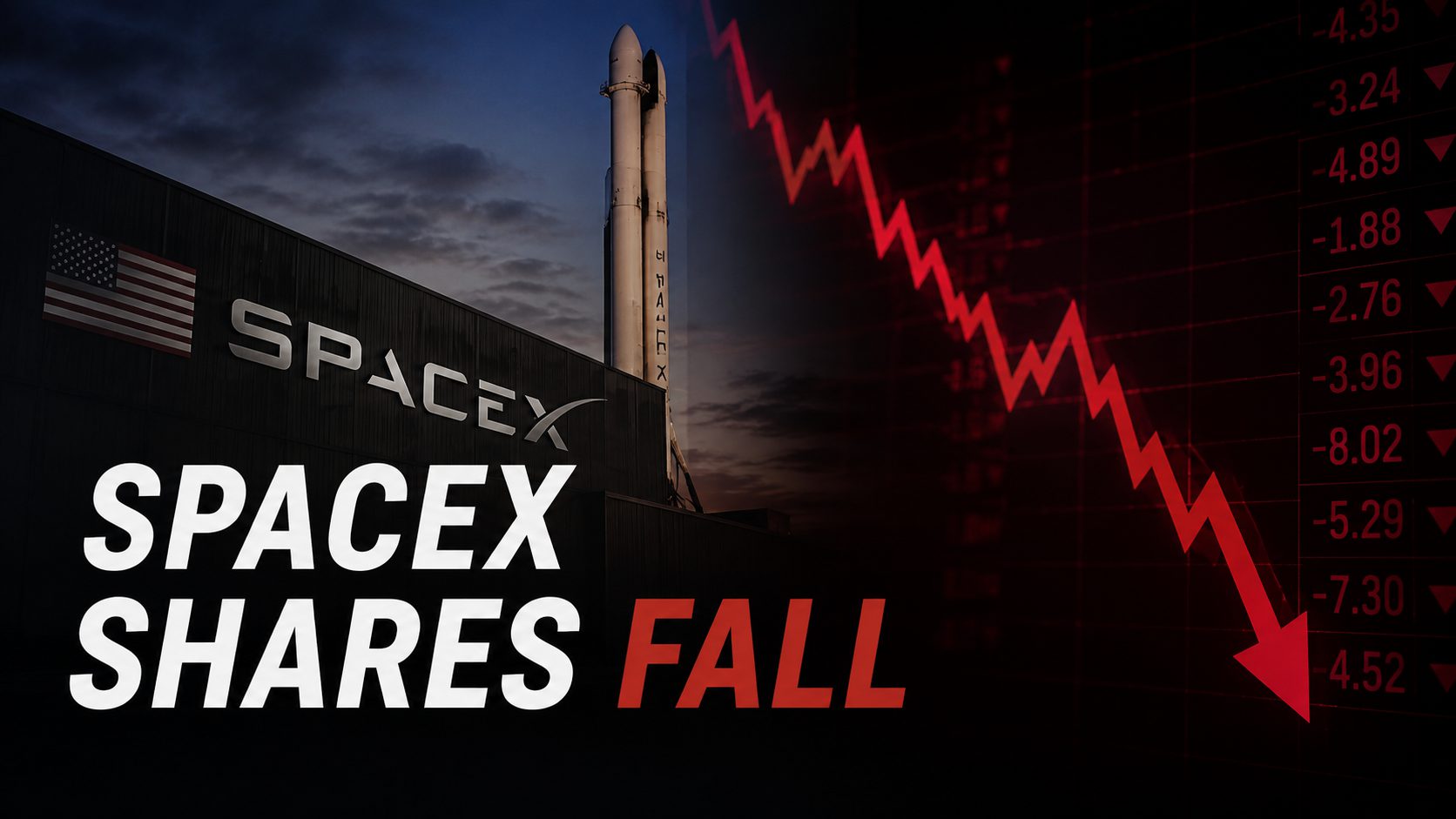
The world’s largest IPO just went underwater. SpaceX priced its historic debut at $135 per share, offered roughly 555.6 million shares, and raised approximately $75 billion at a valuation near $1.75 trillion. That was the party. The hangover arrived quickly. Shares have now slipped below that $135 offer price, according to Hindustan Times, meaning anyone who bought at the IPO is staring at a loss. Buyers who entered at the offer price are now watching early gains evaporate — and the psychological damage runs deeper than the dollar figures suggest.
From Record Debut to Retreat
The decline unfolded across multiple sessions, turning a historic debut into a sustained and uncomfortable pullback.
The slide didn’t happen overnight. On June 18, Reuters reported shares fell more than 6% in a single session, though the stock was still trading roughly 30% above the IPO price at that point — a comfortable margin, at least temporarily. Then the bleeding continued. By June 23, both the New York Times and Forbes reported that shares had dipped below $150, the price at which SpaceX actually started trading on its first day. That $150 level mattered because it represented the market’s opening bet, and crossing below it wiped out gains for early public-market buyers. The decline deepened further from there. Hindustan Times reported a close of $136.08 before shares slid under $135 itself, erasing even the IPO-price safety net across a sustained multi-session pullback.
- IPO price: $135 per share
- Shares offered: approximately 555.6 million
- Total raise: roughly $75 billion
- Peak valuation at debut: approximately $1.75 trillion
- Stock fell below $150 debut trading price on June 23, then below the $135 IPO price
What Falling Below IPO Price Actually Means
Crossing below the offer price isn’t just bad optics — it’s the moment institutional and retail buyers realize the floor they anchored to has given way.
The IPO price isn’t just a number. It’s the psychological anchor every institutional buyer and retail participant locked onto. Dropping below it carries a particular sting — comparable to the crypto euphoria-to-crash cycle of 2022, when valuations that looked bulletproof dissolved faster than the hype that built them. Every shareholder who entered at offering is now holding a position worth less than what they paid.
Balance matters here, though. Post-IPO volatility is standard, particularly for megacap debuts carrying this much attention and expectation. Price discovery takes time, and sharp early swings are more rule than exception for listings of this scale. The harder question hanging over SpaceX stock is whether this correction represents normal settling or the market quietly deciding that $1.75 trillion was a valuation built more on spectacle than spreadsheets. For context, comparable megacap debuts have historically seen post-listing corrections of 15–30% before finding a floor — so the current pullback isn’t without precedent, even if the scale of this offering makes every tick feel amplified.
SpaceX builds real rockets. That part isn’t in dispute. But trillion-dollar valuations demand fundamentals, not just trajectory — and right now, gravity appears to be winning the argument.