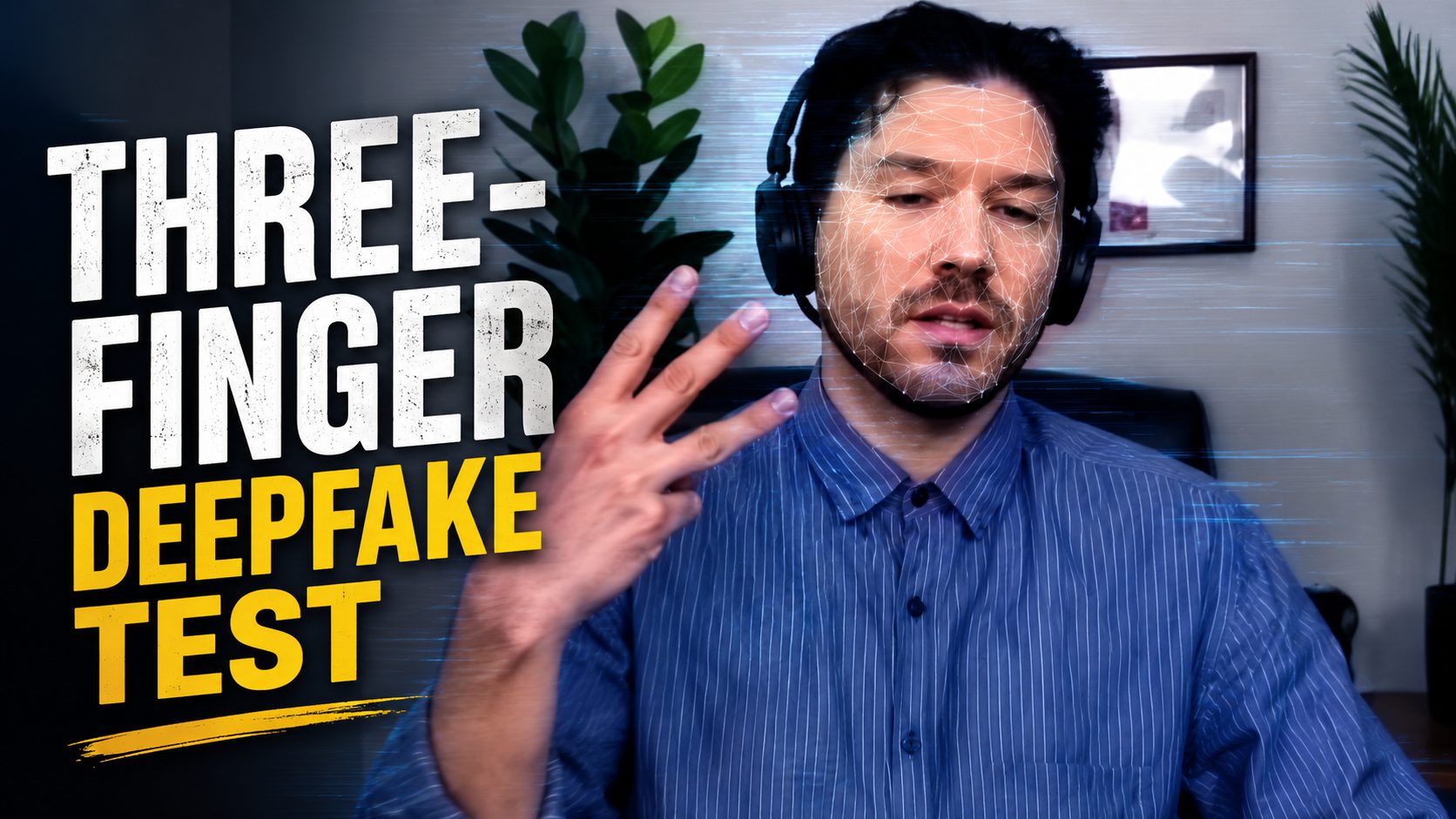
Holding up three fingers on a Zoom call felt like a cheat code against scammers. The gesture flooded social feeds with satisfying clips of deepfake overlays glitching, warping, and collapsing on contact. Millions shared it. The problem? The tools caught up — and the scammers who use them were paying close attention to the same viral clips you were.
Why the Test Worked – and When It Stopped
The trick exploited a genuine weakness in how face-swap software handles occlusion, but that weakness always had a shelf life.
The three-finger test forces a hand directly over key facial landmarks — nose, mouth, jawline. Cheaper deepfake tools track those landmarks to paste a synthetic face over the real one. Block the landmarks, and the overlay loses its reference points. Fingers warp. Seams blur. Sometimes the real face flickers through like a horror movie jump scare.
That was genuinely useful against older, consumer-grade filters. But like CAPTCHAs that bots learned to crack within months of every redesign, the exploit became its own undoing. Ben Colman, CEO of deepfake detection firm Reality Defender, told Cybernews in a 2025 report that current models have “fixed this ‘bug’” — handling occlusion and hand movements cleanly enough to pass the test without visible errors. Manny Ahmed of OpenOrigins put it blunter: “There’s no reliable visual method to recognize deepfakes anymore.”
That assessment warrants a pause. Azar Consulting calls the test flatly “dead” — publicizing the trick handed developers a checklist item to optimize around, turning a viral safety hack into the scammer’s own QA test.
What Actually Catches a Deepfake Now
Single gestures won’t save you — but layering several checks still trips up most attacks.
The three-finger test still catches bargain-bin scam tools. A refusal or obvious glitch remains a red flag. Passing it, though, proves nothing. Here’s what security researchers recommend instead:
- Ask them to slowly turn their head to a full side profile — most models train on frontal faces and struggle with ear and cheek geometry
- Wave a hand slowly across the face and watch for edge warping or flickering
- Toggle a nearby lamp — sudden lighting changes stress real-time compositing
- Ask a question only the real person could answer: something specific and shared, not a birthday
- Hang up and call back on a number you already have
No single trick replaces genuine skepticism. If a call feels urgent and someone wants money, credentials, or access, that urgency is itself the tell. Verify through a second channel before acting. Your best deepfake detector isn’t a hand gesture. It’s a callback.