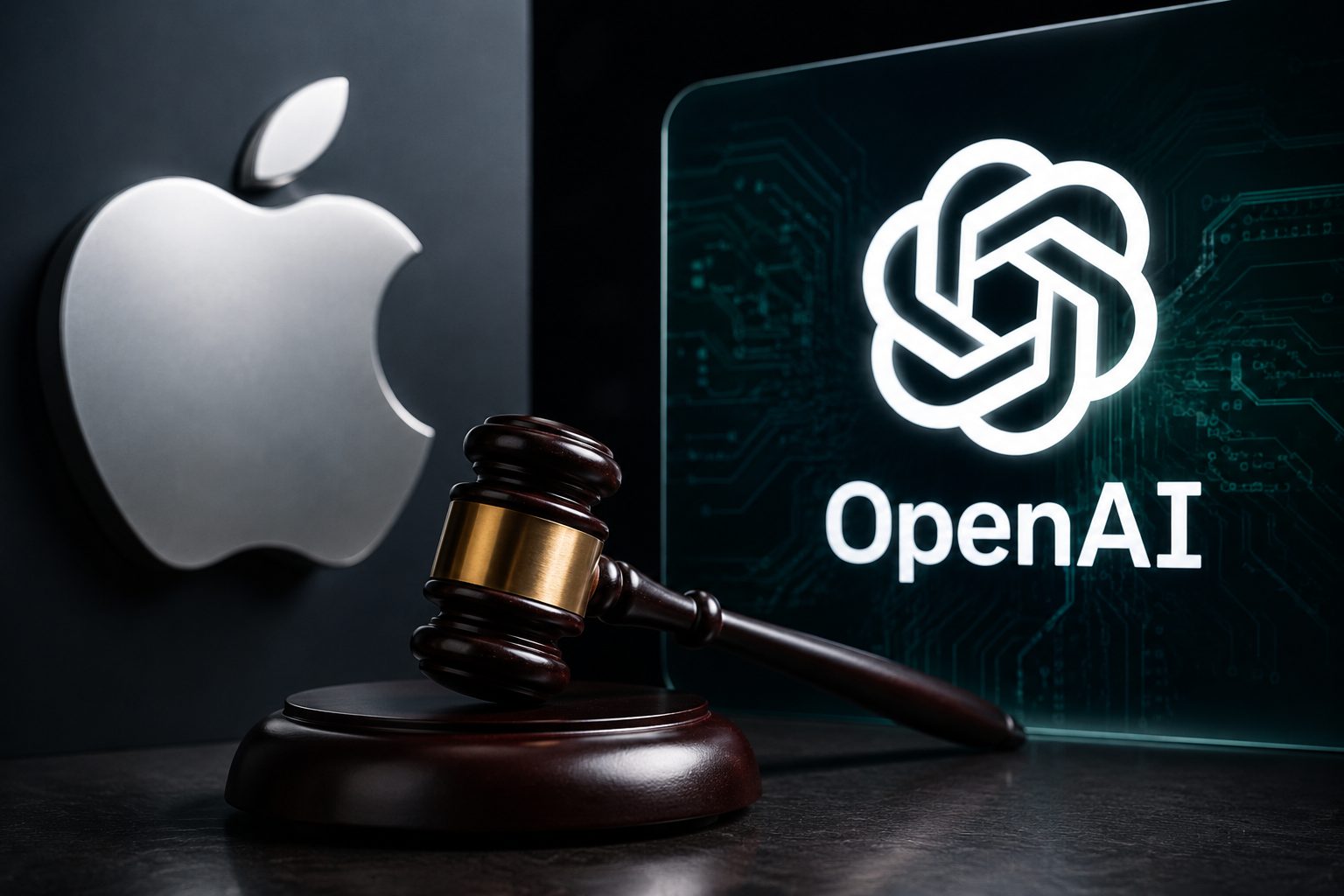
Someone at OpenAI allegedly asked job candidates to bring actual Apple hardware parts to interviews for “show and tell” sessions. That detail — buried in a complaint filed Friday in U.S. District Court for the Northern District of California — signals this is no standard corporate squabble. Apple is accusing OpenAI of building its consumer hardware division on a foundation of stolen intellectual property, right as OpenAI reportedly prepares a device designed to compete directly with your iPhone.
What Apple Says Happened
The complaint names OpenAI’s chief hardware officer and a former Apple engineer, alleging a systematic campaign to extract confidential product designs, manufacturing techniques, and supplier relationships.
The two named defendants carry serious résumés. Tang Yew Tan spent 24 years at Apple, rising to VP of product design for iPhone and Apple Watch, before becoming OpenAI’s Chief Hardware Officer. Chang Liu worked as a senior systems electrical engineer at Apple for approximately eight years. According to Apple’s complaint, both allegedly carried more than experience when they left.
Apple’s core allegations include:
- Tan allegedly used internal Apple project codenames during OpenAI job interviews to probe candidates about unreleased products, and coached departing employees on evading Apple’s data-security protocols
- Liu allegedly retained an Apple-issued laptop after departing, then exploited an authentication bug to access Apple’s network storage and download dozens of confidential hardware files
- An Apple manufacturing partner allegedly performed a proprietary metal-finishing technique for OpenAI, misled into believing Apple had authorized the work
- Apple sent OpenAI a letter in February raising these concerns; OpenAI reportedly never responded
“OpenAI’s nascent hardware business now rests on the shakiest of foundations, rotten to its core by its illegal reliance on misappropriated trade secrets,” the complaint states, according to AP News.
Apple is seeking an injunction barring OpenAI from using any Apple trade secrets, the return of all confidential materials, preservation of evidence, and monetary damages — potentially including punitive damages. Courts could also require OpenAI to redesign hardware products found to rely on misappropriated IP, though that remedy would depend entirely on judicial findings.
OpenAI’s Response and the Bigger Picture
OpenAI denies the allegations in broad terms while its rumored AI-first device — and a $6.5 billion hardware bet — hangs in the balance.
OpenAI posted a brief statement on X: “We have no interest in other companies’ trade secrets. We remain focused on building innovative technology that empowers people everywhere.” A detailed legal response has not yet been filed, and these allegations remain unproven at this stage.
The stakes extend well beyond courtroom procedure. OpenAI reportedly spent $6.5 billion acquiring Jony Ive’s hardware startup — now operating as io Products — and analyst Ming-Chi Kuo has suggested the company aims to build a smartphone-like device organized around AI agents rather than traditional apps. It echoes the Waymo-versus-Uber trade secret battle, which similarly centered on laptop-based data exfiltration by departing employees — except the device at stake here sits in your pocket every day.
Legal discovery could expose the full architecture of OpenAI’s hardware strategy. What surfaces may determine whether that next-generation AI device launches on schedule, gets delayed, or requires a fundamental redesign.