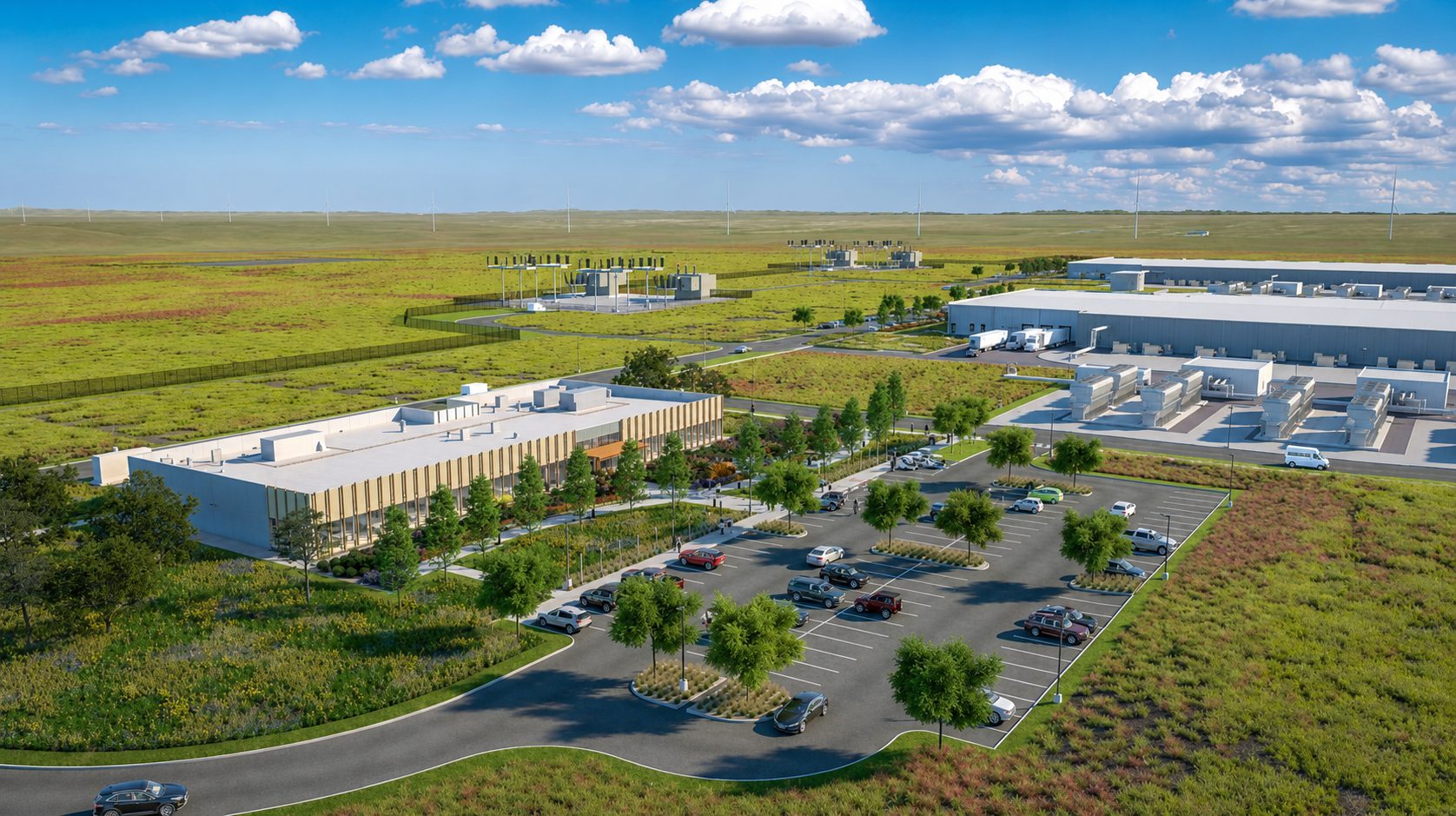
Routine fecal bacteria sampling in February turned up something Cheyenne’s lab staff had never looked for: Cupriavidus gilardii, a rare, metal-resistant bacterium with no business being in the city’s reclaimed water. The Board of Public Utilities traced it to Goat Systems LLC, the contractor building Meta’s Cheyenne data center campus, which had flushed commissioning water straight into the sanitary sewer. Two water reclamation plants were disrupted. The reuse system — the one that irrigates parks and golf courses — went dark for months. This isn’t just a local plumbing problem. It’s a preview of what AI data center expansion looks like from the ground level.
The “Near-Zero-Water” Gap
Sealed cooling loops still produce contaminated discharge before they’re ever sealed.
Fill-and-flush is the commissioning step nobody talks about. Crews fill a cooling loop’s piping with water, circulate it to blast out construction debris, then drain the whole mess — typically into a city sewer. After that, the loop gets sealed and supposedly never touches municipal infrastructure again. Microsoft and Nvidia market these closed-loop systems as near-zero-water solutions, according to company descriptions reported in sector coverage. Nvidia’s Rubin platform runs on roughly 75% water and 25% propylene glycol. The one-time discharge, though? That’s the blind spot — like bragging about your electric car’s zero tailpipe emissions while glossing over what came out of the factory.
The Cheyenne timeline unfolded quickly:
- February 2026: Cupriavidus gilardii detected during routine sampling at water reclamation facilities
- BOPU declared Goat Systems in “significant noncompliance” with industrial pretreatment regulations
- March 24: Goat Systems’ discharge privileges revoked; a broader suspension of all data center fill-and-flush discharges followed
- Contamination triggered “pass-through” and “interference” findings under city code and federal rules — even though C. gilardii isn’t a regulated contaminant
- Late June: Dry Creek and Crow Creek facilities finally cleared; reuse system back online
“This isn’t something we normally test for,” said Frank Strong, BOPU’s engineering and water resource division manager, according to Yahoo News. The bacterium’s origin remains unknown. Notably, the fill water had been purchased from BOPU itself. Strong flagged a further concern: spray irrigation systems can aerosolize microbes, and clinical case reports published in Frontiers in Medicine document C. gilardii causing severe pneumonia and fatal sepsis in immunocompromised patients — a reminder that “environmental” doesn’t mean harmless.
A Pattern Bigger Than Wyoming
From Georgia to New Mexico, data center water problems keep surfacing long after they start.
Meta said its general contractor Fortis stopped discharging and began hauling wastewater offsite. Independent testing reportedly found no remaining C. gilardii — though Cheyenne’s own tests had already confirmed contamination in the reuse system. Councilman Pete Laybourn called the disclosure “a very, very unpleasant surprise,” according to Tom’s Hardware. Similar tensions have emerged elsewhere:
- A Georgia data center project allegedly muddied a town’s drinking water
- A New Mexico facility reportedly consumed 29 million gallons over 15 months before residents noticed through low water pressure complaints
Strong also warned that closed-loop systems can carry glycol and other chemicals municipal treatment plants simply aren’t built to handle. Cities hosting AI data centers may now require pre-discharge pathogen testing and onsite wastewater treatment — pushing costs back onto the companies whose servers generate the waste, rather than onto the public infrastructure quietly absorbing it.